Why protecting the ground beneath our feet must become a government priority
Soil degradation is undermining food production, polluting water, destroying biodiversity and weakening the natural systems that help regulate our climate. Governments have introduced policies, signed international agreements and pledged funding to address these threats, but the problem is, that soil protection remains fragmented, underfunded and poorly accountable. The science is clear. The consequences are measurable. What is missing is the political commitment to make soil health a national and international priority.
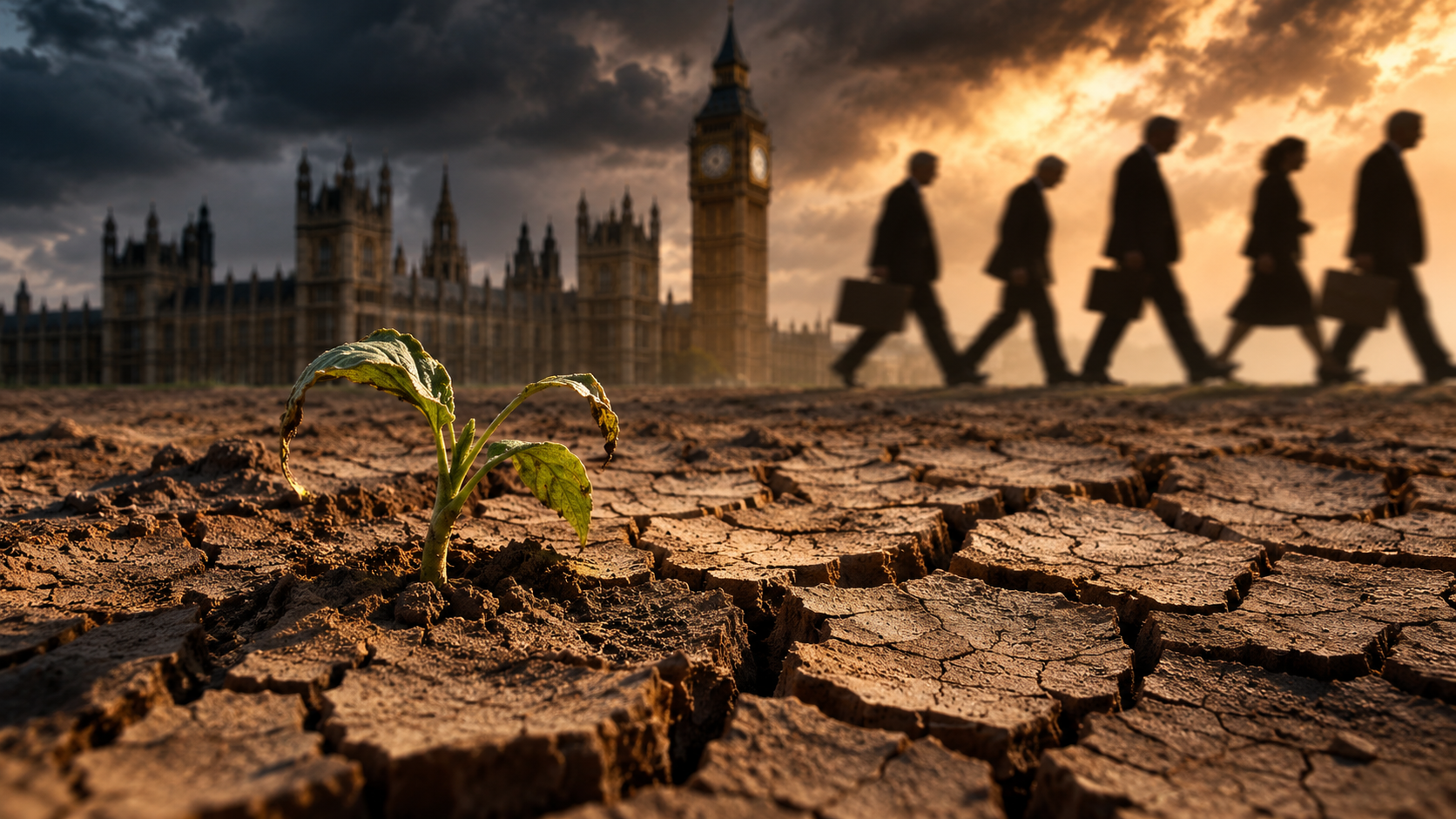
It is easy to understand why. Soil is largely out of sight. Its degradation is gradual, often difficult to measure and rarely produces the dramatic images associated with wildfires, floods or collapsing coastlines. The consequences, however, are anything but invisible. Declining soil fertility threatens food production. Erosion carries sediment and nutrients into rivers. Damaged peatlands release stored carbon. Compacted and sealed soils affect water movement, increasing pressure on drainage systems and contributing to flood risk. The loss of soil biodiversity undermines the natural processes on which productive landscapes depend.
These are not isolated environmental problems. They are economic, social and political challenges. And that makes soil protection a matter of government responsibility.
The gap between political promises and what happens on the ground
There is no shortage of international commitments relating to land, climate, biodiversity and sustainable agriculture. The difficulty is turning those commitments into consistent action.
The United Nations Convention to Combat Desertification (UNCCD), the Convention on Biological Diversity (CBD) and the United Nations Framework Convention on Climate Change (UNFCCC) all address issues that are closely connected to soil. The Sustainable Development Goals also recognise the importance of land restoration, food security, water and terrestrial ecosystems.
However, soil does not sit neatly within one political department or international agreement. It crosses agriculture, environment, planning, infrastructure, water, energy and economic policy. Responsibility is therefore spread across institutions that do not always share the same priorities, budgets or measures of success.
A government might support agricultural productivity while overlooking the long-term consequences of soil degradation. It might invest in flood defences without giving sufficient attention to the condition of the land upstream. It might set ambitious carbon targets while failing to protect the organic matter and peat soils that store carbon naturally.
The result is a familiar problem in environmental policy, where commitments are made in one place, while the decisions that determine whether they succeed are taken somewhere else.
The evidence is becoming harder to ignore
The scale of the challenge is now backed by an increasingly substantial body of scientific evidence. The Food and Agriculture Organization of the United Nations (FAO) launched its Status of the World's Soil Resources 2026 assessment at UNCCD COP17 in August. Drawing on scientific literature published between 2015 and 2025, the assessment brings together the work of 293 experts from 76 countries. Its findings should concern every government.
Across the regional and subregional assessments reviewed, 58% reported that the adoption of sustainable soil management had deteriorated since 2015. Only around 10% reported improvement. More than half indicated low or very low adoption of sustainable soil management practices. In other words, despite greater scientific understanding, better technology and decades of environmental commitments, the response is not keeping pace with the problem.
The FAO's State of Food and Agriculture 2025 report provides another stark warning. It estimates that approximately 1.7 billion people live in areas where human-induced land degradation is associated with declining crop yields.
This is not a distant environmental concern. It has direct implications for food prices, rural livelihoods, economic stability and the ability of countries to feed their populations.
Soil degradation also carries a substantial financial cost. A UNCCD financial needs assessment presented at COP17 estimated that around US$355 billion a year would be required between 2025 and 2030 to meet land restoration targets and address land degradation, desertification and drought. Estimated annual investment was approximately US$77 billion, leaving a gap of around US$278 billion each year. The same assessment put the annual cost of inaction at US$878 billion, compared with potential annual benefits of US$1.8 trillion from the required investment.
These figures make an important point. Protecting land is not an optional environmental expense. It is an investment in economic resilience.
COP decisions must lead to action, not another round of promises
International climate and environmental conferences are important because they bring governments together to agree common priorities, but the value of a COP should not be measured by the language in its final communiqué. It should be measured by what changes afterwards.
At UNCCD COP16 in Riyadh in December 2024, countries committed to prioritising land restoration and drought resilience in national policies and international cooperation. More than US$12 billion in pledges were announced to tackle desertification, land degradation and drought, particularly in vulnerable countries.
COP17, held in Ulaanbaatar in August 2026, took the discussion further. Its decision on avoiding, reducing and reversing land and soil degradation of agricultural land encouraged countries to apply the land degradation neutrality response hierarchy: prevent degradation wherever possible, reduce ongoing damage and restore land that has already been degraded.
Importantly, the decision invited governments to develop national legal and policy frameworks that promote soil health. It also recognised the need for evidence-based land management, access to finance and knowledge for smallholders and greater participation by the private sector.
These are useful steps, but the wording matters. Governments were encouraged and invited to act; the decision did not create a binding global soil protection law or impose a common set of enforceable national soil health targets.
This matters, because international agreement can establish direction, create political pressure and encourage cooperation. It cannot, on its own, ensure that a farmer receives support to improve soil structure, that a developer protects valuable topsoil, or that a government measures whether its soils are becoming healthier. The responsibility for delivery remains national.
Europe has taken a step that other governments should examine
One of the most significant developments in soil policy has come from the European Union. The EU Soil Monitoring Law entered into force on 16th December 2025. It establishes the first EU-wide framework for monitoring and assessing soil health, covering agricultural land, forests, urban areas and other soils.
The law addresses erosion, compaction, soil sealing, contamination, salinisation, loss of organic matter and declining soil biodiversity. Member States must establish monitoring systems using a common methodology, with the wider ambition of achieving healthy soils across Europe by 2050.
The legislation does not impose a blanket requirement for every soil to reach a uniform condition overnight. Its importance lies in establishing a common framework for understanding the problem, identifying degradation and supporting action.
The European Commission estimates that 60–70% of EU soils are in an unhealthy state. That is a sobering starting point, but at least the issue is being addressed through a shared legislative framework.
It also raises a question for governments elsewhere, because if soil is essential to food security, clean water, biodiversity and climate resilience, why should its condition not be monitored and protected as systematically as other critical natural resources?
What is happening in the UK?
The UK has made progress in recognising the importance of soil, but there remains a significant gap between understanding the problem and establishing a comprehensive approach to protecting it.
In England, Defra's Farming Roadmap 2050 sets out plans to establish a national soil monitoring baseline by 2029 through the Natural Capital and Ecosystem Assessment programme. A public soil data portal was launched in April 2026, providing access to the National Soil Map for England and Wales and other datasets. Further guidance on soil structure monitoring is also planned.
These developments matter. Better information can help farmers, land managers and policymakers understand where soil is under pressure and which interventions are likely to be effective, but monitoring is not the same as protection.
The Office for Environmental Protection has called for stronger regulation to support sustainable soil management in England. In its January 2026 reporting, it noted that progress had been limited and that the Government had deferred a full response to its recommendation for an effective soil protection regulatory framework.
That leaves an important question unanswered - what happens when soil is damaged, who is responsible for preventing it, and what measures ensure that restoration takes place?
There are existing policies and funding mechanisms that support soil-friendly farming practices, but a collection of schemes, guidance and monitoring initiatives is not necessarily the same as a coherent national soil policy.
The UK needs a clearer framework that connects agriculture, construction, planning, water management, biodiversity and climate policy. It also needs to recognise that soil is not only a farming resource. The soil beneath towns, cities, roads, industrial developments, parks and infrastructure is part of the same natural system.
Follow the money – and ask what it is achieving
Funding is where political ambition becomes practical reality. Farmers cannot be expected to change established practices without appropriate support, advice and financial incentives. Land restoration often requires investment before benefits become apparent. Improving soil structure, rebuilding organic matter, restoring peatlands and establishing more diverse cropping systems can take years.
Public funding therefore has an important role to play. It can help farmers manage the transition, support research and monitoring, fund restoration and encourage private investment, but funding must be judged by its outcomes, not just the amount announced.
How much money is reaching the people managing land? How much is being spent on preventing degradation rather than repairing it afterwards? Are payments linked to measurable improvements in soil condition? Are projects being monitored over a long enough period to establish whether the benefits last?
The financial gap identified by the UNCCD is substantial. Yet the issue is not only how much money is available. It is how effectively existing money is used, whether funding reaches the right places and whether governments are prepared to redirect financial support away from activities that contribute to land degradation.
There is also a need to make soil restoration a more attractive proposition for private investment. Businesses depend on productive land, reliable water supplies, resilient supply chains and functioning ecosystems. Those dependencies create a strong economic case for investing in soil protection.
However, private finance should complement public responsibility, not replace it. Governments must establish the standards, safeguards and transparency needed to ensure that investment produces genuine environmental benefits.
Accountability is the missing piece
Perhaps the most important question is not whether governments have soil policies. It is whether anyone can establish if those policies are working. A target to improve soil health is meaningless without a baseline. A restoration commitment is difficult to assess without transparent reporting. A funding announcement tells us little unless we know where the money went and what it achieved. Accountability needs to become a central part of soil policy.
Governments should be expected to publish regular assessments of soil condition, report on changes over time and explain whether national targets are being met. Monitoring should cover more than agricultural productivity. It should include erosion, compaction, organic carbon, contamination, soil biodiversity, sealing and the capacity of soils to absorb and retain water.
The data should be publicly accessible. It should be possible for researchers, farmers, businesses, communities and campaign organisations to examine progress and challenge decisions that put soil at risk.
There should also be greater consistency between countries. Soil does not respect national boundaries, and the consequences of degradation can extend far beyond the land where the damage begins. International agreements need meaningful reporting mechanisms and comparable indicators if progress is to be assessed honestly. Without accountability, soil protection risks becoming another political ambition that is repeatedly announced but rarely measured.
Soil needs a voice in every major policy decision
The politics of soil cannot be confined to agriculture departments or environmental conferences. Planning decisions should consider the quality and function of the soil being developed. Construction projects should be expected to protect, manage and reuse valuable topsoil. Flood strategies should recognise the role of healthy soils in storing and regulating water. Climate policy should account for the carbon held in soils and peatlands. Biodiversity strategies should recognise that the health of ecosystems begins below ground.
Food security policy must also look beyond the volume of food produced in a particular season. It must consider whether the land will remain productive for future generations. This requires joined-up thinking. It also requires political leadership willing to challenge short-term decisions that create long-term environmental and economic costs.
The international frameworks already exist. Scientific knowledge is advancing. Practical approaches to sustainable soil management are available. The 2026 FAO assessment makes clear that the problem is not a lack of understanding. It is the failure to put what we know into practice at the scale required.
The campaign for soil must become a political campaign
Soil Matters believes that protecting soil should be a priority for every government, not an issue left to farmers, scientists and environmental organisations to raise. We need governments to recognise soil as essential national infrastructure. We need proper protection, long-term funding, consistent monitoring and transparent reporting. We need soil health built into decisions about agriculture, planning, construction, water, climate and biodiversity.
We also need the public to understand that this is not an abstract environmental debate. Soil affects the food we eat, the water we drink, the landscapes we depend on and the resilience of the communities in which we live.
The question is no longer whether we know enough to act. We do. The real question is whether governments are prepared to make soil a political priority, commit the resources needed to protect it and accept responsibility for the results.
International agreements can set the direction. National policies can provide the framework. Funding can make change possible, b ut without accountability, none of them guarantees progress.
The ground beneath our feet cannot vote, lobby ministers or demand that promises are honoured. That is why it needs people to speak on its behalf. Soil must become part of the political conversation, not an afterthought once the decisions have already been made.
Because when governments fail to protect soil, the consequences are not confined to the ground. They reach our food, our water, our climate, our economy and our future. Soil Matters and it is time governments acted like it.