Can We Put a Value on Healthy Soil?
Soil underpins the global economy, even though its contribution is largely invisible in the financial decisions made by governments, businesses and investors. It produces our food, stores carbon, filters water, supports biodiversity and helps protect communities from flooding, but how much would it cost to replace these services if healthy soil disappeared? And why do we continue to treat one of the world's most valuable natural resources as though it has little economic value?
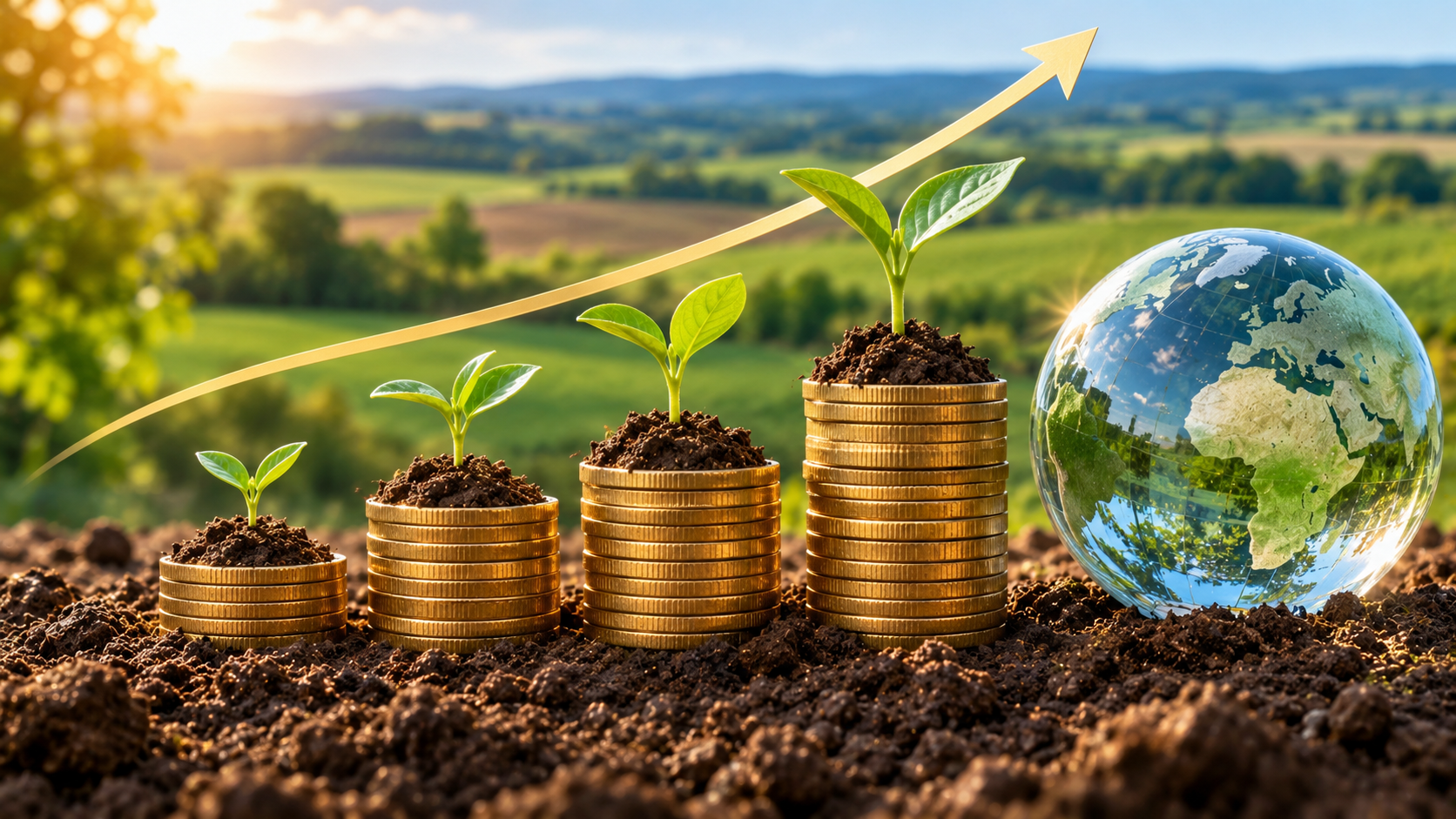
There is a question that rarely appears in a company's annual accounts, a government's infrastructure budget or an investor's financial forecasts. What is the value of the soil beneath our feet?
We know the value of land. We measure it in hectares, property prices, agricultural yields and development potential. We calculate the cost of fertiliser, machinery, drainage, irrigation and construction. We can put a price on the crops grown in a field and the buildings constructed on it, but what about the soil itself?
What is the economic value of the carbon it stores, the water it absorbs, the pollutants it filters, the biodiversity it supports and the protection it provides against flooding? What would it cost to replace those functions if the soil became degraded, compacted, contaminated or was lost altogether? The uncomfortable answer is that we rarely calculate the full cost.
Soil is one of the foundations of the global economy, yet many of the services it provides are treated as though they are free. They are not. They represent an extraordinary natural asset, built over thousands of years, which supports food production, public health, infrastructure, industry and the stability of ecosystems. The problem is that much of its value is hidden and what is not measured is too easily overlooked.
The global economy depends on healthy soil
The economic importance of soil becomes clearer when we consider how much of the world's economy depends on natural resources. The United Nations Convention to Combat Desertification (UNCCD) estimates that approximately US$44 trillion of economic output, equivalent to more than half of global GDP, is moderately or highly dependent on natural capital. This includes the land, water, ecosystems and natural processes that support economic activity.
Soil is fundamental to many of these services. It supports agricultural production, regulates water, stores carbon, recycles nutrients and provides habitats for an extraordinary range of organisms.
The Food and Agriculture Organization of the United Nations (FAO) estimates that more than 95% of the world's food is produced on land, with soil supplying the nutrients, storing the water and supporting the plant growth on which agricultural production depends and demand is increasing. According to the FAO's State of the World's Land and Water Resources for Food and Agriculture 2025 report, agriculture will need to produce approximately 50% more food, feed and fibre by 2050 compared with 2012 levels.
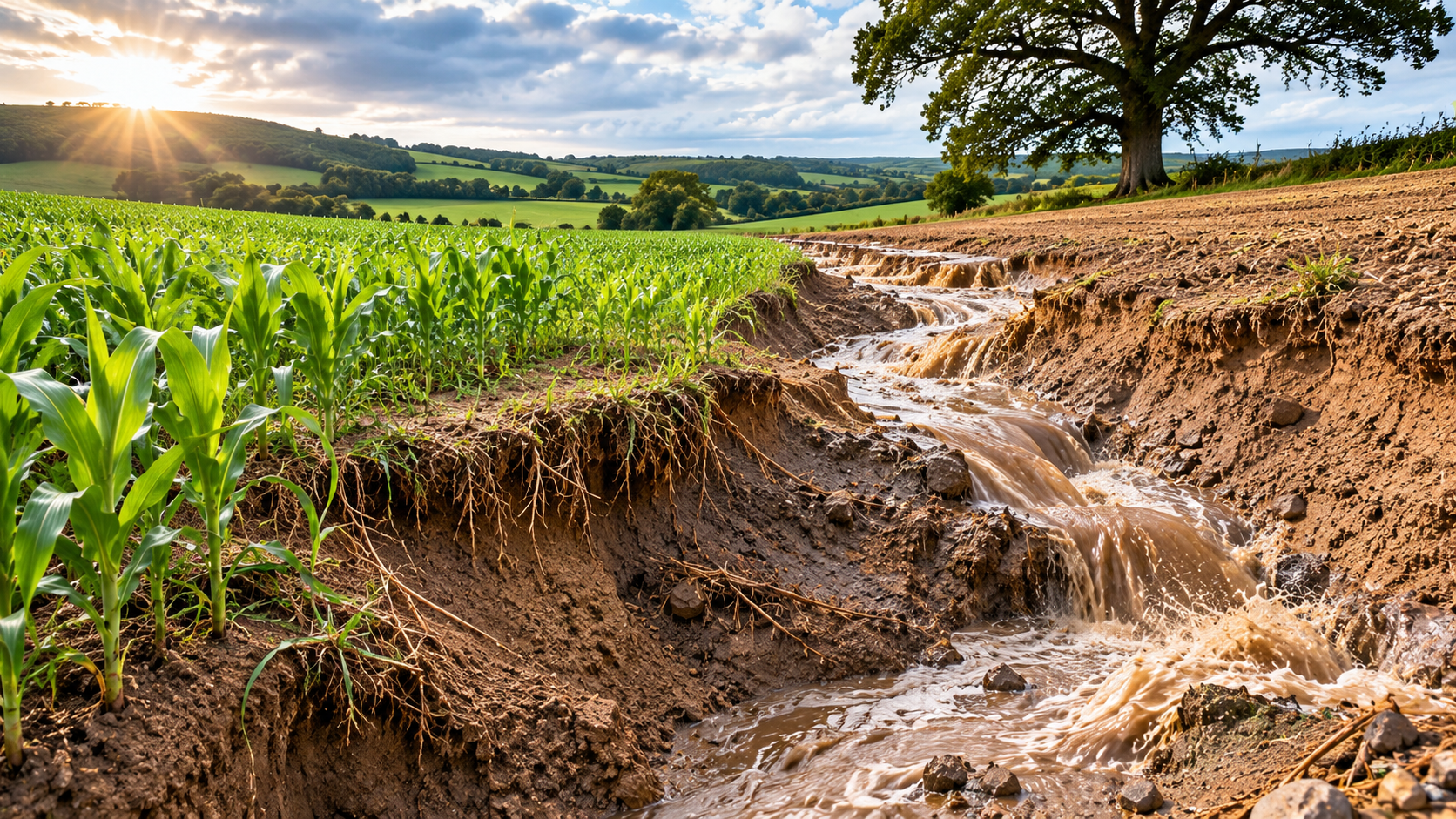
Yet the resource expected to support this increased production is already under pressure. The same report estimates that more than 1.6 billion hectares of land have been degraded by unsustainable land-use and management practices. More than 60% of this degradation occurs on agricultural land, including cropland and pasture.
These are not just environmental statistics. They represent risks to agricultural productivity, food prices, rural livelihoods, supply chains and the stability of economies around the world.
If we were discussing the degradation of a major industrial asset, the financial implications would be taken seriously. Yet when the asset is soil, the economic consequences are often treated as someone else's problem.
The value of food production
The most obvious economic contribution of soil is its role in producing food. Farmers depend on soil to support crops and livestock, but its contribution extends far beyond the farm gate. Healthy soil supports the entire food system, from agricultural production and food processing to distribution, retail, hospitality and export markets. Its value cannot be measured by crop yield alone.
Soil with good structure and organic matter can retain water, make nutrients available to plants and support the biological processes that help crops grow. It can also improve resilience during periods of drought and heavy rainfall.
Degraded soil, by contrast, can require greater inputs to maintain production. Farmers may need more fertiliser, irrigation, fuel and other interventions to compensate for declining soil functions.
This creates an economic paradox. We can spend increasing amounts trying to maintain agricultural output while simultaneously allowing the natural resource supporting that output to deteriorate.
There is also a wider risk. When productive soil is lost through erosion, salinisation, compaction or contamination, the consequences can affect communities far beyond the immediate agricultural area. Food prices, import dependency and supply-chain security can all be influenced by the condition of land in countries thousands of miles away. Healthy soil is therefore not just an agricultural asset. It is part of the infrastructure of global food security.
Soil as natural flood protection
One of the most undervalued services provided by healthy soil is its ability to manage water. Soil acts as a natural reservoir. Its structure allows rainfall to infiltrate, move through pores and be stored for use by plants and other organisms.
When soil is healthy, well-structured and rich in organic matter, it can help slow the movement of water across the landscape. Vegetation and soil work together to reduce surface run-off, support infiltration and regulate the movement of water into rivers and groundwater systems. This has significant economic implications.
Flooding damages homes, businesses, roads, bridges, agricultural land and public infrastructure. It can interrupt transport networks, disrupt supply chains, affect insurance costs and place considerable pressure on emergency services.
Natural flood management measures, including restoring wetlands, improving soil structure, planting trees and maintaining vegetation cover, can help reduce run-off and slow the movement of water through catchments. The value of healthy soil in this context is not just the water it stores. It is the damage that may be avoided when rainfall is absorbed and released more gradually.
Of course, soil alone cannot prevent flooding, particularly during extreme weather events. Its contribution depends on soil type, land use, vegetation, topography and the capacity of the wider catchment, but it is an important part of the natural infrastructure that helps communities manage water.
The FAO recognises soil and its associated vegetation as fundamental to the distribution of rainfall across landscapes, influencing water supply, regulation and the movement of pollutants.
We routinely invest in drainage systems, flood barriers and engineered defences. Yet the natural systems that can help reduce pressure on this infrastructure are rarely valued with the same financial seriousness.
The value of natural water filtration
Healthy soil also performs an important water purification function. As water moves through the soil profile, physical, chemical and biological processes can trap, transform or break down certain pollutants. Soil can retain nutrients, filter suspended particles and help reduce the movement of some contaminants into groundwater and surface water. This service has a direct economic value.
Water companies spend significant amounts treating water to make it suitable for human consumption. Pollution from agricultural run-off, industrial activity and other sources can increase treatment requirements and place additional pressure on water infrastructure.
Where soil is able to retain nutrients and reduce pollutant movement, it can help protect water quality and lower the burden on downstream systems. The economic benefits can extend to fisheries, tourism, recreation and communities that depend on clean rivers, lakes and groundwater.
However, soil is not an unlimited filtration system. Its capacity to retain pollutants varies, and some contaminants can accumulate or pass through into groundwater. Once soils become saturated, contaminated or chemically damaged, their ability to provide this service may be reduced.
This is another reason why protecting soil quality is economically important. Preventing pollution at source is often less costly than dealing with its consequences after it has entered the water system.
Carbon storage and the economics of climate change
Soil is also one of the world's major natural carbon stores. Plants absorb carbon dioxide from the atmosphere through photosynthesis. Some of this carbon is transferred into the soil through roots, fallen leaves and other organic material. Soil organisms break down this material, with some carbon released back into the atmosphere and some becoming incorporated into longer-lived soil organic matter.
When soil is managed well, it can maintain or increase its carbon stocks. When it is degraded, drained, eroded or intensively disturbed, some of that stored carbon can be released. This gives soil a significant role in climate change mitigation.
The economic value of soil carbon can be considered in several ways. It can be assessed through the cost of greenhouse gas emissions, the contribution of carbon sequestration to climate targets, or the potential value of verified carbon removal within appropriate markets, but carbon storage should not be viewed in isolation.
The same practices that help protect soil carbon can also improve water retention, reduce erosion, support biodiversity and strengthen agricultural resilience. Their combined value may be considerably greater than the carbon benefit alone.
This raises an important question for governments and businesses. If soil management can contribute to climate objectives while delivering wider environmental and economic benefits, why is it not more consistently included in investment decisions and carbon strategies?
Biodiversity – an economic asset we rarely count
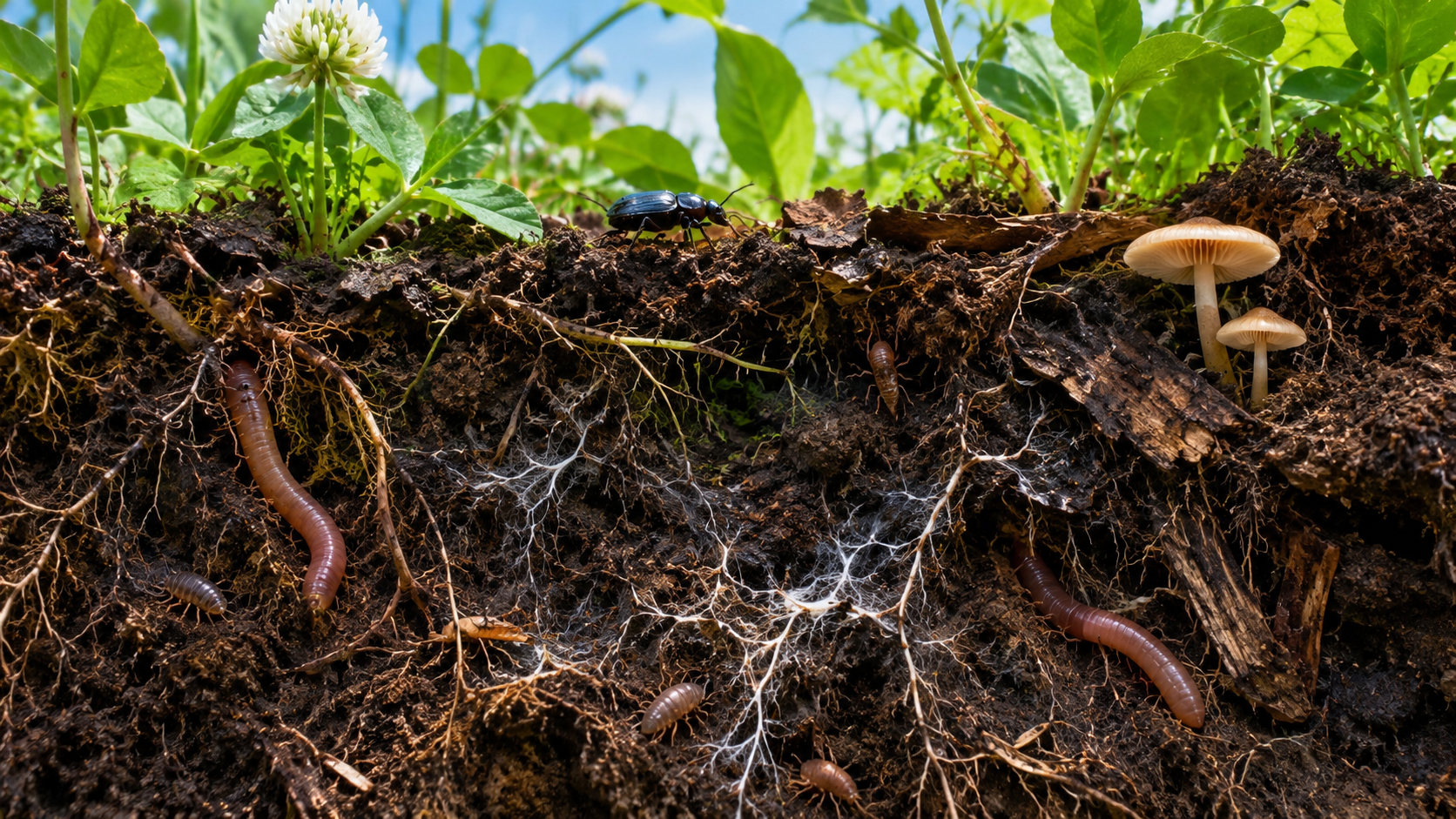
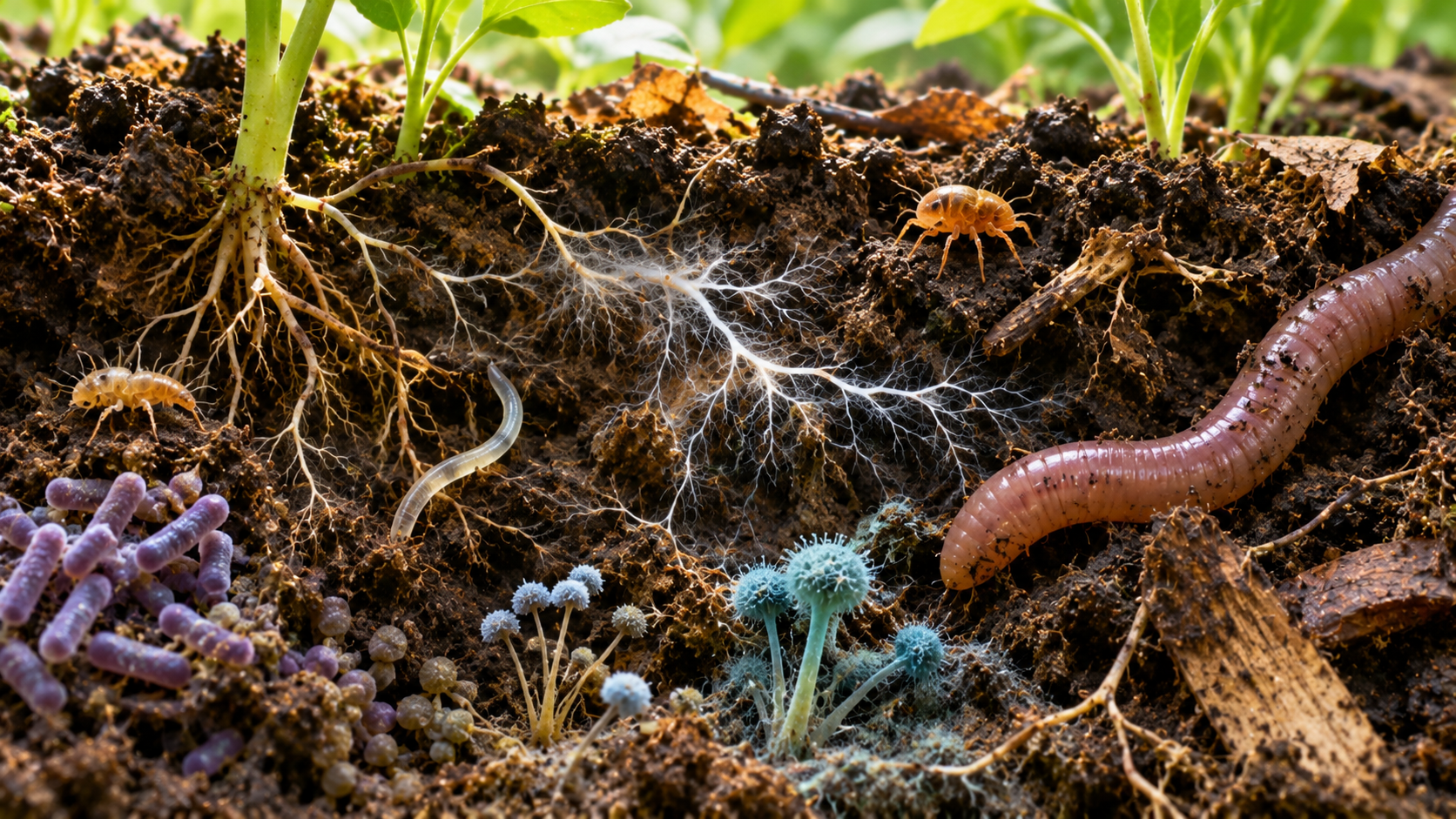
Healthy soil is home to an extraordinary diversity of life. Bacteria, fungi, earthworms, nematodes, mites, springtails and countless other organisms work together to decompose organic material, recycle nutrients, maintain soil structure and support plant growth.
Their contribution to the economy is largely indirect, but that does not make it less important. Without these organisms, the natural processes that sustain agricultural productivity and healthy ecosystems would be severely compromised.
Soil biodiversity also supports life above ground. Healthy soil encourages plant growth, which provides food and habitats for insects, birds, mammals and other wildlife. It contributes to the functioning of forests, grasslands, wetlands and agricultural landscapes.
The International Union for Conservation of Nature (IUCN) has reported estimates placing the annual contribution of soil biodiversity to ecosystem services at between US$1.5 trillion and US$13 trillion.
That is an exceptionally wide range, reflecting differences in valuation methods, assumptions and the services included. It should not be interpreted as a definitive market price for soil biodiversity. Nevertheless, it demonstrates the potential scale of the economic contribution that is frequently absent from conventional financial accounting.
The difficulty is that biodiversity does not fit neatly into conventional financial models. It is difficult to put a price on the value of a functioning ecosystem, particularly when the benefits are shared across entire landscapes and generations, but failing to assign a financial value does not mean there is no economic value.
What is the cost of getting it wrong?
Perhaps the strongest argument for recognising the economic value of healthy soil is the cost of allowing it to deteriorate. The UNCCD's 2025 Desertification and Drought Day factsheet estimates that drought, land degradation and desertification cost the global community approximately US$878 billion every year.
It also reports that around one million square kilometres of healthy and productive land are becoming degraded annually. These figures cover the wider consequences of land degradation and drought, rather than soil damage alone. They nevertheless demonstrate the scale of the economic burden associated with declining land health.
An earlier assessment by the Intergovernmental Science-Policy Platform on Biodiversity and Ecosystem Services (IPBES) estimated that the loss of biodiversity and ecosystem services resulting from land degradation costs more than 10% of annual global gross product.
The assessment also found that the benefits of restoration exceeded the costs by an average ratio of 10 to one across the nine biomes examined. This is an average drawn from particular restoration studies, not a guaranteed return on every project, but it illustrates the potential economic case for investing in land recovery.
These figures should make governments, businesses and investors pause. We are not talking about a marginal environmental concern. We are talking about the deterioration of natural assets that support food production, water security, climate regulation and economic activity across the world.
And the cost is not distributed equally. Communities that depend directly on agriculture and natural resources are often among those most exposed to land degradation, while the consequences of consumption and production decisions can be felt far away from where those decisions are made.
Can we actually put a price on healthy soil?
There have been attempts to do exactly that. Researchers and policymakers have developed ways of estimating the economic value of soil ecosystem services, including nutrient cycling, water regulation, carbon sequestration, pollution filtration and biodiversity.
A European Commission impact assessment, for example, brings together published estimates of individual soil services. It reports valuations for nutrient cycling of approximately €79 per hectare per year, water cycling of around €73 per hectare per year and hydrological control of approximately €23 per hectare per year. Its estimates for filtering contaminants and nutrients range from €421 to €4,955 per hectare per year, depending on the pollutant or nutrient being considered.
These figures are drawn from different studies and valuation methods. They are not universal prices that can be applied to every hectare of land, and they should not be added together without checking for overlap between services. However, they demonstrate that researchers are finding ways to make some of soil's less visible contributions more visible in economic terms.
The challenge is to develop valuation methods that are credible, consistent and useful to decision-makers. We need to understand not only what soil produces, but what it prevents, what it supports and what would be lost if its functions were damaged. This is where the concept of natural capital becomes important.
Natural capital recognises the world's natural assets as contributors to economic prosperity. Instead of treating soil, water, forests and biodiversity as free resources, it seeks to account for the benefits they provide and the risks associated with their loss, but there is a danger in taking this too far.
Not every aspect of soil can or should be reduced to a monetary figure. Its cultural, ecological and intrinsic value cannot always be captured through financial calculations. Nor should assigning a price to soil become a justification for destroying it, provided someone is willing to pay. Economic valuation should help protect soil, not turn it into another commodity to be exploited.
Why soil is missing from financial decision-making
If healthy soil provides so many economic benefits, why is it still so frequently overlooked? Part of the answer is that its value is spread across different sectors.
A farmer benefits from productive soil. A water company benefits from cleaner water. A local authority benefits from reduced flood risk. A government benefits from carbon storage and biodiversity protection. A food manufacturer benefits from reliable agricultural supply chains, but these benefits are rarely reflected in a single financial account.
The person or organisation making the decision to protect soil may not be the one receiving the financial reward. Conversely, the cost of degrading soil may be passed on to water companies, taxpayers, communities and future generations. This is a classic economic problem - the benefits of healthy soil are widely shared, while the costs of damaging it are often externalised.
Short-term financial thinking makes matters worse. A landowner may see an immediate commercial benefit from intensive production or development, while the longer-term costs of soil degradation are not included in the calculation.
A developer may assess land according to its development potential without properly accounting for the loss of soil functions. A business may measure its direct emissions while overlooking the condition of the land supporting its supply chain.
Governments may invest in flood defences without fully considering the contribution that healthy soils and restored landscapes could make to reducing flood risk. Until these costs and benefits are more consistently recognised, decisions will continue to favour what can be measured immediately over what is valuable in the long term.
The case for investing in soil
Putting a value on healthy soil is not just an academic exercise. It should influence where money is invested, how land is managed and how businesses assess their environmental impact.
Farmers need support to adopt practices that maintain soil structure, increase organic matter, protect biodiversity and reduce erosion.
Governments need to recognise soil as part of national infrastructure, incorporating its value into decisions about agriculture, planning, water management, climate change and nature recovery.
Businesses need to understand their dependence on soil, particularly where their supply chains rely on agricultural products, forestry, natural materials or functioning ecosystems.
Investors need to look beyond the immediate financial return of land and consider its long-term natural capital value.
Restoration should also be recognised as an economic opportunity. Rebuilding soil organic matter, restoring degraded land, improving water infiltration and supporting biodiversity can deliver benefits that extend well beyond the boundaries of an individual farm or project.
The economic case is not about preventing all land use or development. It is about making better decisions, understanding the full consequences of those decisions and ensuring that the natural assets supporting the economy are not sacrificed for short-term gains.
The most valuable resource we rarely see
We have become accustomed to putting a price on almost everything. We know what a barrel of oil costs, what a tonne of steel is worth and how much it takes to build a road, a bridge or a house. We calculate the financial value of natural resources when they are extracted, processed or sold. Yet the soil that supports so much of this economic activity remains largely absent from the balance sheet.
Perhaps that is because its greatest contributions are not always visible. Healthy soil does not arrive as a finished product. It works quietly beneath our feet, supporting crops, filtering water, storing carbon, regulating ecosystems and helping communities withstand environmental pressures, but the absence of a price tag should never be confused with an absence of value.
The global figures are compelling. More than half of global GDP depends to some degree on natural capital. More than 95% of the world's food is produced on land. More than 1.6 billion hectares have already been degraded through unsustainable land management. And the annual economic cost of drought, land degradation and desertification is estimated at US$878 billion. These are not separate environmental concerns. They are connected economic risks.
So, can we put a value on healthy soil? Yes, to a degree. We can estimate the value of its services, calculate the costs of degradation and assess the returns from restoration. But the more important question is whether we are prepared to use that information to change the way we make decisions.
Soil Matters believes that healthy soil should be recognised as a global asset, not an expendable resource. Its value must be reflected in the policies, investment decisions and business practices that shape our future.
We need to move beyond asking how much land is worth and start asking how much the soil itself contributes. Because when we lose healthy soil, we do not just lose the ability to grow food. We lose water security, carbon storage, biodiversity, flood resilience and a foundation for economic prosperity.
The real question is not whether healthy soil has value. It is why we have allowed something so valuable to remain so poorly valued.
Frequently Asked Questions About the Economic Value of Soil
1. Why is healthy soil economically important?
Healthy soil supports food production, stores carbon, filters water, regulates flooding and provides habitats for biodiversity. These services underpin agriculture, businesses and economies worldwide, even though their financial value is often overlooked.
2. Can you put a financial value on soil?
Yes. Economists can estimate soil's value by assessing the services it provides, including agricultural productivity, carbon storage, water filtration and flood protection. However, values vary depending on soil type, location and the valuation methods used.
3. How much of the global economy depends on natural resources?
The United Nations Convention to Combat Desertification estimates that approximately US$44 trillion of economic output, more than half of global GDP, is moderately or highly dependent on natural capital. This includes soil, water, forests and other natural resources.
4. How does soil degradation affect the global economy?
Soil degradation can reduce agricultural yields, increase farming costs, damage water resources and weaken biodiversity. These impacts can affect food prices, supply chains, rural livelihoods and national economies.
5. What is the economic value of soil carbon?
Soil carbon has economic value because storing carbon helps regulate greenhouse gas concentrations and contributes to climate change mitigation. Its value can be assessed through carbon markets, climate policy and estimates of the economic damage caused by greenhouse gas emissions.
6. How does healthy soil help reduce flood damage?
Healthy soil can absorb and retain rainfall, slowing surface run-off and helping regulate water movement through landscapes. This can contribute to natural flood management and reduce pressure on drainage systems and engineered flood defences.
7. How does soil help reduce the cost of water treatment?
Healthy soil can filter water, trap sediment and retain certain pollutants and nutrients before they reach rivers and groundwater. Protecting these natural processes can reduce pollution pressures and the treatment required to maintain water quality.
8. What is natural capital and why does soil matter?
Natural capital refers to the world's natural assets, including soil, water, forests and biodiversity. Soil is a vital part of this capital because it provides essential services that support economic activity, human wellbeing and functioning ecosystems.
9. Is investing in soil restoration economically worthwhile?
Soil restoration can deliver long-term economic benefits through improved agricultural productivity, carbon storage, water regulation and biodiversity. Research by IPBES has found that the benefits of land restoration exceeded its costs by an average ratio of 10 to one across the nine biomes examined, although individual project returns vary.
10. Why should businesses and governments include soil health in financial decisions?
Businesses and governments depend on healthy soil for food, water, natural resources and environmental stability. Including soil in financial planning helps reveal the hidden costs of degradation, identify investment opportunities and protect the natural assets that support long-term economic prosperity.