The Hidden Universe in a Handful of Soil
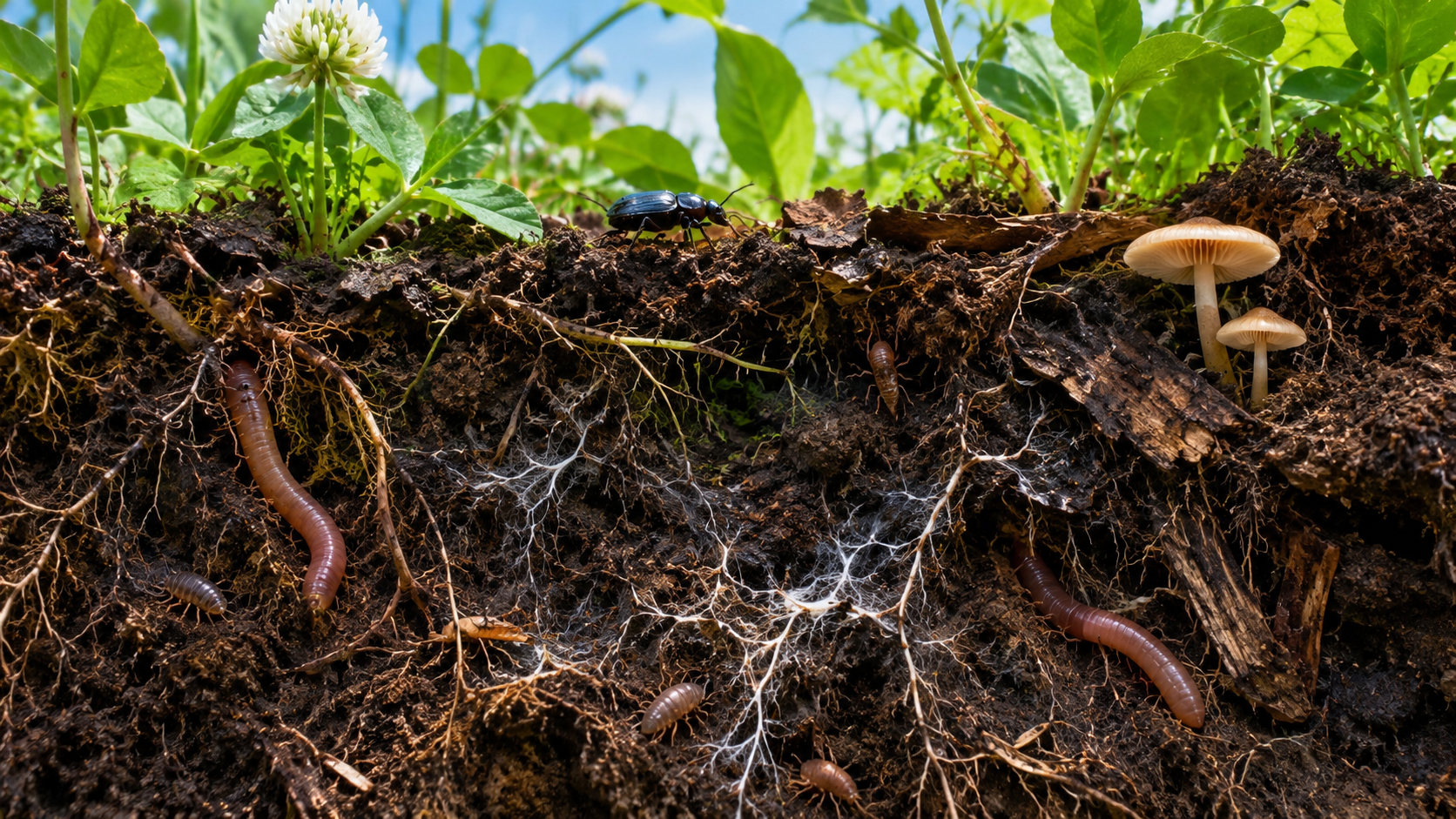
Take a handful of soil and look at it closely. You might see grains of sand, fragments of leaves, tiny roots and perhaps an earthworm. What you cannot see is the extraordinary population of organisms living within it. Millions of microscopic bacteria, networks of fungal threads, tiny nematodes and countless other creatures may occupy that small amount of earth.
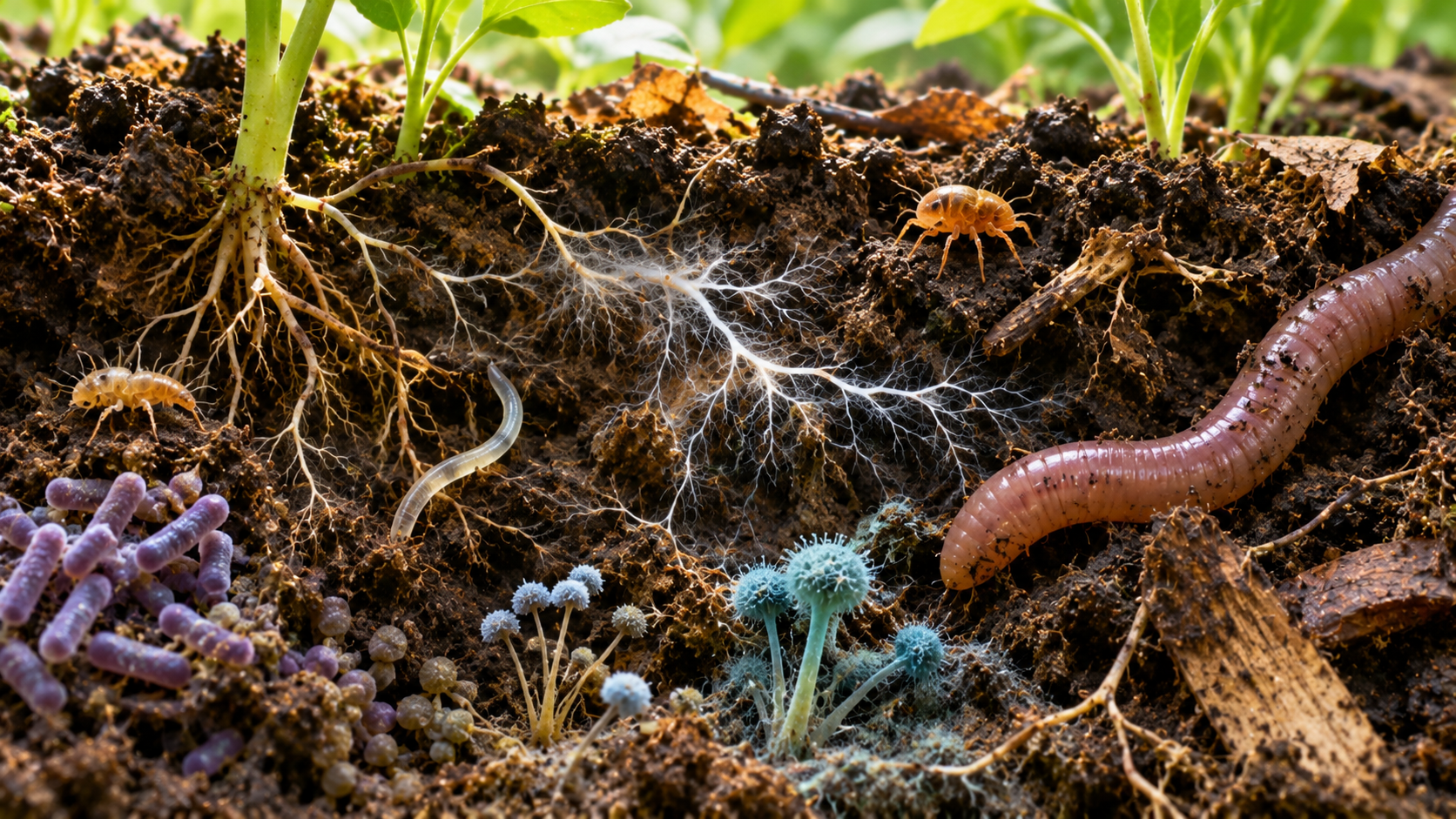
This is not an incidental collection of organisms sharing the same space. They form an interconnected biological community, with different species performing different tasks and influencing one another. Their combined activity helps determine how soil functions, how plants obtain nutrients and how ecosystems maintain their productivity.
The scale of this hidden biodiversity is remarkable. The Food and Agriculture Organization of the United Nations (FAO) reports that a single gram of soil may contain millions of individual organisms and several thousand species of bacteria. Its illustrative description of healthy soil also identifies hundreds of species of fungi, tens of species of nematodes and numerous species of mites and insects. These figures vary considerably between soils and environments, but they demonstrate the complexity of life beneath the surface.
Soil biodiversity includes organisms of very different sizes, from microscopic bacteria to earthworms and larger burrowing animals. Scientists often describe these communities in terms of their size, but their ecological roles are just as important.
Some organisms break down dead material. Others feed on bacteria, fungi or other soil creatures. Some interact directly with plant roots, while others alter the physical structure of the ground as they move through it.
These relationships form what is known as the soil food web. Energy and nutrients pass between organisms as they consume organic matter and one another. The process is not a straightforward chain - it is a complex network in which one organism can influence several others.
The FAO's State of Knowledge of Soil Biodiversity describes this underground community as fundamental to the cycling of energy and nutrients, plant growth and soil productivity.
Bacteria: the microscopic workforce
Bacteria are among the most numerous organisms in soil. Although individual cells are invisible to the naked eye, their collective influence is enormous. Different bacterial species use different food sources and perform different functions. Many break down readily decomposable organic materials, including plant residues and substances released by roots. As they process these materials, nutrients are transformed into forms that can become available to plants.
Some bacteria are involved in nitrogen cycling. Certain species, including those associated with the roots of legumes, can convert atmospheric nitrogen into compounds that plants can use. Others participate in processes that transform nitrogen within the soil.
Bacteria also interact with plant roots and other microorganisms. Some contribute to plant protection by competing with harmful organisms or producing substances that influence microbial communities.
Their importance is not measured by their size, but by the sheer number of biological processes in which they participate. The AHDB identifies decomposition, nutrient cycling, soil structure, water infiltration and plant health among the functions influenced by soil biology.
Fungi occupy a different but equally important position in the soil community. Many grow as networks of microscopic threads called hyphae, which collectively form a structure known as mycelium.
These threads spread through the soil and through decaying organic material. Fungi are particularly effective at breaking down some complex substances in plant residues, helping release nutrients that can be reused within the ecosystem.
Some fungi also form partnerships with living plants. Known as mycorrhizal associations, these relationships connect fungal networks with plant roots. The fungus can help the plant access nutrients and water beyond the immediate area of its roots, while the plant supplies the fungus with carbon compounds produced through photosynthesis.
This is a relationship built on exchange rather than competition. It illustrates how organisms that are rarely seen can have a direct influence on the growth and development of plants above ground. Fungal threads can also help bind soil particles together, contributing to the formation and stability of soil aggregates. These structures influence the movement of air and water through the ground.
Nematodes: small creatures with a significant role
Nematodes are microscopic, often transparent worms found in water films around soil particles. They are among the most numerous animals in many soil environments, although their populations and species composition vary.
Their feeding habits make them important participants in the soil food web. Some feed on bacteria, others consume fungi, while different groups feed on plant roots or prey on other small organisms.
Those that graze on bacteria and fungi help regulate microbial populations. As they digest their food and release waste products, nutrients can be returned to the soil in forms that plants may access.
Not all nematodes are beneficial to plants. Some are plant parasites that feed on roots and can damage crops. Others are predators or bacterial and fungal feeders. Understanding this diversity matters: nematodes cannot all be treated as a single group with the same effect on soil health.
Their presence is a reminder that a healthy soil community depends on relationships between different feeding groups, rather than the abundance of one particular organism.
There are also mites, tiny arthropods that occupy an important position between microorganisms and larger soil animals. Some are barely visible without magnification, yet they can be abundant in leaf litter and the upper layers of soil. Different species have different diets. Some feed on fungi, others consume decomposing plant material, while predatory mites hunt smaller soil organisms.
By grazing on fungi and other microorganisms, mites help influence the balance of the soil food web. Those feeding on organic debris also contribute to the fragmentation of plant residues, making material more accessible to microbial decomposers.
Predatory species provide another level of population control, feeding on other small creatures. This diversity of feeding behaviour is one reason why soil biodiversity matters: different organisms perform different functions and their interactions help regulate the wider community.
Earthworms: engineers of the underground
Unlike bacteria, fungi, nematodes and mites, earthworms are readily visible. Their contribution to soil function is also more physically obvious. As earthworms move through the ground, they create burrows that can provide pathways for air and water. Their feeding activity involves consuming soil and organic material, mixing these components and producing casts that contain processed organic matter and mineral particles.
This activity can influence soil structure, drainage, aeration and nutrient distribution. Earthworms also help break down and incorporate surface residues, making organic material more accessible to microorganisms.
The USDA Natural Resources Conservation Service describes earthworms and other larger soil organisms as important contributors to the mixing of organic residues and soil. Their activities form part of a wider biological process involving organisms of very different sizes.
It is tempting to measure soil biology by counting individual organisms, but numbers alone do not tell the whole story. A soil containing large populations of one group may still lack other organisms needed to perform different functions. The balance between decomposers, grazers, predators, root-associated organisms and larger soil animals is important.
Consider what happens when a leaf falls to the ground. Larger organisms may fragment it. Fungi and bacteria then break down its remaining components. Other organisms feed on those microorganisms, while nutrients released through their activity become available for further use. Earthworms and other invertebrates can help mix the material into the soil. No single species is responsible for the entire process. It is the combined activity of the community that makes it work.
This diversity also means that soil organisms influence several functions simultaneously, including nutrient cycling, organic matter decomposition, soil structure, water movement and plant health. The FAO identifies these as key contributions of soil biodiversity to ecosystem functioning.
Protecting a world we cannot see
The complexity of soil life presents a challenge. Many of its most important inhabitants are invisible without specialist equipment, and their relationships cannot be understood by looking at the soil surface alone.
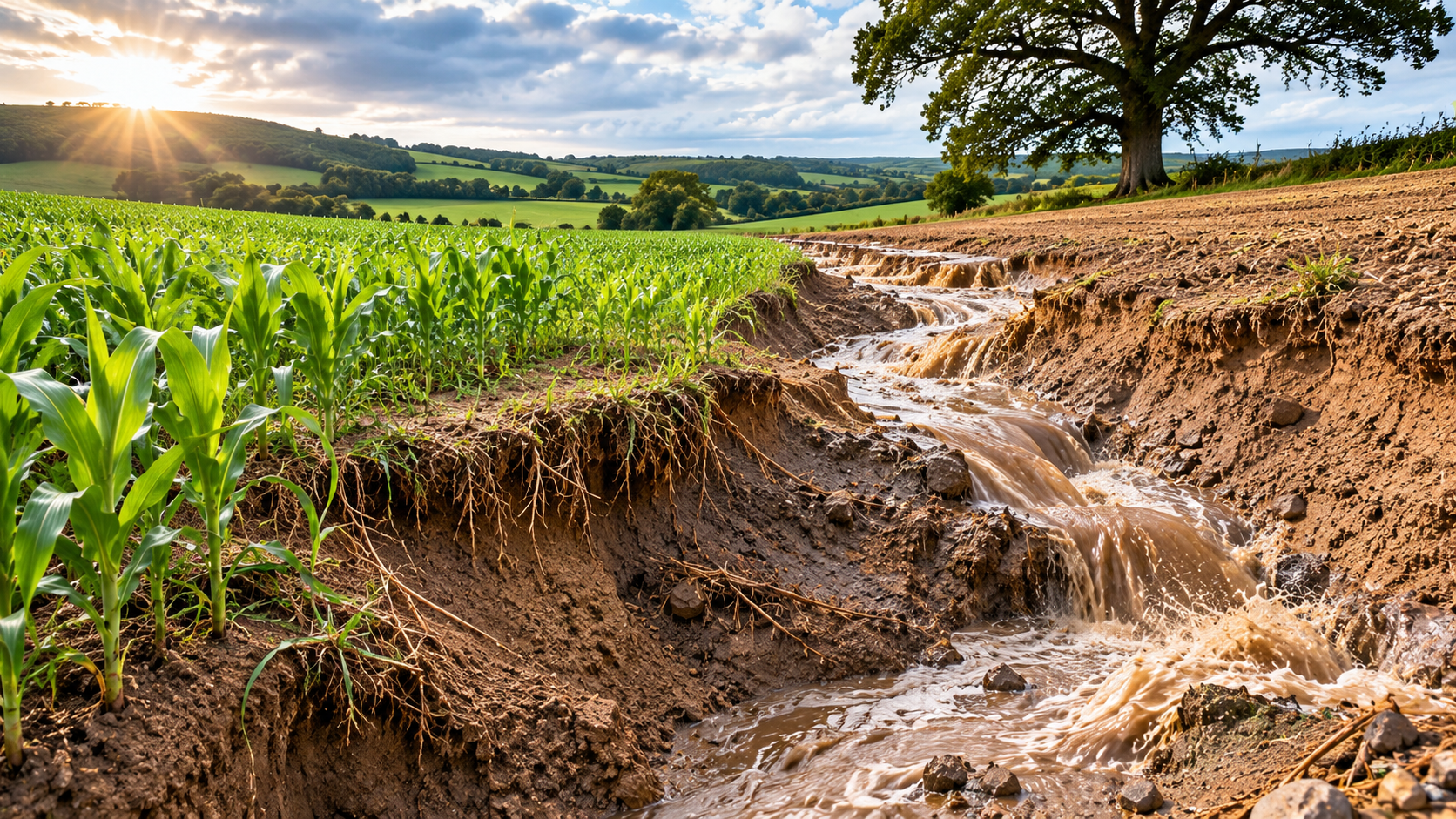
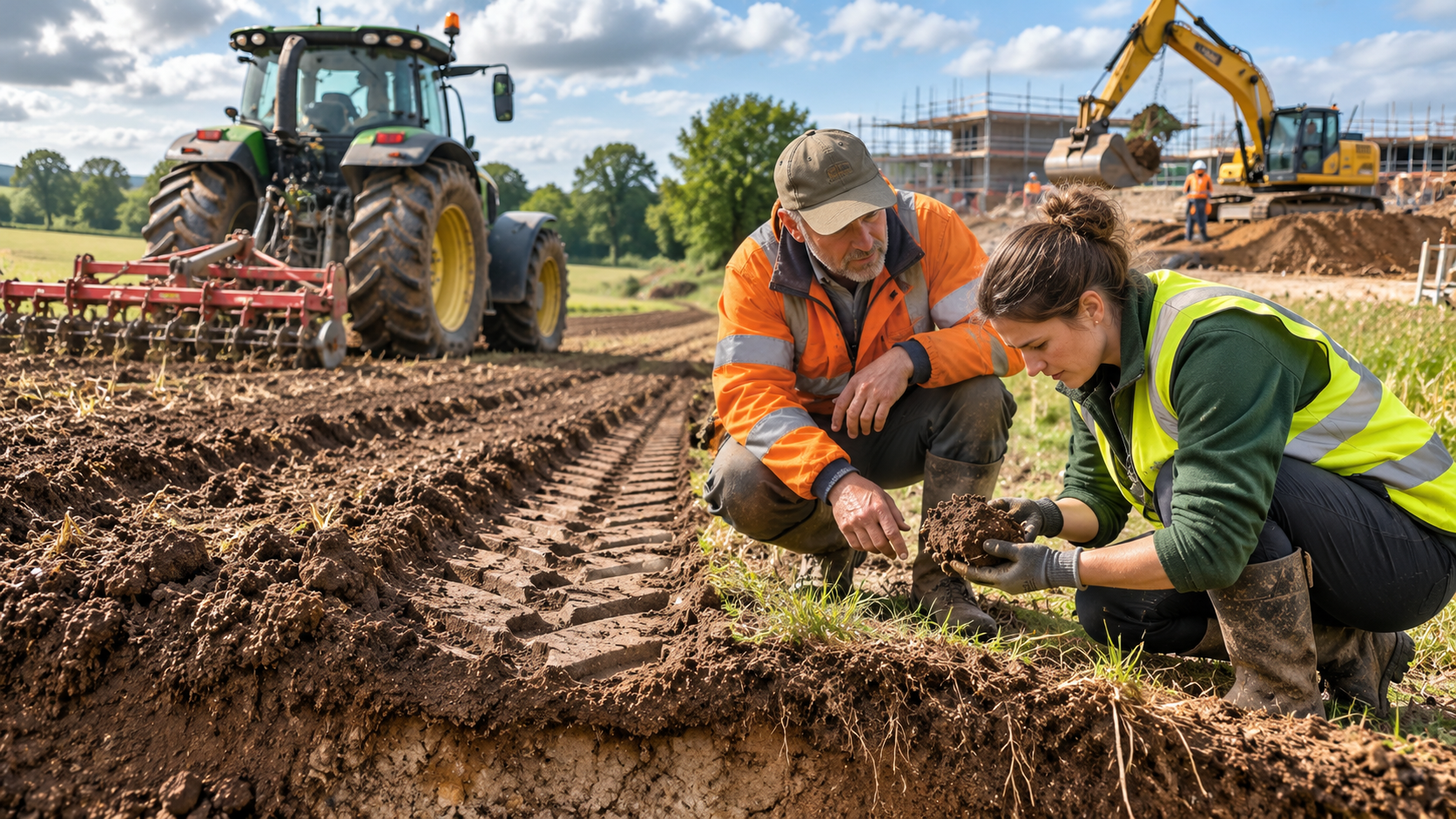
Yet land management decisions can influence the conditions in which these organisms live. Compaction, erosion, contamination, loss of organic material and intensive disturbance can all affect soil habitats and biological communities.
Protecting soil biodiversity therefore requires more than looking after earthworms or adding organic matter. It means recognising the soil as a functioning ecosystem, maintaining suitable habitats and understanding how different organisms contribute to its health.
The next time you pick up a handful of earth, consider what it contains. Beneath its familiar appearance is a world of microscopic activity, complex relationships and constant exchange. It is a universe we rarely see, but one on which the world above it depends.
Frequently Asked Questions: The Hidden Universe in Soil
1. How do scientists study organisms that live beneath the soil surface?
Scientists use a combination of soil sampling, microscopy, DNA analysis and laboratory techniques to investigate soil life. DNA sequencing can help identify organisms that are difficult to distinguish visually, while microscopes allow researchers to examine their physical characteristics. These methods reveal communities that would otherwise remain largely hidden.
2. What is the soil food web and how does it work?
The soil food web describes the network of feeding relationships between organisms living in soil. Bacteria and fungi break down organic materials, while nematodes, mites and other creatures feed on microorganisms or each other. Energy and nutrients move through these interconnected relationships, influencing how the soil functions.
3. Do soil organisms compete with one another?
Yes. Soil organisms compete for food, space and other resources. Bacteria and fungi may compete for organic material, while different species of nematodes and mites compete for prey or feeding sites. Predation, competition and cooperation all help shape the composition and activity of soil communities.
4. What are mycorrhizal fungi and why are they important?
Mycorrhizal fungi form associations with the roots of many plants. Their fine fungal threads extend into the surrounding soil, helping plants access nutrients and water beyond the immediate reach of their roots. In return, plants supply the fungi with carbon compounds produced through photosynthesis. This partnership is an important example of cooperation between organisms in soil.
5. Are all nematodes harmful to plants?
No. Although some nematodes are plant parasites that feed on roots and damage crops, many others perform different roles. Some feed on bacteria, others consume fungi, while predatory nematodes feed on other small organisms. These different feeding groups contribute to nutrient cycling and the regulation of soil food webs.
6. Why are soil mites important if they are so small?
Soil mites occupy several positions in the underground food web. Depending on the species, they may feed on fungi, decaying organic material or smaller organisms. Some are predators. Their feeding activity helps regulate microbial populations and contributes to the breakdown and recycling of organic material.
7. How do microorganisms help release nutrients from dead plants?
Bacteria and fungi produce enzymes that break down organic materials into smaller compounds. As they digest dead leaves, roots and other residues, nutrients are released through decomposition and microbial activity. These nutrients can then be transformed and recycled within the soil ecosystem, making some available for plant uptake.
8. Can soil organisms survive without plant roots?
Many soil organisms can survive without living plant roots, feeding instead on decomposing organic matter, other microorganisms or soil organisms. However, living roots are an important source of energy for many soil communities because they release carbon-rich substances into the surrounding soil. The availability of plant material and root-derived carbon therefore influences which organisms can thrive.
9. What happens to soil biodiversity when land is disturbed?
The effects depend on the type, intensity and frequency of disturbance. Activities such as intensive cultivation, compaction, removal of vegetation and contamination can alter soil habitats, disrupt fungal networks and change the availability of food and shelter. Some organisms may decline, while others better adapted to the changed conditions may become more prevalent.
10. Why is it important to protect the relationships between soil organisms?
Soil functions depend on interactions between many different organisms, rather than the activity of individual species in isolation. Decomposers, grazers, predators and root-associated organisms all contribute to the movement of energy and nutrients. Protecting the diversity and relationships within these communities helps maintain the biological processes on which productive soils and healthy ecosystems depend.