Soil Compaction and the Hidden Damage Beneath Our Feet
Soil compaction is one of the less visible forms of land degradation. Unlike erosion, which can leave obvious channels and exposed roots, compaction can develop without dramatic signs on the surface. Its consequences, however, can be substantial. It affects how water drains, how air moves through the ground and whether plant roots can penetrate the soil.
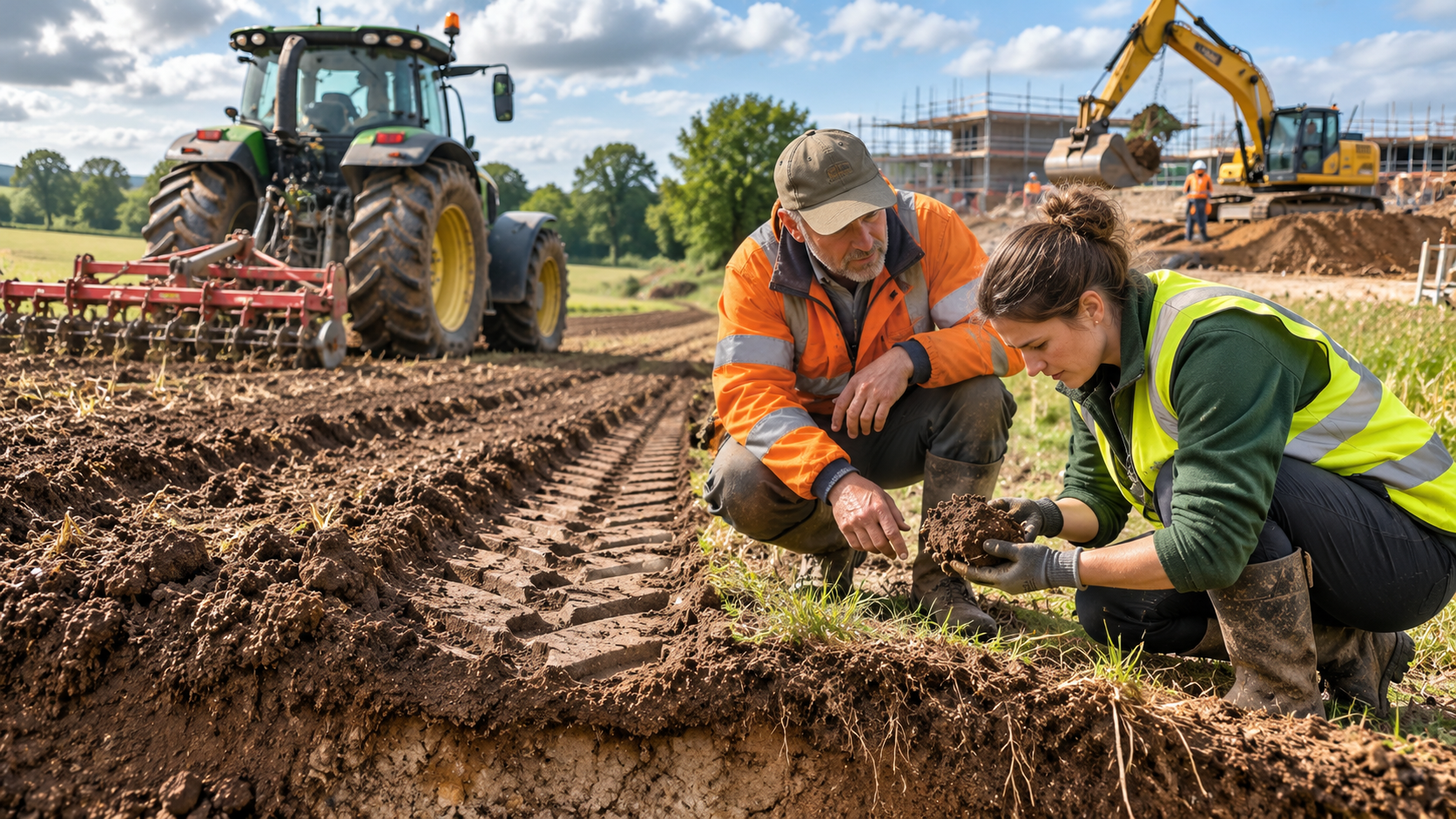
The problem is relevant to agriculture, forestry, landscaping and construction. Wherever machinery, vehicles, animals or people place repeated pressure on vulnerable ground, soil structure can be damaged.
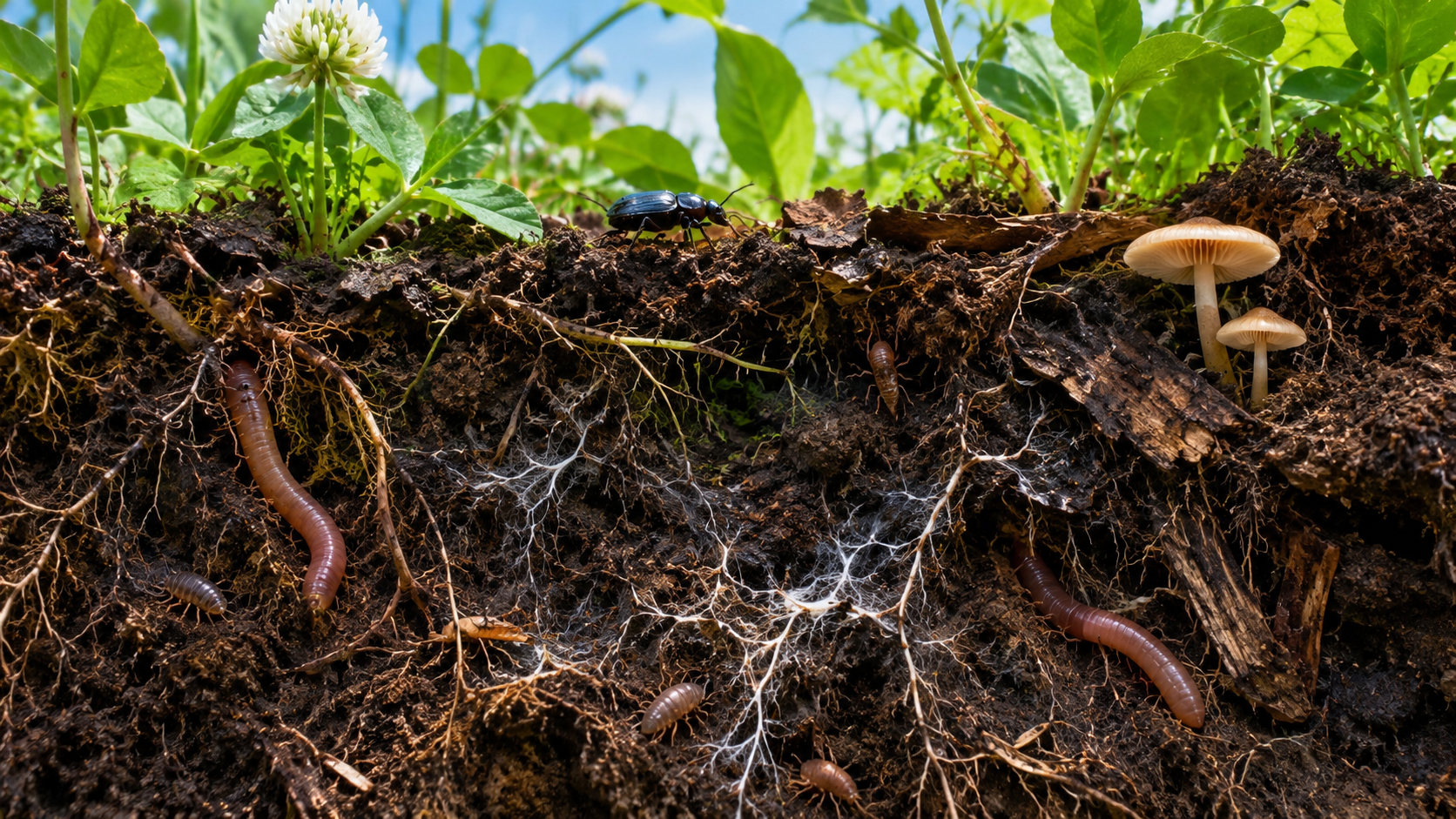
Healthy soil contains a network of spaces, known as pores, between its mineral particles and organic matter. These spaces are essential. Larger pores allow water to drain and air to circulate, while smaller pores help retain water that plants can access.
Compaction occurs when pressure pushes soil particles closer together, reducing the volume and continuity of these spaces. The result is denser soil with fewer effective pathways for water, air and roots.
The USDA Natural Resources Conservation Service (NRCS) explains that compaction reduces pore space, restricts water infiltration and limits root penetration. It can also slow the exchange of gases within the soil, creating conditions that make it harder for roots to obtain the oxygen they need.
The damage can occur close to the surface or deeper in the soil profile. Surface compaction is often associated with vehicle and livestock traffic. Subsoil compaction can result from heavy machinery transmitting pressure into deeper layers, creating dense zones that are difficult to correct.
The main causes of soil compaction
Heavy machinery and agricultural vehicles
Modern agricultural equipment allows farmers to work larger areas more efficiently, but the weight of machinery can place considerable pressure on the ground. Tractors, combine harvesters, trailers and cultivation equipment can all contribute to compaction, particularly when operations take place on wet soil.
The risk is influenced by vehicle weight, axle load, tyre pressure, the area of contact with the ground and the strength of the soil. Repeated traffic along the same routes can make the problem worse, creating compacted wheelings and headlands.
Livestock and repeated trampling
Animals can also compact soil. Cattle and sheep exert pressure through their hooves, and repeated movement over the same areas can damage the surface structure.
The problem is particularly acute when livestock graze wet or saturated ground. Soil is less able to withstand pressure when water content is high, making it more vulnerable to deformation. Gateways, feeding areas, drinking points and heavily used tracks can become localised areas of compaction.
The Scottish Government's guidance on preventing environmental pollution from agricultural activity identifies machinery damage and high stocking densities as causes of over-compaction. It highlights the resulting restrictions on root growth and drainage, as well as increased runoff and erosion.
Construction activity
Construction sites also present a particular challenge because soil is frequently exposed to heavy machinery, delivery vehicles, temporary access roads, storage areas and repeated site traffic.
Excavators, dump trucks, cranes and tracked plant can exert substantial loads. Compaction can occur during site preparation, excavation, material storage and landscaping. Even after buildings and hard surfaces are completed, areas intended for planting may have been driven over or used for storage during construction.
Forest Research identifies construction activity around street trees, vehicle access and the removal and reinstatement of soil materials as sources of compaction in urban and regeneration sites. The resulting loss of pore space can restrict root development and affect water conditions, contributing to waterlogging during wet periods and drought stress during dry weather.
Why wet soil is particularly vulnerable
One of the most important factors in preventing compaction is understanding soil moisture. When soil is wet, its structure is less able to resist the pressure applied by machinery, livestock or vehicles. Particles and aggregates can be pushed closer together, and the spaces that allow water and air to move can collapse.
This explains why driving across a field after heavy rainfall can cause damage that lasts long after the surface has dried. The ground may appear firm enough to support machinery, but deeper layers can remain vulnerable.
AHDB advises avoiding field traffic when soil is excessively wet and recommends assessing soil conditions before machinery operations. Its guidance also highlights the importance of reducing axle loads, managing tyre pressures and using established traffic routes.
What happens when soil becomes compacted?
The effects extend well beyond making the ground harder.
Roots struggle to grow. Dense soil presents greater physical resistance to root penetration. Roots may become flattened, shortened or forced to grow horizontally above a compacted layer. This limits their access to water and nutrients deeper in the soil.
Drainage becomes less effective. The loss of larger pores reduces the pathways through which water can move. Rainfall may collect on the surface, create ponding or run off rather than infiltrating the ground.
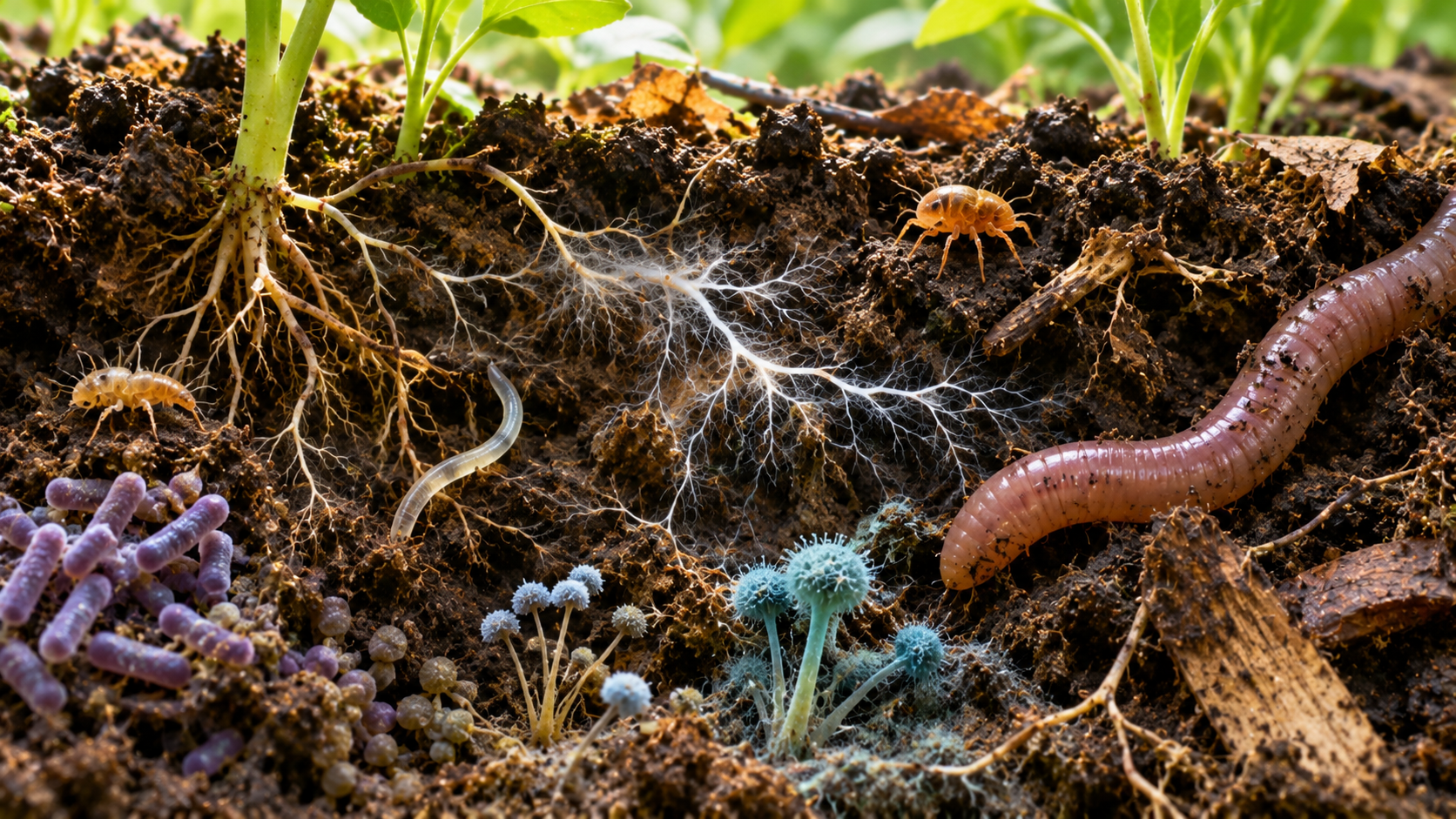
Air movement is restricted. Roots and soil organisms depend on suitable conditions for gas exchange. Reduced pore space can limit oxygen availability, particularly in wet soils, affecting root development and biological activity.
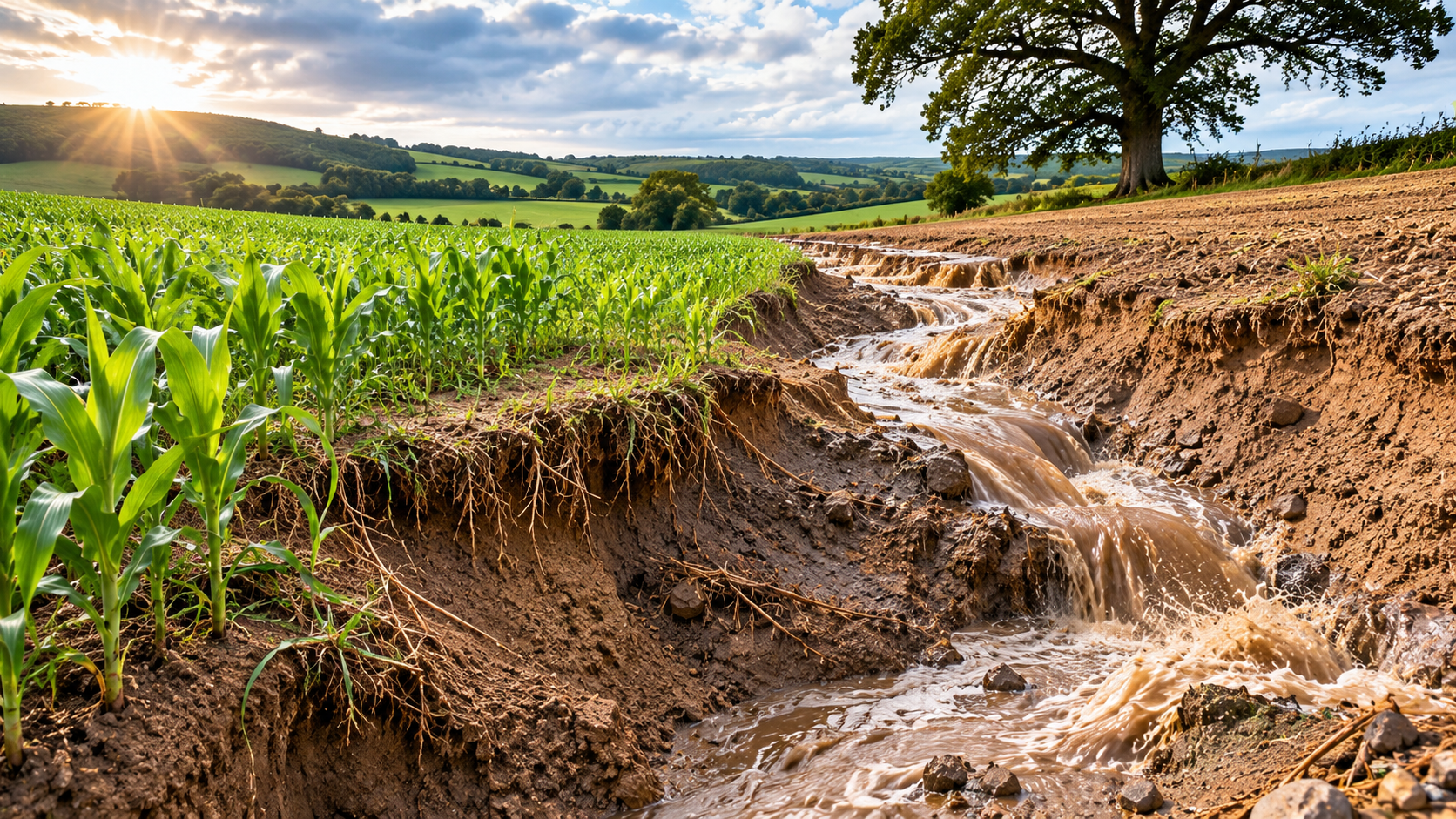
Flooding and erosion risks can increase. When water cannot infiltrate effectively, more may travel across the surface. This can increase runoff, carry sediment into drains and watercourses, and contribute to localised flooding.
Agricultural productivity can suffer. Restricted roots, poor drainage and reduced access to water and nutrients can affect crop establishment, growth and yield. AHDB identifies poor rooting, reduced crop quality, poor drainage and increased erosion risk among the consequences of poor soil structure.
How to recognise compacted soil
Compaction is not always obvious from the surface, so inspecting the soil profile is important. Warning signs include standing water after rainfall, uneven crop growth, shallow or distorted roots and areas where plants struggle despite apparently suitable growing conditions. A spade inspection can reveal dense layers, large angular aggregates, horizontal root growth and a lack of visible pores.
AHDB recommends examining soil structure directly rather than relying on surface appearance alone. Its Visual Evaluation of Soil Structure (VESS) approach provides a practical way to assess the condition of soil using samples taken from the field.
On construction sites, soil inspections should take account of how the land has been used during the project. Areas beneath temporary haul roads, storage compounds and vehicle routes may require particular attention before landscaping or planting begins.
How to prevent compacted soil
Prevention is generally more effective than trying to repair damage after it has occurred. The right approach will depend on the site, soil type and intended use. For agriculture, practical measures include avoiding machinery operations when soil is wet, reducing unnecessary vehicle movements, using controlled traffic routes and selecting equipment appropriate to ground conditions. Lower tyre pressures and wider tyres can help distribute loads, while maintaining organic matter and good soil cover supports better structure.
Livestock management also matters. Avoiding grazing on saturated ground, controlling stocking pressure and managing gateways and feeding areas can reduce repeated damage.
For construction, soil protection needs to be considered before work begins. Site plans should identify areas where soil must be retained for landscaping, planting or future green space. Vehicle routes and storage areas should be planned to avoid unnecessary traffic over these areas. Where possible, protective barriers and designated access routes should prevent machinery entering retained soil zones.
Following construction, compacted areas should be assessed before planting or reinstatement. The appropriate remediation method depends on the depth and severity of the damage. Mechanical loosening may be suitable in some circumstances, while deep-rooting vegetation and improved soil management can help restore structure over time. Deep cultivation should not be undertaken without first identifying the compacted layer and checking that the soil conditions are suitable.
The USDA NRCS recommends reducing traffic, avoiding operations on wet ground, maintaining cover crops and using diverse rotations to help prevent and address compaction.
Treat soil structure as an asset
Soil compaction is not just an agricultural inconvenience or a problem for the landscaping contractor at the end of a construction project. It is a physical change that can affect the long-term performance of the land.
For farmers, healthy soil structure supports productive crops and more reliable water management. For developers and contractors, protecting soil helps ensure that retained landscapes, planted areas and green infrastructure have the conditions they need to establish and thrive.
The challenge is to recognise that soil is not an inert surface capable of absorbing unlimited pressure. It is a carefully structured natural resource, and once that structure is damaged, recovery can be difficult and time-consuming. Protecting it begins with a straightforward principle: understand the ground before putting it under pressure.
Frequently Asked Questions About Soil Compaction
1. At what depth can soil compaction become a problem?
Soil compaction can occur at different depths, depending on the pressure applied, soil type and ground conditions. Surface compaction is often associated with livestock and repeated vehicle movements, while heavy machinery can create compacted layers deeper in the soil profile. Subsoil compaction can be particularly difficult to address because it is less accessible to cultivation.
2. What is a plough pan and how does it affect soil?
A plough pan is a compacted layer that can develop beneath the normal depth of cultivation through repeated ploughing at the same depth. It can restrict root penetration and slow the movement of water through the soil. This may contribute to waterlogging above the compacted layer and limit crops' access to deeper moisture.
3. Can compacted soil cause plants to become more vulnerable to drought?
Yes. Compacted soil can restrict root growth, preventing plants from exploring a sufficiently large volume of soil for water. It can also reduce infiltration and alter water distribution. Even where moisture is present below the surface, restricted roots may struggle to access it, increasing the risk of drought stress.
4. Why does soil compaction make drainage systems less effective?
Compaction reduces the spaces between soil particles, particularly the larger pores that allow water to move through the ground. This can slow infiltration and increase surface runoff. Even where drainage pipes are installed, compacted soil surrounding them may limit the movement of water towards the drainage system.
5. Can repeated pedestrian traffic compact soil?
Yes. Although the pressure from an individual person is much lower than that from heavy machinery, repeated foot traffic can gradually compact soil, particularly when it is wet. This is common on heavily used footpaths, public open spaces, parks and areas around building entrances. The effects can include worn vegetation, reduced infiltration and surface puddling.
6. How does soil compaction affect newly planted trees?
Compacted soil can make it difficult for young tree roots to spread beyond the original planting area. Restricted root development can limit access to water and nutrients, reduce establishment and increase vulnerability during dry weather. In urban environments, adequate soil volume and suitable soil structure are important considerations when designing planting schemes.
7. Is compacted soil always harder to identify when it is dry?
Not necessarily. Dry compacted soil may appear hard and difficult to penetrate, but wet conditions can reveal different symptoms, including standing water, poor drainage and surface runoff. Visual inspection alone can be misleading. Examining the soil profile and assessing its structure provides a more reliable indication of compaction.
8. Can adding compost reverse soil compaction?
Compost can improve soil organic matter, aggregation and biological activity, helping support better soil structure over time. However, it will not automatically remove a dense compacted layer, particularly deep within the soil profile. The underlying cause and depth of compaction need to be identified before choosing an appropriate treatment.
9. Why should developers protect soil intended for landscaping during construction?
Soil intended for planting needs sufficient pore space, suitable drainage and the ability to support root development. Construction traffic, material storage and repeated machinery movements can compromise these characteristics. Protecting designated landscaping areas throughout a project can reduce the need for expensive remedial work and improve the prospects of successful planting.
10. How long does it take for compacted soil to recover?
Recovery depends on the severity and depth of compaction, soil type, climate and management. Surface damage may improve through vegetation growth, biological activity and suitable soil management, while severe subsoil compaction can persist for many years without intervention. There is no universal recovery timescale, which makes preventing compaction particularly important.