Soil Erosion and the Disappearing Foundation of Our Food Supply
Soil erosion is one of the most serious threats to the land on which we depend. Every time rain washes fertile earth from a field or wind carries fine particles into the atmosphere, a valuable natural resource is being displaced. The damage can be difficult to recognise at first. A field may still appear productive, crops may continue to grow and the landscape may look much as it always has. Beneath the surface, however, the foundations of that productivity can be disappearing.
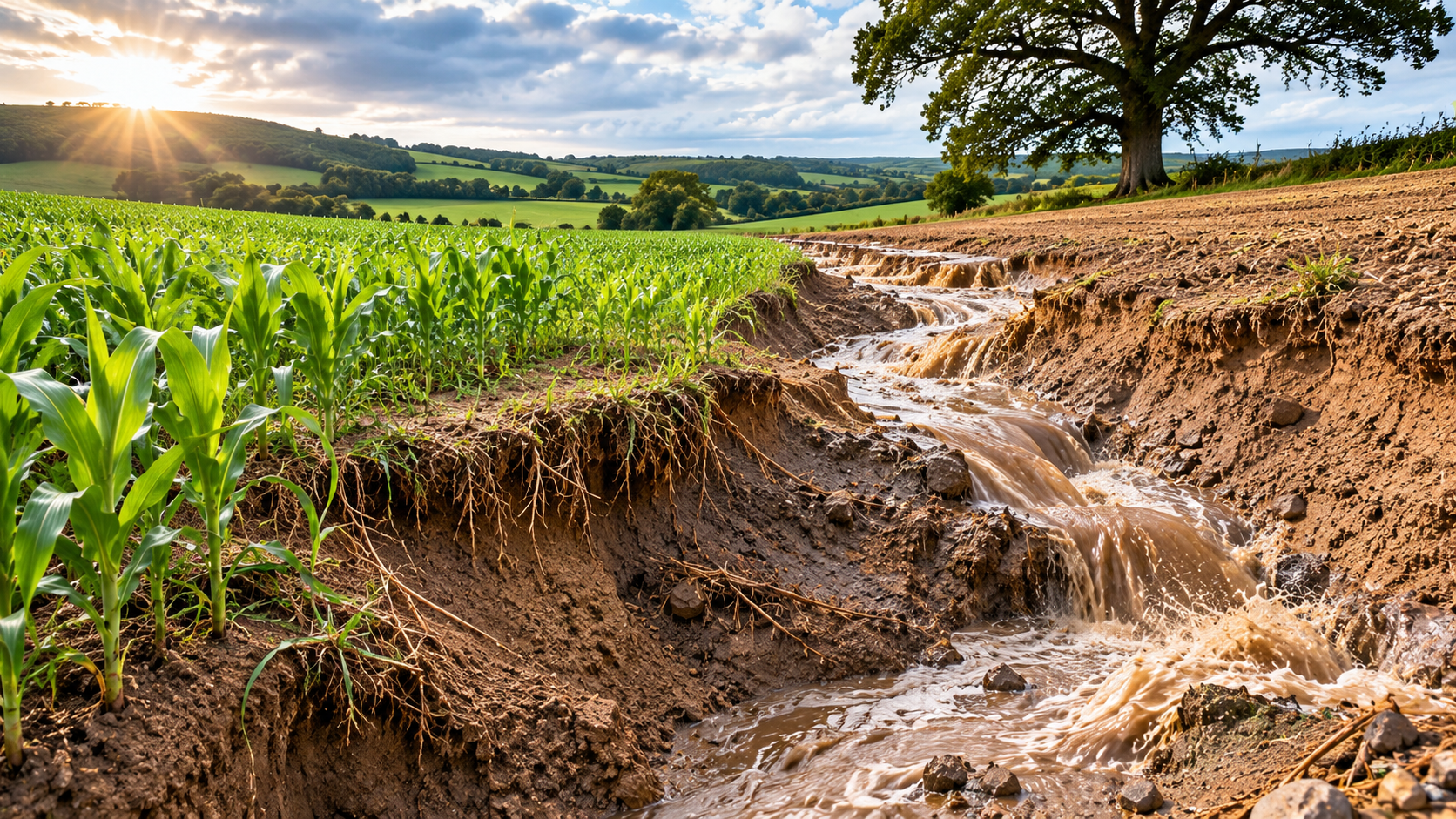
Soil is not an unlimited resource that can be replaced at the speed at which we consume it. The Food and Agriculture Organization of the United Nations (FAO) estimates that producing just 2–3 centimetres of soil can take up to 1,000 years. Erosion can remove significant quantities in a fraction of that time. Protecting soil therefore means looking beyond the next harvest and considering the long-term condition of the land.
Soil erosion is the removal and movement of soil particles by natural forces, principally water and wind. It is a natural process that has helped shape landscapes over geological time. The problem arises when human activity accelerates the process beyond the soil's capacity to recover.
The FAO identifies intensive agriculture, deforestation, overgrazing and inappropriate land-use changes among the activities that can increase erosion dramatically. It estimates that human activities can accelerate natural erosion rates by up to 1,000 times.
Water erosion often begins with the impact of raindrops on exposed ground. The force can dislodge soil particles, which are then carried away by water flowing across the surface. On sloping land, this can develop into small channels known as rills. If the process continues, larger gullies can form, removing substantial quantities of soil and making cultivation more difficult.
Wind erosion is particularly damaging where land is dry, exposed and lacks protective vegetation. Strong winds lift and transport fine soil particles, including clay, silt and organic matter. These are important components of fertile topsoil. Wind-blown dust can travel considerable distances, while heavier particles may be deposited elsewhere.
The United States Department of Agriculture's Natural Resources Conservation Service (USDA NRCS) explains that wind erosion can reduce soil productivity by removing clay and organic matter, damaging soil structure and affecting biological activity. It can also damage young crops through the abrasive impact of moving particles.
Why losing topsoil matters so much
Not all soil layers have the same characteristics or value for agriculture. Topsoil is the upper layer, generally containing a greater concentration of organic matter, nutrients and biological activity than the material beneath it.
It provides the growing environment for most crop roots and plays an important role in storing water and supplying nutrients. Its structure influences how readily rainfall enters the ground, how much water is retained and how easily roots can develop.
When erosion removes topsoil, it takes away more than a layer of earth. It can remove organic matter, nutrients and the physical structure that supports productive agriculture. The underlying subsoil may be less fertile, more compact or less suitable for root growth.
Replacing lost nutrients with fertiliser does not restore all these functions. Fertiliser can supply particular nutrients, but it cannot recreate the depth, structure, organic matter and biological complexity of the topsoil that has been removed.
The European Commission's Joint Research Centre highlights that even where soils are relatively deep, the loss of topsoil can be difficult to see while still causing significant damage to productivity. It also notes that, because soil forms so slowly, losses exceeding one tonne per hectare per year can be considered irreversible over a period of 50–100 years.
The most immediate impact of erosion is often felt by farmers. Reduced soil depth, declining organic matter and the loss of nutrients can affect crop establishment, root development and yields. Land may require additional inputs and management to maintain production, increasing costs and placing further pressure on farm businesses.
The consequences are not confined to food production. Soil carried away by water can enter streams, rivers, lakes and reservoirs. Sediment can cloud water, carry nutrients and agricultural chemicals, and damage aquatic habitats. Excessive sedimentation can also affect drainage channels and reservoirs.
The movement of soil can influence flooding and water availability. When soil structure deteriorates and water infiltration is reduced, more rainfall may travel across the surface as runoff. This can increase the speed and volume of water reaching streams and rivers, particularly during intense rainfall.
The FAO identifies reduced agricultural productivity, biodiversity loss, degraded ecosystem functions and increased risks associated with floods and landslides among the consequences of erosion. It also highlights the implications for global food security.
Why exposed soil is vulnerable
One of the most effective ways to reduce erosion is to avoid leaving soil exposed for extended periods. Vegetation provides a natural protective layer. Leaves and stems intercept rainfall, while roots help bind soil particles together. Plant cover also reduces the direct force of wind at ground level.
When vegetation is removed through deforestation, intensive cultivation or poorly managed grazing, this protection is weakened. Bare ground becomes more vulnerable to raindrop impact, surface runoff and wind.
The USDA NRCS identifies maintaining year-round soil cover, reducing unnecessary disturbance and increasing biodiversity as important elements of soil health management. Practices such as cover cropping and no-tillage can help protect the surface and reduce the movement of soil.
Practical ways to prevent soil erosion
There is no single solution suitable for every landscape. Effective erosion prevention depends on soil type, climate, slope, vegetation and how the land is used. However, several established approaches can make a substantial difference.
Keep the ground covered. Cover crops, grass, crop residues and suitable mulches protect exposed soil from rainfall and wind. Maintaining vegetation between growing seasons can be particularly valuable.
Reduce unnecessary cultivation. Repeated and intensive tillage can disturb soil structure and leave the surface vulnerable. Reduced-tillage and no-tillage systems can help retain protective crop residues and limit disturbance, although their suitability depends on the farming system and local conditions.
Manage water movement. Contour cultivation, grass strips, terraces and appropriately designed drainage measures can slow runoff and reduce the force with which water moves across slopes. Field margins and vegetated waterways can also help intercept sediment.
Protect trees and hedgerows. Trees, shrubs and hedgerows can provide shelter from wind, stabilise soil through their root systems and help manage water movement. Their value extends beyond erosion control, supporting habitats and landscape connectivity.
Manage grazing carefully. Excessive livestock pressure can remove vegetation and expose soil. Rotational grazing, appropriate stocking levels and allowing vegetation to recover can help maintain protective ground cover.
Build and maintain organic matter. Returning suitable organic materials to the soil can help improve aggregation, structure and water retention. These characteristics can make land less vulnerable to erosion.
Protecting soil is protecting our future
Soil erosion is not always dramatic. It does not always leave behind deep gullies or clouds of dust. In many cases, it happens gradually, removing small amounts of valuable material until the productive capacity of the land is seriously affected.
That makes prevention particularly important. Once fertile topsoil has been carried away, restoring the original condition of the land can take decades or centuries. The challenge is to manage soil as a resource that must be protected, rather than a surface that can be repeatedly disturbed without consequence.
Farmers, landowners, planners, developers and policymakers all have a role to play. Better land management, responsible construction, protection of vegetation and investment in soil conservation can help reduce avoidable losses.
The ground beneath our feet supports food production, ecosystems, water systems and communities. Every effort to keep it in place is an investment in the future. Soil erosion may begin with a raindrop or a gust of wind, but preventing it requires a much wider change in how we value and manage the land.
Frequently Asked Questions About Soil Erosion
1. How can you tell if a field is losing topsoil?
Warning signs include exposed plant roots, small channels forming across the surface, sediment collecting at the bottom of slopes, uneven crop growth and areas where the soil has become noticeably shallower. Changes in soil colour and structure can also indicate that valuable surface material is being lost.
2. Can soil erosion happen on flat land?
Yes. Although slopes can accelerate water erosion, flat land is not immune. Wind can remove fine soil particles from exposed fields, while heavy rainfall can cause surface runoff and soil movement where drainage is poor or the ground is compacted. Soil erosion is influenced by ground cover, soil type, weather and land management, not slope alone.
3. Why is sandy soil particularly vulnerable to wind erosion?
Sandy soils contain relatively large particles that can be detached and transported by strong winds, particularly when the surface is dry and vegetation is absent. However, fine particles such as silt and clay can also be carried over considerable distances. The risk depends on particle size, soil moisture, surface condition and wind speed.
4. Can soil erosion affect the quality of drinking water?
Yes. Soil washed into rivers, lakes and reservoirs can carry sediment, nutrients, pesticides and other contaminants. Increased sediment can make water treatment more difficult, while excess nutrients can contribute to eutrophication and harmful algal growth. Preventing erosion can therefore help protect water quality as well as agricultural land.
5. What is a soil erosion hotspot?
An erosion hotspot is an area particularly vulnerable to the removal of soil. It might be a steep cultivated slope, an exposed field, a riverbank, a construction site or land where vegetation has been removed. Identifying these locations allows land managers to concentrate protection measures where they are most needed.
6. How does construction contribute to soil erosion?
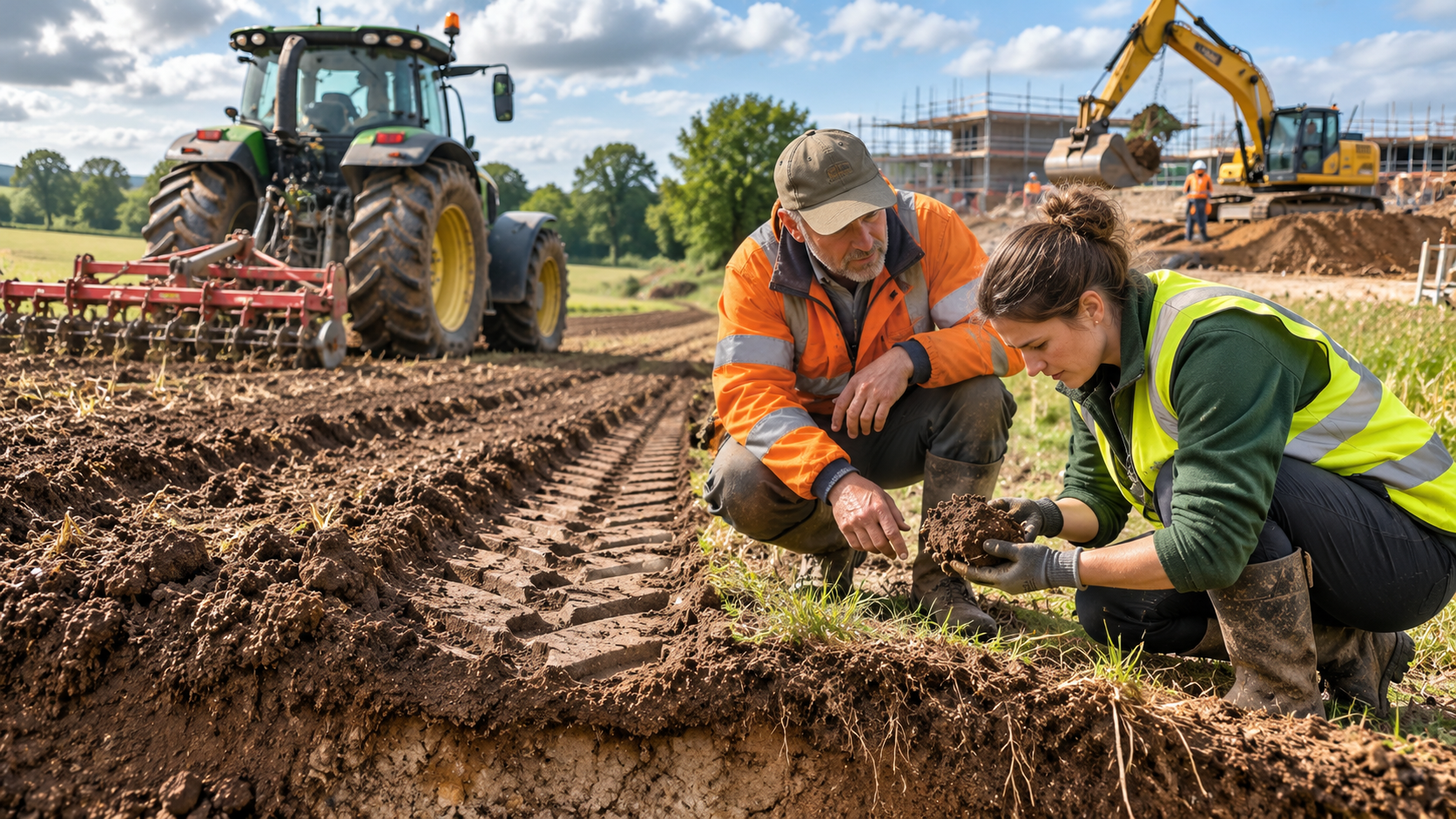
Construction can expose large areas of soil through vegetation clearance, excavation, earthmoving and changes to natural drainage. Without suitable protection, rainfall can carry sediment from construction sites into nearby watercourses and drainage systems. Erosion and sediment control measures, including temporary ground cover, sediment barriers and managed runoff, can reduce these risks.
7. Does planting trees always prevent soil erosion?
Trees can help reduce erosion through their root systems, canopy cover and ability to slow wind and intercept rainfall. However, their effectiveness depends on species, planting density, soil conditions, landscape position and management. Trees are most effective as part of a wider approach that also protects ground vegetation and manages water movement.
8. Can eroded soil be restored to agricultural use?
In some circumstances, degraded land can be improved through measures such as rebuilding organic matter, establishing vegetation, reducing compaction and managing water movement. However, replacing substantial losses of topsoil is difficult and can take a very long time. Restoration should therefore be distinguished from prevention: protecting existing topsoil is generally more effective than trying to recreate it after it has been lost.
9. What is the difference between soil erosion and soil degradation?
Soil erosion is the physical removal and movement of soil by water, wind or other forces. Soil degradation is a broader term covering the decline in soil condition and its ability to perform important functions. It can include erosion, compaction, contamination, salinisation, loss of organic matter and declining biological activity. Erosion is one of the major processes that can cause soil degradation.
10. Who is responsible for preventing soil erosion?
Responsibility is shared by farmers, landowners, developers, construction contractors, planners, businesses and governments. Land management decisions can either increase or reduce erosion risks. Effective prevention requires appropriate agricultural practices, responsible development, protection of vegetation, good drainage design and policies that recognise soil as a valuable natural resource.