Understanding the Extraordinary World Beneath Our Feet
We walk on it, build on it, grow our food in it and depend on it for life. Yet soil is far more than the ground beneath our feet. It is a living, breathing ecosystem, home to an extraordinary community of organisms whose activities help sustain the natural world. Understanding what happens beneath the surface is the first step towards protecting one of our most valuable resources.
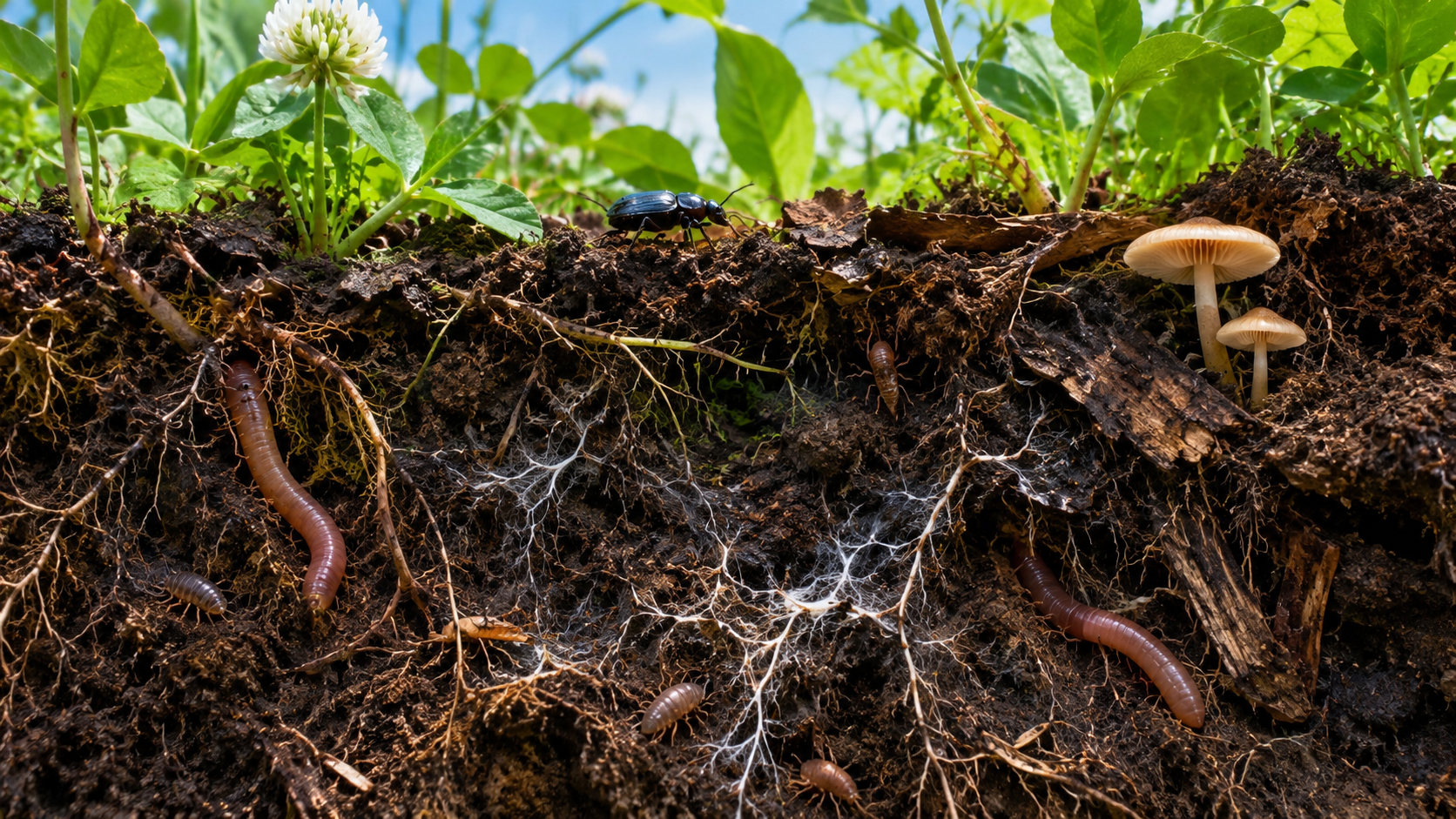
Look at a handful of soil. It might appear to be little more than a mixture of tiny stones, particles, roots and decaying leaves, but look closer and an entirely different world begins to emerge.
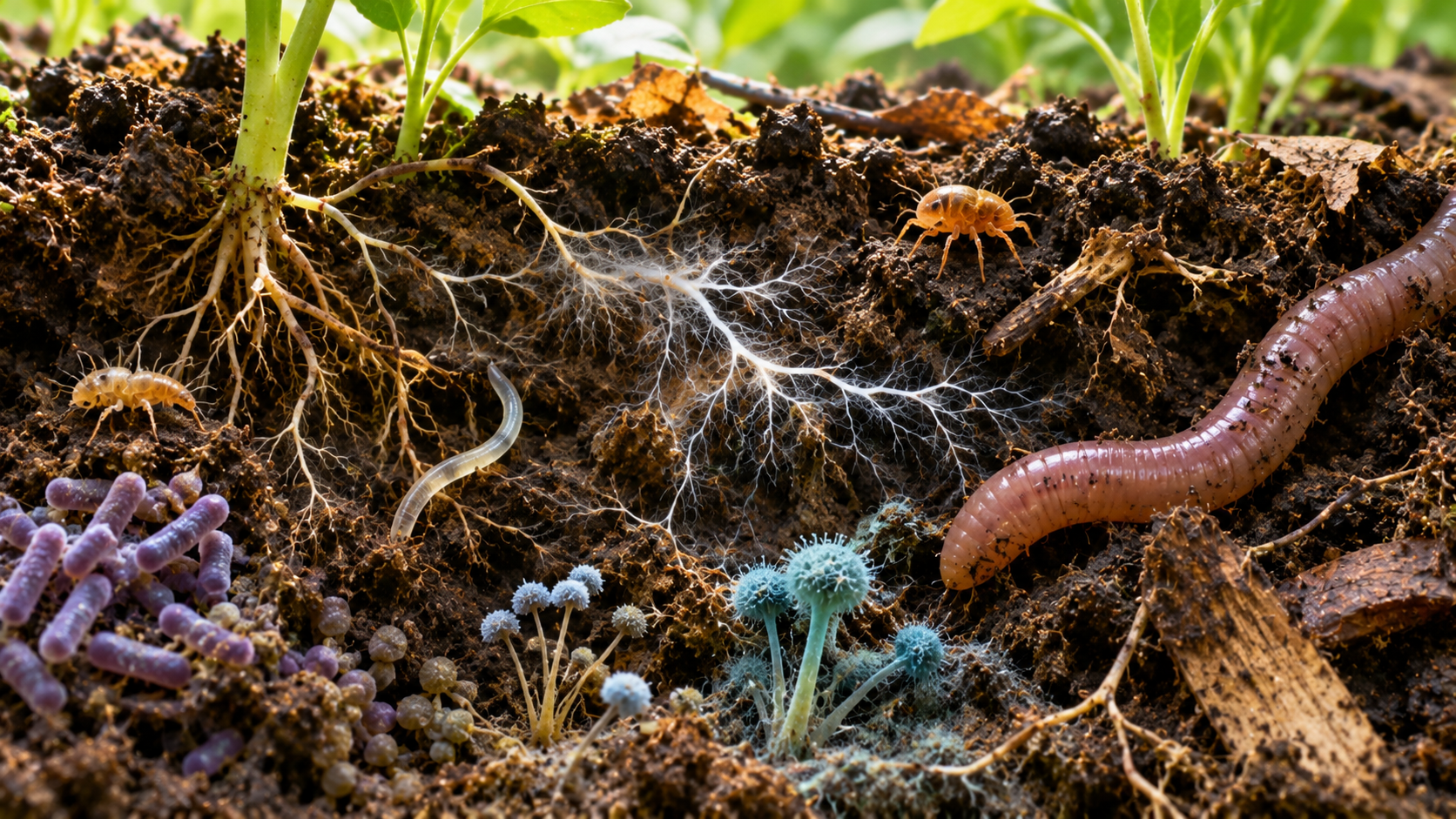
Within that handful is a complex community of living organisms, interacting with minerals, water, air and organic matter. Bacteria break down organic material. Fungi form networks through the soil. Earthworms move through its structure, while mites, insects and microscopic organisms feed, reproduce and interact with one another. Soil is not an inert material. It is a dynamic ecosystem, constantly changing and performing functions that are essential to life above ground.
The Food and Agriculture Organization of the United Nations (FAO) describes soil as one of the most diverse habitats on Earth, supporting thousands of different organisms and contributing to the global cycles that sustain life. Understanding this hidden world helps explain why soil health deserves far greater attention.
What exactly is soil made of?
Soil is a combination of mineral particles, organic matter, water, air and living organisms. The proportions vary according to soil type, location, climate and management.
A commonly used illustration of a well-structured mineral soil is approximately 45% mineral matter, 25% water, 25% air and 5% organic matter. These are indicative proportions rather than a universal formula: actual soils vary considerably.
Each component has a role. Minerals provide the physical framework of the soil. Sand, silt and clay particles influence texture, drainage, water retention and the movement of nutrients. Their proportions help determine whether a soil is sandy, silty, clay-rich or somewhere between.
Organic matter comes from decomposing plant and animal material, including roots, leaves, crop residues and organisms. As it breaks down, it contributes to nutrient cycling, improves soil structure and helps soil retain water. It also provides an important source of energy and food for soil organisms. The US Department of Agriculture's Natural Resources Conservation Service (USDA NRCS) identifies organic matter as fundamental to soil functions.
Water carries dissolved nutrients, supports biological activity and supplies plants with the moisture they need to grow. Air occupies the spaces between soil particles. These pores allow oxygen and other gases to move through the soil, supporting roots and organisms that need oxygen to survive.
The balance between these components matters. Compacted or waterlogged soil can lose the air spaces that roots and many organisms need. Soil that has lost organic matter and structure may struggle to retain water or support biological activity. Healthy soil depends on these elements working together.
The microscopic workforce keeping soil alive
Much of the activity taking place beneath our feet is invisible to the naked eye. Bacteria are among the most numerous organisms in soil. Different species perform different functions, including breaking down organic material, transforming nutrients and interacting with plant roots. Some bacteria help make nitrogen available to plants through biological nitrogen fixation, while others contribute to the decomposition of residues.
Fungi play an equally important role. Their fine thread-like structures, known as hyphae, spread through soil and help break down organic matter. Some fungi form partnerships with plant roots called mycorrhizal associations.
In these relationships, fungi can help plants access water and nutrients, particularly phosphorus, from beyond the immediate reach of their roots. In return, plants supply the fungi with carbon compounds produced through photosynthesis.
These relationships demonstrate that plants do not grow in isolation. Their health is closely connected to the biological community surrounding their roots. The FAO identifies soil organisms as essential contributors to nutrient cycling, soil organic matter dynamics, soil structure, water regulation and plant health.
Of course, not all soil life is microscopic. Some of its most important workers are visible to the human eye. Earthworms are particularly valuable because their movement through soil can create channels that help water infiltrate and roots penetrate. They consume organic material and mix it with mineral particles, contributing to the formation of soil aggregates and the recycling of nutrients.
Insects, mites, springtails, nematodes and other small organisms also have important roles. Some feed on decaying plant material, others graze on bacteria and fungi, while predators help regulate populations within the soil community. Together, these organisms form what scientists call the soil food web.
It is a network of feeding relationships in which energy and nutrients move between organisms. Dead leaves and roots become food for decomposers. Bacteria and fungi are consumed by other organisms. Those organisms, in turn, become food for predators.
This continuous exchange helps break down organic material and return nutrients to forms that plants and other organisms can use. The FAO's soil biodiversity research describes this underground community as a major driver of the processes that support ecosystem productivity, food production and water filtration.
Why soil biodiversity matters
Biodiversity is often associated with rainforests, oceans, wetlands and wildlife habitats, but the diversity of life beneath the ground is just as important. A diverse soil community helps maintain the processes that allow soil to function. Different organisms perform different tasks, and their interactions contribute to the stability and resilience of the wider ecosystem.
These functions include:
- Nutrient cycling: Breaking down organic material and making nutrients available to plants.
- Soil structure: Helping bind particles into aggregates and maintain a network of pores.
- Water management: Supporting infiltration, storage and movement of water through soil.
- Carbon cycling: Contributing to the breakdown, transformation and storage of organic carbon.
- Plant health: Supporting root development, nutrient acquisition and interactions that can help protect plants against certain diseases.
The loss of soil biodiversity can therefore have consequences far beyond the organisms themselves. It can affect the ability of soil to support crops, regulate water and sustain other forms of life.
The FAO's global assessment of soil biodiversity identifies the loss of soil biodiversity as a significant threat in many regions, while highlighting the potential of healthy biological communities to contribute to environmental solutions.
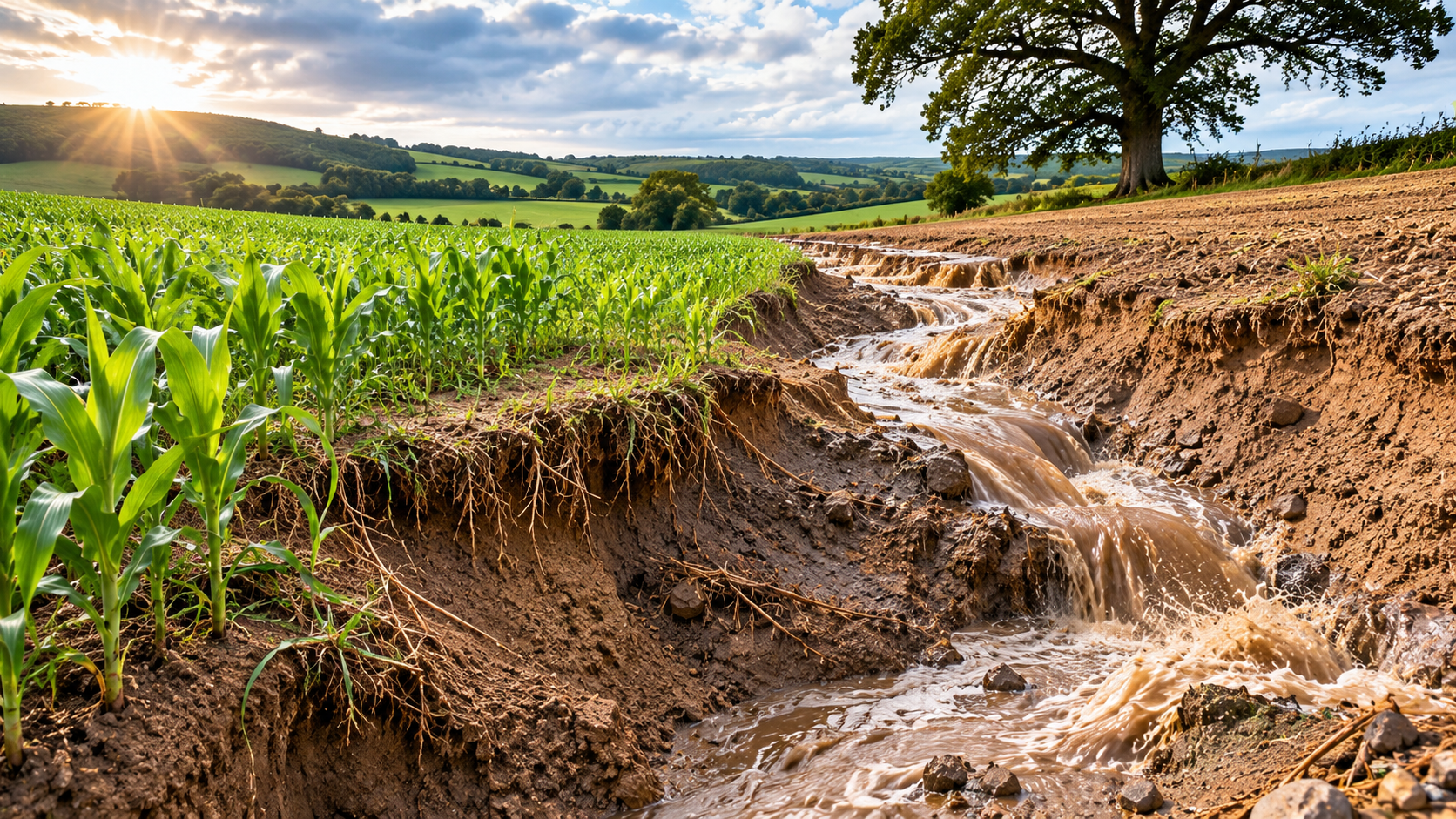
This is because soil organisms depend on suitable conditions to survive. When soil is repeatedly disturbed, compacted, contaminated or stripped of vegetation and organic matter, the habitats and resources they need can be damaged.
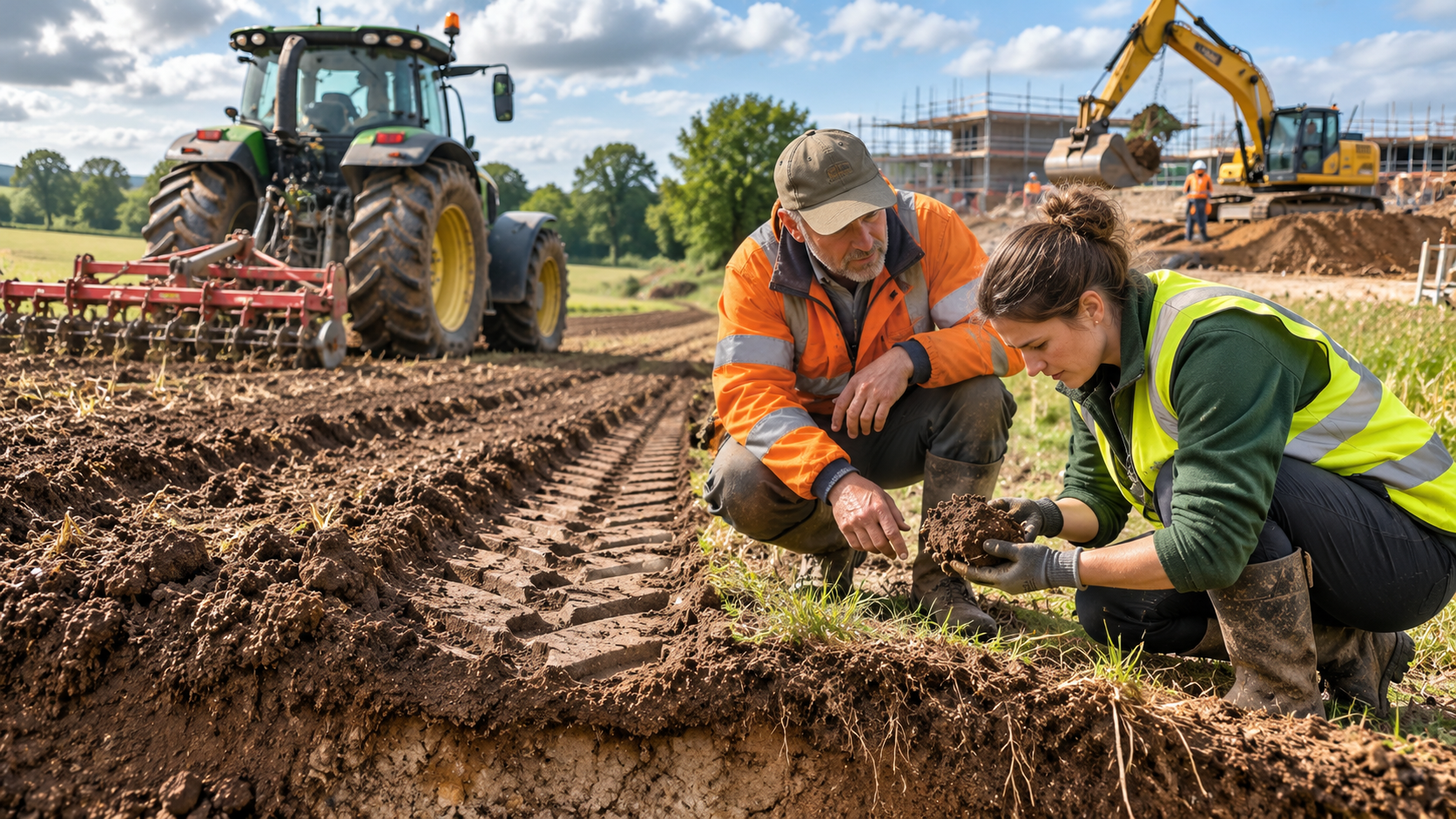
Intensive cultivation can disrupt soil structure and biological habitats. Heavy machinery can compress pore spaces, restricting the movement of air and water. Excessive or inappropriate applications of fertilisers and pesticides can alter biological and chemical conditions. Removing vegetation and leaving soil exposed can increase erosion and reduce the supply of organic material.
These pressures do not affect every soil in the same way. Soil type, climate, land use and the organisms present all influence how it responds, but the principle is clear - protecting soil means protecting the living community within it, not just preserving the physical material.
How can we keep soil alive and healthy?
There is no single solution that works everywhere. Good soil management needs to reflect local conditions, intended land use and the characteristics of the soil itself. However, several approaches can help protect soil biology and improve soil condition, such as:
- Keep soil covered. Vegetation and suitable organic mulches protect the surface from erosion and help maintain a supply of organic material.
- Reduce unnecessary disturbance. Limiting excessive cultivation can help preserve soil structure and biological habitats.
- Return organic matter. Well-managed compost and appropriate plant residues provide food for soil organisms and contribute to soil structure.
- Maintain living roots. Plants support soil organisms through root growth and the release of carbon compounds into the surrounding soil.
- Avoid compaction. Managing machinery, traffic and livestock carefully helps preserve the spaces through which air and water move.
- Understand the soil before treating it. Soil testing and observation can help identify problems and guide appropriate management.
These practices are not interchangeable prescriptions. Their suitability depends on the soil, climate, land use and management objectives, but they share a common principle by working with the living system rather than treating soil as an inert growing medium.
The extraordinary world beneath our feet is easy to overlook because most of its activity happens out of sight, but the organisms living in soil help sustain the food systems, landscapes and natural processes on which we all depend.
We cannot protect something we do not understand and we cannot improve soil health by focusing only on what happens above the surface. Soil deserves to be recognised as a living resource. Its biological diversity, physical structure and chemical properties are interconnected, and each plays a part in maintaining its ability to support life.
At SoilMatters.world, we want to bring together the scientists, farmers, businesses, organisations and individuals who understand this importance and are doing something to protect it.
We want to share knowledge, highlight practical solutions and make soil health part of the wider public conversation. Because soil is not just where life grows. Soil is alive and its future matters to all of us.
Frequently Asked Questions: Soil Health and Soil Biodiversity
1. Why is soil considered a living ecosystem?
Soil is considered a living ecosystem because it contains an enormous community of organisms, including bacteria, fungi, earthworms, insects, mites and nematodes. These organisms interact with one another and with plant roots, minerals, water and organic matter. Together, they help cycle nutrients, maintain soil structure and support plant growth.
2. What is soil biodiversity and why does it matter?
Soil biodiversity refers to the variety of living organisms found in soil, from microscopic bacteria and fungi to earthworms and insects. It matters because these organisms perform essential functions, including breaking down organic matter, recycling nutrients, improving soil structure and supporting healthy plant growth. Greater biological diversity can also help soil ecosystems remain resilient.
3. What organisms live in healthy soil?
Healthy soil can contain billions of microorganisms alongside larger organisms such as earthworms, beetles, mites, springtails, nematodes and other invertebrates. Bacteria and fungi are particularly important because they help decompose organic material and make nutrients available to plants. The exact community varies according to soil type, climate, vegetation and land management.
4. What do earthworms actually do for soil health?
Earthworms help improve soil structure by creating channels through which air and water can move. They consume organic material and mix it with mineral soil, producing nutrient-rich casts. Their activity can improve drainage, support root development and contribute to the natural cycling of nutrients.
5. What is the role of fungi in healthy soil?
Soil fungi help break down complex organic materials, including dead plant matter, releasing nutrients back into the soil. Some fungi form mycorrhizal relationships with plant roots, extending the area from which plants can access water and nutrients. These partnerships are an important part of the relationship between soil biology and plant health.
6. What is the difference between soil and dirt?
Soil is a living, functioning natural system made up of mineral particles, organic matter, water, air and living organisms. The word dirt is often used to describe soil that has been displaced or treated as material without its biological and ecological functions. Healthy soil is much more than the ground beneath our feet: it is a resource that supports ecosystems, food production and water regulation.
7. What are the main signs of unhealthy soil?
Signs of unhealthy soil can include poor drainage, surface crusting, compaction, erosion, low organic matter, limited plant growth and reduced biological activity. A lack of earthworms or other visible soil organisms may also be worth investigating, although their presence varies naturally. Soil testing, combined with physical observation, can provide a clearer picture of its condition.
8. How does soil compaction affect living organisms?
Soil compaction reduces the spaces between soil particles, restricting the movement of air and water. This can make it harder for plant roots to grow and create less favourable conditions for many soil organisms. Heavy machinery, repeated vehicle movements, livestock and working soil when it is wet can all contribute to compaction.
9. How can I improve soil health in my garden or on my land?
Practical measures include adding suitable organic matter, keeping the soil covered with plants or mulch, avoiding unnecessary digging, reducing compaction and maintaining living roots wherever possible. Compost can help replenish organic matter, while diverse planting can support a wider range of soil organisms. The best approach will depend on the soil type, its current condition and how the land is used.
10. Can healthy soil help tackle climate change?
Soil plays an important role in the global carbon cycle because it stores substantial quantities of organic carbon. Improving soil management can help protect existing soil carbon and, in some circumstances, increase carbon storage. However, the amount stored varies considerably according to soil type, climate, land use and management, so healthy soil should be seen as one part of wider climate action rather than a standalone solution.