Construction and Soil and Why Topsoil Should Never Be Treated as Waste
When a construction site is cleared, the first visible signs of progress are often the removal of vegetation, the stripping of ground and the movement of earth. Excavators arrive, topsoil is scraped away, foundations are prepared and the landscape begins to change, but beneath the surface lies a resource that is too often overlooked in the rush to build.
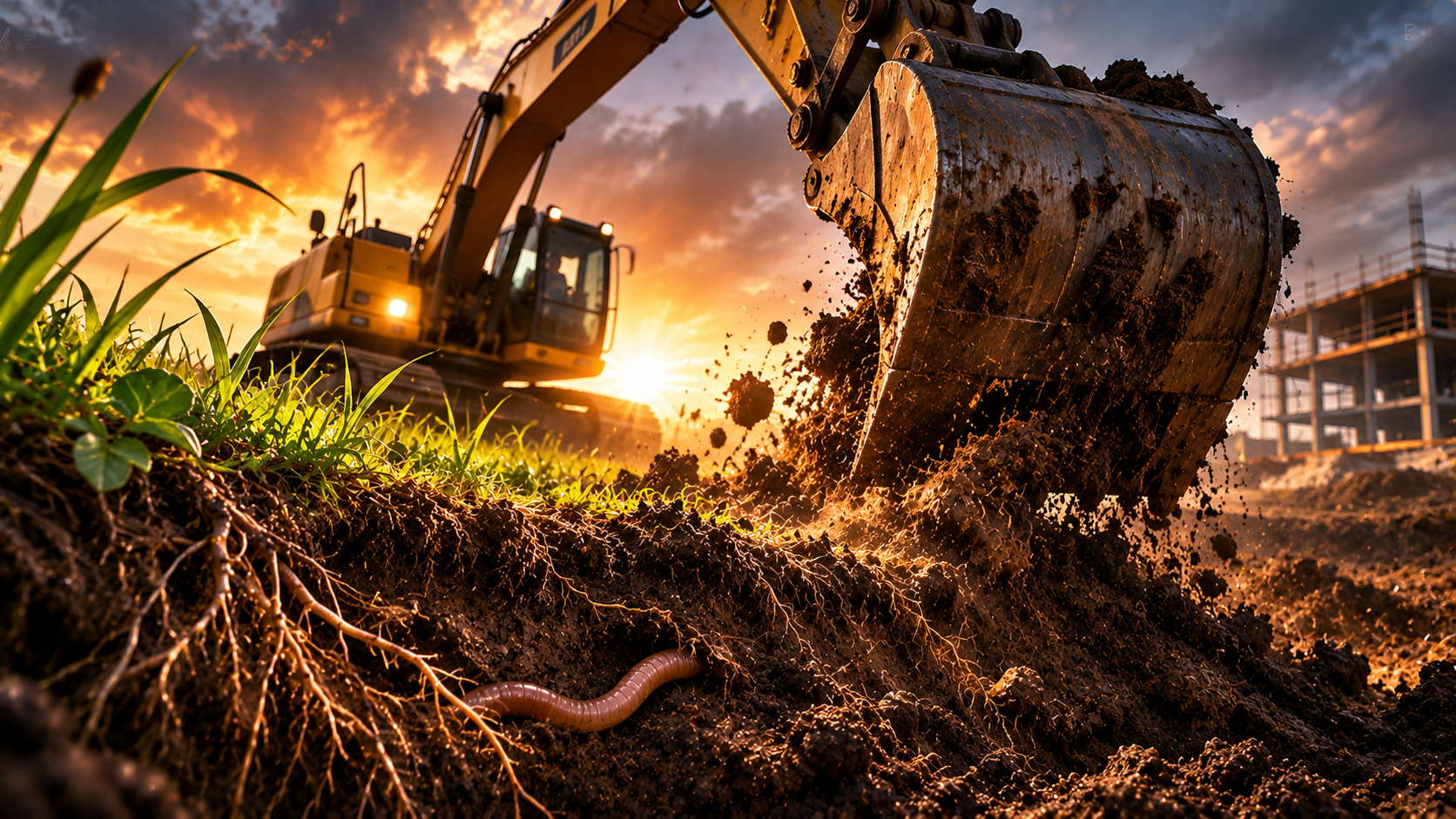
Topsoil is not just another material to be moved out of the way. It is a living, biologically active layer that supports plant growth, stores organic matter, regulates water movement and provides a habitat for an extraordinary range of organisms. It takes a long time to develop, yet can be damaged in a matter of hours through careless stripping, handling, storage and compaction.
For developers and contractors, this presents an important challenge. Construction inevitably changes the land, and some soil will need to be excavated or relocated, but that does not mean the soil has lost its value. With proper planning, much of it can be protected, retained and reused, helping to create healthier landscapes while reducing the need to import replacement material.
The question is whether the construction industry is prepared to treat soil as a resource to be managed, rather than an inconvenience to be removed.
What Makes Topsoil So Valuable?
Topsoil is generally the uppermost layer of soil, although its depth and characteristics vary considerably between sites. It contains a mixture of mineral particles, organic matter, water, air and living organisms. It is usually the most biologically active and fertile part of the soil profile. Its value goes well beyond supporting grass, trees and planted areas.
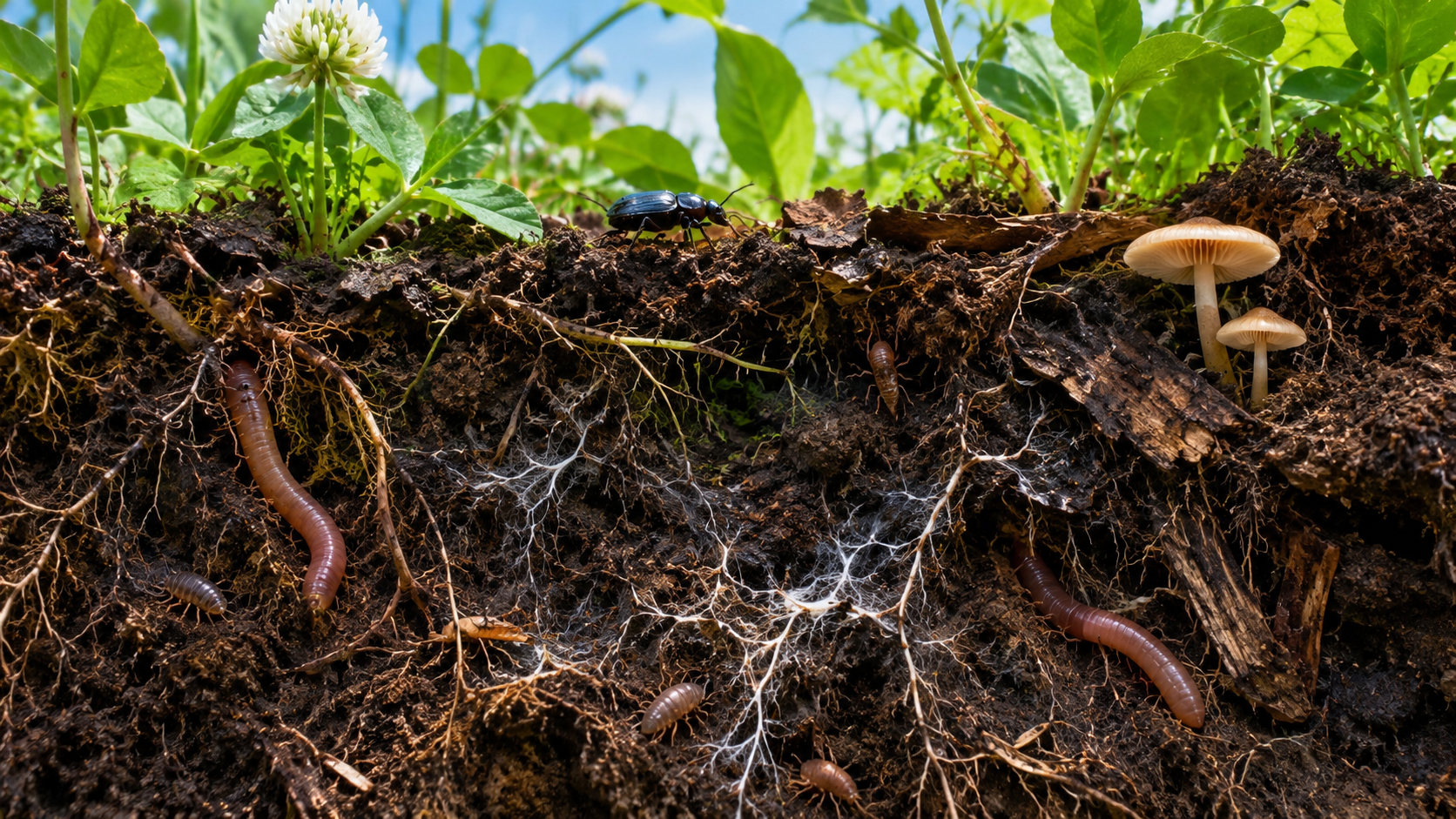
Healthy topsoil provides a growing medium for vegetation, supplying plants with nutrients, moisture and the physical conditions needed for root development. It contains organic matter that contributes to soil structure and helps the ground retain water. It also supports communities of bacteria, fungi, earthworms, insects and other organisms involved in decomposition and nutrient cycling.
These functions have consequences for the wider environment. Well-structured soil can absorb rainfall, reduce surface runoff and help regulate water movement through the landscape. Vegetation growing in healthy soil can provide habitats, store carbon and contribute to biodiversity.
The underlying subsoil also has an important role, particularly in storing and transmitting water and providing the physical foundation for vegetation. Topsoil and subsoil work together, and both need to be understood when planning earthworks and landscaping.
The value of this resource is recognised in the Government's Construction Code of Practice for the Sustainable Use of Soils on Construction Sites. It describes topsoil as a finite resource and explains its importance in providing anchorage and oxygen for plant roots, releasing nutrients and retaining moisture to support plant growth.
The guidance is particularly relevant because it makes a point that should be central to every construction project - soil that is available for beneficial reuse should be identified and carefully managed before construction begins.
The Damage Can Begin Before Construction Starts
One of the biggest problems with soil management is that decisions are often made too late. A development may have detailed plans for foundations, drainage, access roads, utilities, landscaping and building materials, yet the soil itself may receive relatively little attention until machinery arrives on site. By then, opportunities to protect it may already have been lost.
A soil resource survey carried out before work begins can establish what types of soil are present, their condition, depth, distribution and potential uses. It can also identify areas that should be protected from construction traffic or disturbance.
Without that information, contractors risk mixing topsoil with subsoil, removing more material than necessary or sending potentially reusable soil off site before anyone has considered its value.
The Government's construction code recommends preparing a soil resource plan that identifies the soil units to be stripped, their locations, haul routes, stockpiling arrangements and intended uses. It also stresses the importance of supervision and appropriate working methods.
This is not an unnecessary administrative exercise. It is an opportunity to prevent the loss of a valuable natural resource and avoid costs associated with importing replacement topsoil later.
Stripping Topsoil – Getting It Right Matters
Topsoil stripping is a routine part of many construction projects, but the way it is carried out can have a significant effect on the condition of the material.
The first requirement is to understand the depth and characteristics of the topsoil. Stripping too deeply can introduce subsoil into the material, reducing its quality and suitability for future landscaping. Removing too little can leave valuable topsoil exposed to construction traffic and damage.
The timing of the work is equally important. Soil is particularly vulnerable when wet. Heavy machinery operating on wet ground can compress the soil particles, destroy the spaces between them and damage the structure needed for air and water movement. The result may be a material that looks like soil but no longer performs as healthy topsoil should.
The Government's code recommends handling soil when conditions are sufficiently dry and suspending stripping during sustained heavy rainfall. It also advises using appropriate machinery and minimising repeated handling, which increases the risk of structural damage.
The distinction matters because soil cannot always be restored to its original condition through straightforward landscaping. A compacted or poorly structured material may require additional treatment before it can support healthy vegetation. The objective should therefore be to preserve the soil's existing properties rather than assume they can be recreated after construction.
Stockpiling – The Hidden Risks of Temporary Storage
Once topsoil has been stripped, it may need to be stored until landscaping or restoration work can take place. This is often treated as a straightforward operation, but poorly managed stockpiles can result in further deterioration.
Soil is a living material. It contains organisms that depend on oxygen, moisture and suitable physical conditions. When large quantities are piled together, the weight of the material can cause compaction, while the interior of a stockpile may become poorly aerated.
Stockpiles can also suffer from erosion, contamination and mixing with other materials. Rainfall may wash fine particles away, while construction debris, aggregates, fuels or other substances can compromise the quality of the soil.
The size, height, location and duration of storage all matter. Large stockpiles can suffer from a loss of quality, particularly where the material is stored for extended periods without appropriate management. The practical response is to plan storage before stripping begins.
Topsoil and subsoil should be kept separate, stockpiles should be clearly identified and protected from construction traffic, and their locations should be selected to minimise erosion and the risk of pollution. Where storage is expected to continue for several months, appropriate vegetation or other protective measures may help maintain the material and reduce erosion.
The CIRIA guidance on construction soil management highlights the importance of limiting stockpile height where necessary, avoiding heavy machinery on stored soil and using cover crops where stockpiles are likely to remain for more than six months. Temporary storage should not become an excuse for allowing soil quality to deteriorate.
Compaction – When Soil Loses Its Ability to Function
Compaction is one of the most common forms of soil damage on construction sites. It occurs when pressure forces soil particles closer together, reducing the spaces between them. Those spaces, known as pores, are essential for the movement and storage of air and water.
When compaction becomes severe, water infiltration and drainage can be restricted. Roots may struggle to penetrate the ground, and soil organisms can be affected by reduced oxygen availability.
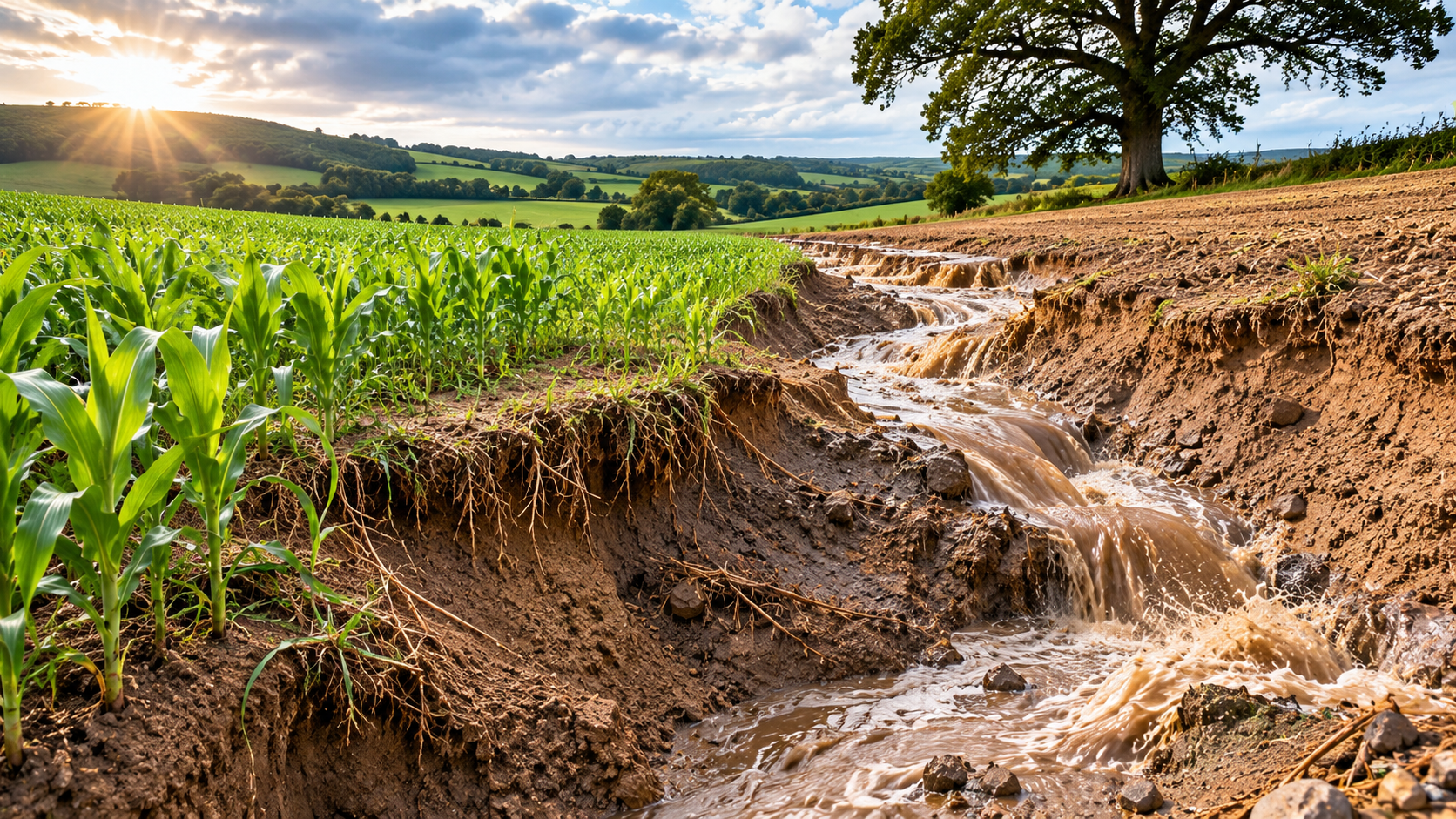
For landscaping schemes, this can create serious problems. Newly planted trees and shrubs may fail to establish because their roots cannot penetrate the underlying soil or access sufficient water. Grass may struggle to grow, while areas intended to support wildflowers and other habitats may fail to develop as expected. Compaction can also increase surface runoff, potentially contributing to localised flooding and the movement of sediment into drains and watercourses.
The problem is not confined to areas where buildings or roads are constructed. It can occur across land intended for future green space, gardens, verges and planted areas if heavy machinery repeatedly travels over the ground.
This is why construction traffic routes, storage areas and working zones need to be identified in advance. Areas intended for landscaping should be protected from unnecessary trafficking, particularly when the soil is wet. The soil may still be physically present when construction is complete, but its ability to function may have been severely compromised.
Why Mixing Topsoil and Subsoil Creates Problems
Topsoil and subsoil are different materials with different characteristics and functions. Topsoil generally contains more organic matter and biological activity. Subsoil typically has lower organic matter levels, but plays an important role in supporting the ground above and storing and transmitting water.
When these layers are mixed during excavation, stripping or storage, the resulting material may be less suitable for either purpose. Mixing can dilute the organic matter and biological activity of topsoil, while introducing materials with different drainage and structural properties. The result may be a growing medium that does not provide the conditions required for successful planting.
This is one reason why soil should be stripped, stored and reused in identifiable layers wherever possible. It also reinforces the importance of understanding the soil profile before construction begins. Not every brown material excavated from a site is interchangeable, and not every soil can be used as topsoil without appropriate assessment and preparation.
Reusing Soil Rather Than Importing More
One of the most effective ways to reduce soil waste on construction projects is to plan for reuse from the outset. Where site conditions allow, suitable topsoil can be retained and used in landscaping, planting schemes, habitat creation and the restoration of disturbed areas. Subsoil can also be reused in appropriate applications, provided its properties and intended use are understood.
This can reduce the need to purchase and transport replacement material, helping to avoid additional costs, vehicle movements and environmental impacts. It can also reduce pressure on supplies of good-quality topsoil, which may be particularly difficult to source in urban areas.
However, reuse should never be based on the assumption that all excavated soil is suitable for every purpose. Material needs to be assessed for its quality, condition and intended application. Where contamination is suspected, appropriate investigation and testing are essential.
Imported topsoil also needs careful consideration. Its source, quality and suitability should be established rather than relying on appearance alone. BS 3882 provides a specification for topsoil, including requirements relevant to its intended use. The important principle is to match the material to the application and avoid treating soil as a generic bulk commodity.
What Happens When There Is More Soil Than the Site Needs?
Not every development can reuse all the topsoil it generates. Building footprints, roads, car parks and other infrastructure inevitably reduce the amount of land available for landscaping. This can leave developers with a surplus that needs to be managed.
The traditional response has often been to remove the material from site, sometimes treating it as waste without fully exploring its potential for beneficial use elsewhere. That approach can be costly and environmentally damaging, particularly where suitable topsoil is available locally and other sites are importing material to create landscapes or restore degraded ground.
There may be opportunities to transfer suitable surplus soil to nearby developments, land restoration schemes, brownfield regeneration projects or other beneficial uses. Identifying those opportunities early can help connect sites that have surplus material with those that need it.
CIRIA's 2023 guidance, Sustainable Management of Surplus Soils and Aggregates from Construction, addresses the importance of designing out surplus material and improving how excavated soils are managed across construction and development projects.
There is, however, an important distinction between reuse and disposal. Soil that is discarded rather than temporarily moved for reuse can be classified as waste, and its movement and recovery may be subject to regulatory requirements. Developers and contractors need to establish the appropriate legal and environmental route before transferring material off site. The objective should be to identify beneficial uses without assuming that moving soil from one location to another automatically makes it a recovered resource.
Making Soil Management Part of the Construction Plan
Protecting topsoil cannot be left to the landscaping contractor at the end of a project. By then, much of the damage may already have occurred. It needs to be considered during the earliest stages of design and carried through procurement, enabling works, earthworks and construction.
A practical soil management strategy should include:
A soil resource survey: Identify soil types, depths, condition, potential contamination and opportunities for reuse.
A soil resource plan: Map areas for stripping, protection, storage and reuse, including haul routes and stockpile locations.
Defined responsibilities: Make clear who is responsible for soil management, supervision and monitoring.
Appropriate stripping methods: Use suitable machinery and avoid handling soil when it is too wet.
Separate storage: Keep topsoil and subsoil apart and protect stockpiles from contamination, erosion and compaction.
Controlled site traffic: Establish designated routes and protect areas intended for future landscaping.
A reuse strategy: Identify how much soil the project will need, how much it will generate and whether surplus material can be used elsewhere.
Aftercare and monitoring: Check the condition of reinstated soil and ensure that it can support the intended planting and landscape functions.
These measures need to be understood by everyone working on site. A soil management plan has little value if contractors, plant operators and subcontractors do not know which areas must be protected or how excavated material should be handled.
Toolbox talks and clear site markings can help turn the plan into everyday working practice.
The Wider Environmental Cost of Wasting Soil
The consequences of poor soil management extend beyond the boundaries of a development. When healthy topsoil is lost, the site loses more than a growing medium. It loses part of its capacity to support vegetation, regulate water, store carbon and sustain biodiversity.
Replacing it with imported material does not necessarily restore those functions. Soil is highly variable, and its biological communities and physical characteristics develop over time. A replacement material may meet a specification for a particular use, but that does not mean it immediately replicates the ecological functions of the soil that was removed.
There is also a wider resource and waste-management issue. The House of Commons Environment, Food and Rural Affairs Committee highlighted soil waste as a significant concern in its 2023 report on soil health. It noted that soil accounted for 58% of the tonnage received at landfill sites in 2018, equivalent to 58.5 million tonnes. These are historical figures, but they illustrate the scale of the challenge and the consequences of treating excavated soil as a disposal problem rather than a resource-management issue.
Better planning can reduce unnecessary excavation, avoid damage, increase reuse and limit the demand for imported soil. It can also help prevent sediment and soil particles being washed from construction sites into surrounding land and watercourses.
The construction industry has an opportunity to make a meaningful contribution to soil protection, not by avoiding development altogether, but by recognising the value of the resource it works with.
Building on Land Should Not Mean Destroying Its Value
Construction and development will inevitably change landscapes. Buildings, roads, infrastructure and essential services all require land, and some soil will be excavated, relocated or permanently sealed beneath development. But there is a difference between accepting that change and treating the soil as expendable.
A development can be designed with a clear understanding of its soil resources. Contractors can be given practical instructions to protect them. Topsoil can be stripped and stored carefully, suitable material can be reused, and areas intended for landscaping can be protected from compaction.
These are not abstract environmental ambitions. They are practical decisions that can influence project costs, construction efficiency, landscape quality and long-term environmental performance.
The industry has become increasingly familiar with concepts such as embodied carbon, material efficiency, circular construction and resource recovery. Soil deserves the same attention. It is a natural resource that cannot be manufactured to order, and its value is not measured by the number of tonnes that can be moved or removed from a site.
Soil Is Part of the Legacy We Leave Behind
A construction project does not end when the buildings are handed over. The landscape around them will continue to develop for decades. Trees will grow, planted areas will mature, rainwater will move through the ground and habitats will either establish or struggle to survive. The condition of the soil will influence all of those outcomes.
If topsoil has been stripped carelessly, mixed with unsuitable material, compacted by machinery or discarded unnecessarily, the consequences may remain long after the construction work is complete. If it has been protected, carefully managed and reused, it can help create landscapes that support vegetation, biodiversity and more resilient places.
The construction industry needs to change the way it thinks about the ground beneath its projects. Topsoil should not be viewed as an obstacle to progress or a waste product of excavation. It is a valuable natural asset that deserves the same consideration as other materials used in the built environment.
We spend considerable time deciding what goes into a building. It is time we paid equal attention to what happens to the soil beneath and around it. Because once healthy topsoil is lost, replacing its true value is far harder than replacing the material itself.
FAQs – Construction and Soil: Why Topsoil Should Never Be Treated as Waste
1. Why is topsoil important on construction sites?
Topsoil is a valuable natural resource that supports plant growth, stores organic matter, retains moisture and provides a habitat for soil organisms. Protecting it helps maintain the environmental quality and long-term performance of landscaped areas.
2. What happens when topsoil is stripped incorrectly?
Poor stripping practices can mix topsoil with subsoil, damage its structure and reduce its biological quality. Stripping when soil is too wet can also cause compaction, making it less suitable for future landscaping.
3. How should topsoil be stored during construction?
Topsoil should be stored separately from subsoil in clearly identified stockpiles. Storage areas should be protected from construction traffic, contamination and erosion, with appropriate measures to maintain soil quality during longer storage periods.
4. Why is soil compaction a problem on construction sites?
Compaction reduces the spaces between soil particles, restricting the movement of air and water. It can limit root growth, affect drainage, increase surface runoff and make it harder for newly planted vegetation to establish.
5. Why should topsoil and subsoil be kept separate?
Topsoil generally contains more organic matter and biological activity than subsoil. Mixing the two can dilute these properties and create a material with unsuitable drainage, structure and growing characteristics.
6. Can excavated topsoil be reused on the same construction site?
Yes. Suitable topsoil can often be retained and reused for landscaping, planting, habitat creation and restoration. Its condition and suitability should be assessed before reuse, and it should be handled and stored carefully.
7. What is a soil resource survey?
A soil resource survey identifies the types, depths, condition and potential uses of soil on a development site. It provides information needed to plan stripping, storage, protection and reuse before construction begins.
8. How can construction companies reduce soil waste?
They can survey soil resources before work starts, minimise unnecessary excavation, keep topsoil and subsoil separate, protect stockpiles and identify opportunities for beneficial reuse. Planning soil requirements early can also reduce the need to import replacement material.
9. What is the environmental impact of disposing of topsoil?
Disposing of suitable topsoil can waste a valuable natural resource. It can increase demand for replacement material, generate additional transport emissions and remove soil that could otherwise support vegetation, biodiversity, water regulation and carbon storage.
10. What is a soil management plan in construction?
A soil management plan sets out how soil will be protected, stripped, stored, transported and reused during a construction project. It identifies responsibilities, working methods, storage locations and intended uses to help prevent unnecessary soil damage and waste.