The Carbon Beneath Our Feet and Its Role in Tackling Climate Change
Soil is one of the planet’s greatest natural carbon stores, but the way we farm, build, manage landscapes and restore damaged land can determine whether that carbon stays safely underground or escapes into the atmosphere. It is the carbon store we rarely think about.
When the subject of climate change comes up, attention usually turns to the atmosphere. We talk about carbon dioxide emissions from power stations, transport, industry and buildings. We look at forests and the role trees play in absorbing carbon. We discuss renewable energy, electric vehicles and the transition away from fossil fuels, but there is another major carbon store beneath our feet, one that rarely receives the same attention.
Soil holds enormous quantities of carbon. In fact, the Food and Agriculture Organization of the United Nations (FAO) estimates that the first metre of soil contains around 1,500 billion tonnes of carbon, with a margin of uncertainty of approximately 230 billion tonnes. That makes soil one of the largest carbon reservoirs on the planet, holding more carbon than the atmosphere and vegetation combined.
This is not an abstract scientific statistic. It has profound implications for how we manage farmland, forests, grasslands, peatlands and development sites. The soil beneath a field, woodland or building project is not just a growing medium or a foundation. It is part of the global climate system and how we treat it can make a significant difference to how much carbon remains stored underground.
How does soil capture and store carbon?
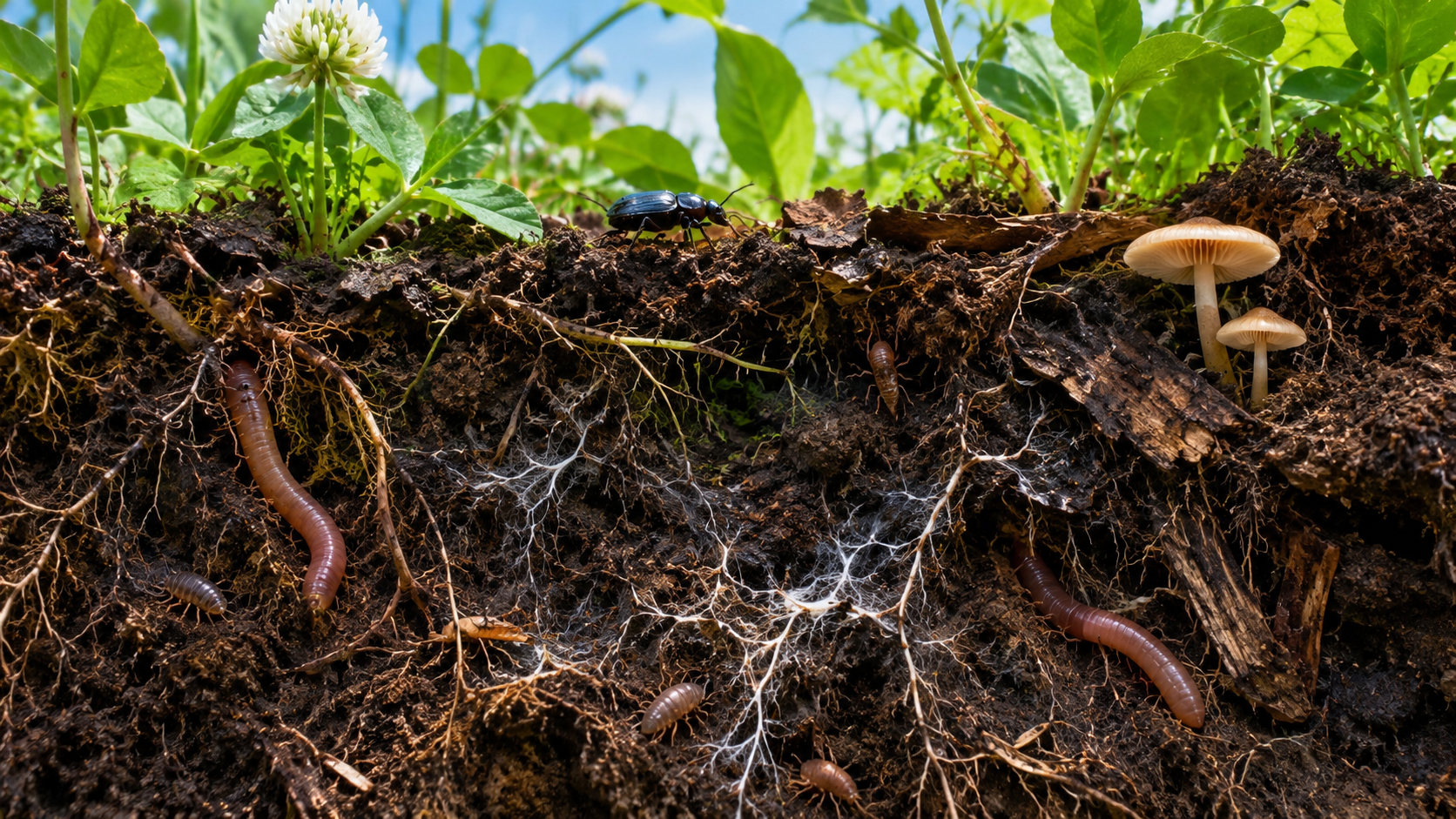
The story begins above ground, with plants. Through photosynthesis, plants absorb carbon dioxide from the atmosphere and use the carbon to build leaves, stems, trunks and roots. When leaves fall, roots die and plant material decomposes, some of that carbon enters the soil.
It becomes part of what scientists call soil organic carbon (SOC) – the carbon contained in organic matter, including decaying plant material, roots, microorganisms and other biological residues, but the process is more complicated than dead leaves gradually turning into soil.
Bacteria and fungi break down organic material, using some of it for energy and growth. Other products of decomposition become incorporated into the soil. Some carbon attaches to mineral particles, forming associations that can help protect it from further decomposition. Some remains in organic matter within soil aggregates, where its exposure to decomposing organisms can be restricted.
The result is a complex system in which carbon moves continually between plants, organisms, soil and the atmosphere. Some is released back into the air as carbon dioxide through respiration and decomposition. Some remains stored in the soil for years, decades, centuries or, in certain environments, much longer.
The balance between carbon entering and leaving the soil determines whether it is gaining or losing carbon. This is why healthy, functioning soil matters so much. It supports the plant growth that supplies carbon, provides habitats for the organisms involved in decomposition and nutrient cycling and creates the physical and chemical conditions that allow organic matter to accumulate. Soil carbon storage is not a one-off event. It is an ongoing biological process, influenced by climate, vegetation, soil type and, crucially, land management.
When the carbon store starts to leak
Soil can store vast quantities of carbon, but that does not mean the carbon is permanently locked away. Change the way land is used or managed and the balance can shift. Soil that has accumulated organic carbon over many years can begin to lose it, releasing carbon dioxide into the atmosphere.
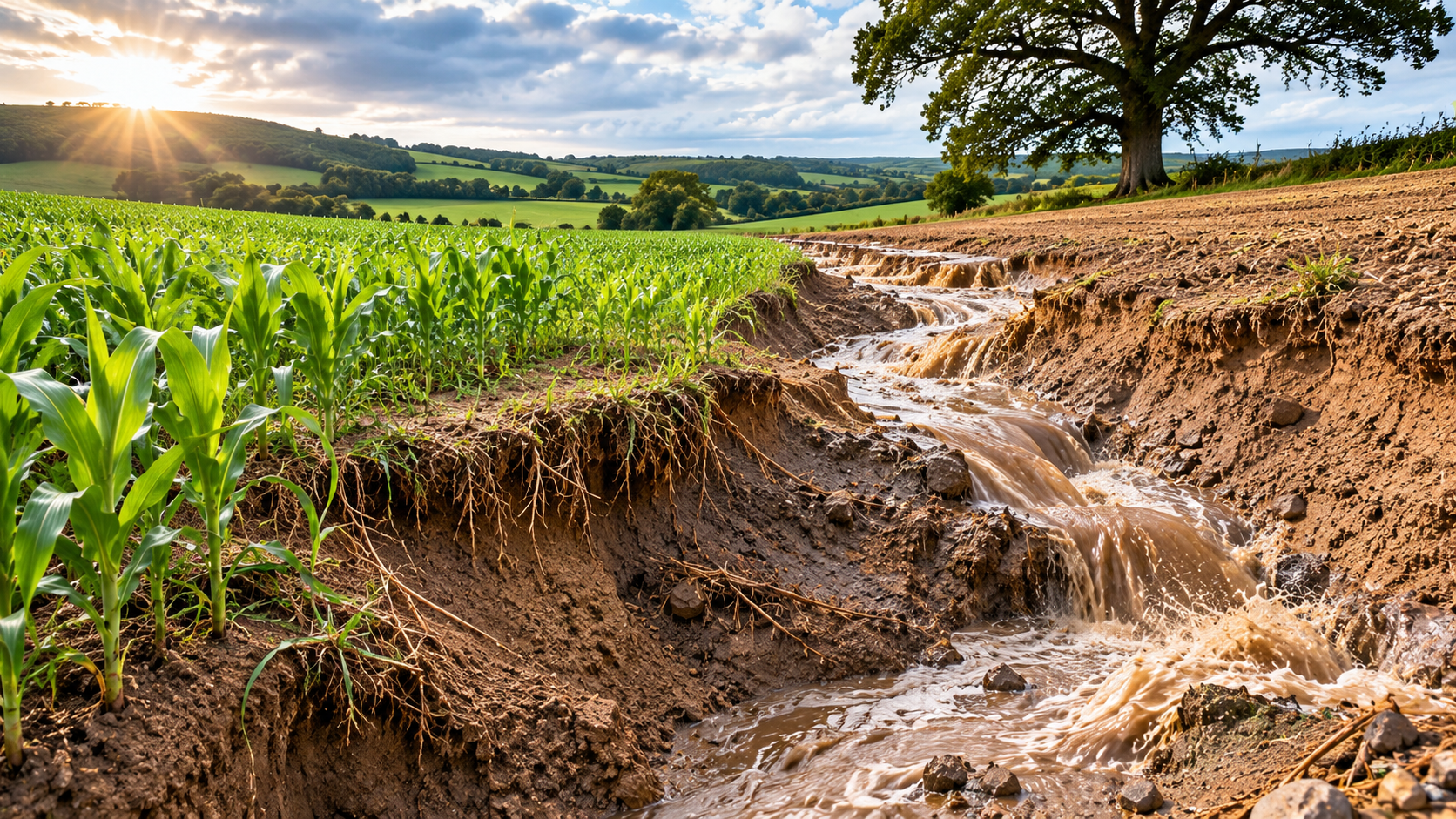
Cultivating previously undisturbed land, removing vegetation, draining organic soils and allowing erosion to strip away carbon-rich topsoil can all contribute to losses. The effects vary according to soil type, climate and the nature and intensity of the disturbance.
Peatlands are a particularly important example. Formed from partially decomposed plant material accumulated over thousands of years, peat soils contain exceptionally large carbon stores. Waterlogged conditions restrict decomposition, allowing organic matter to build up. Drain the land, however, and oxygen enters the soil, accelerating decomposition and releasing carbon dioxide.
The consequences can be substantial. The European Environment Agency reported that, in 2019, emissions from drained and cultivated organic soils across EU Member States amounted to 108 million tonnes of carbon dioxide. This illustrates an important point, that protecting existing carbon stores can be just as important as trying to create new ones.
Once that carbon has entered the atmosphere, replacing it in the soil is not a quick process. Building soil organic carbon takes time and the rate at which it can be restored depends on local conditions.
The difference between storing and losing carbon
If soil carbon is influenced by how land is managed, then the decisions made by farmers, foresters, landowners, developers and public authorities all have a part to play.
Agriculture is particularly significant because of the enormous area of land under cultivation and grazing. Practices that maintain vegetation, return organic material to the soil and minimise unnecessary disturbance can help protect existing carbon stocks and in suitable conditions, increase them.
Cover crops are one example. Rather than leaving fields bare between main crops, farmers establish vegetation that protects the surface, captures carbon through photosynthesis and contributes roots and plant residues to the soil.
Reducing tillage can also help. Repeated cultivation disturbs soil structure and can accelerate the breakdown of organic matter. Reduced tillage and no-till approaches limit this disturbance and help retain plant residues at the surface. Their effects on carbon storage vary with soil, climate and management, so they are not a universal solution, but they can form part of a wider soil health strategy.
Other approaches include diverse crop rotations, returning suitable organic residues, applying compost or other appropriate organic amendments, maintaining permanent vegetation and managing grazing to avoid excessive pressure on the land.
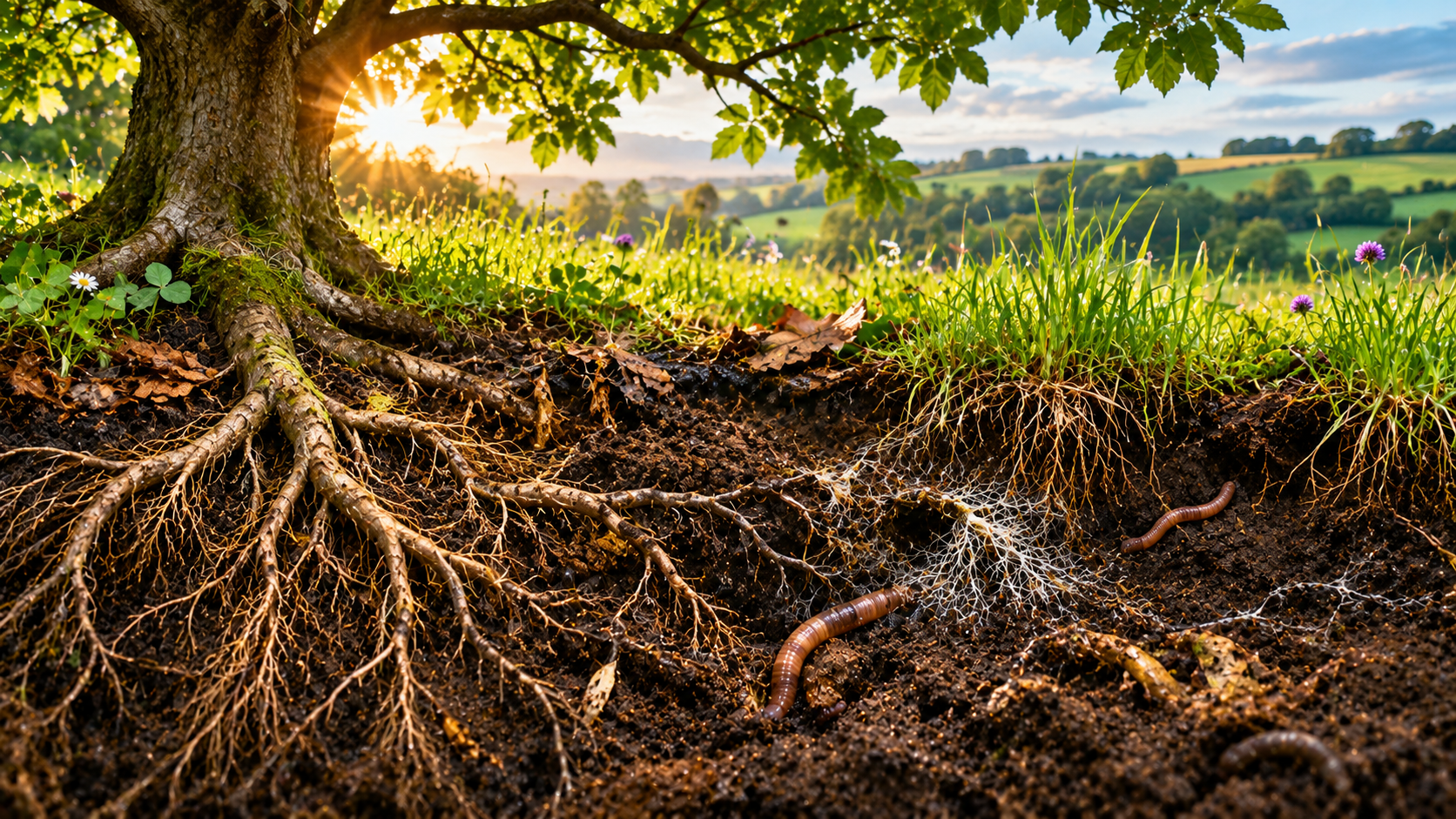
Trees and hedgerows also have a role. Their roots contribute organic material, while the vegetation helps protect soil from erosion and can support long-term carbon accumulation. Permanent grassland and woodland soils can hold significant carbon stocks, making their protection an important consideration when land-use changes are proposed.
None of these practices should be treated as a guaranteed carbon solution in isolation. The outcome depends on the starting condition of the soil, the local environment and how consistently the land is managed, but together, they demonstrate how land management can influence the carbon balance beneath our feet.
Why protecting existing carbon matters
Climate strategies often place considerable emphasis on carbon sequestration: removing carbon dioxide from the atmosphere and storing it in natural or engineered systems.
Soil carbon sequestration has genuine potential. Restoring degraded soils, increasing organic matter and improving land management can help draw additional carbon into the ground.
However, there is an important distinction between increasing a carbon store and preventing an existing store from being depleted. A field that has lost organic carbon through years of intensive cultivation may have opportunities to rebuild some of that stock, but a peatland containing thousands of years of accumulated organic matter presents a different challenge. Allowing it to be drained or damaged can release carbon that took millennia to accumulate.
The priority should therefore be twofold - protect the carbon already stored in soil and increase storage where conditions allow.
This is particularly important because soil carbon sequestration has limits. The rate at which soil can accumulate carbon is influenced by its existing carbon content, mineral composition, climate and biological activity. As soil approaches its capacity to stabilise additional carbon, the rate of further accumulation can slow and if management changes, some of the gains can be lost. In other words, we cannot rely on putting carbon back into soil while continuing to release it through damaging land-use decisions.
The construction industry has a responsibility too
The relationship between soil and climate change extends well beyond agriculture. Construction, infrastructure and development can have a direct influence on the amount of carbon held in the ground.
Land clearance, excavation, soil stripping, compaction, drainage and changes in vegetation can all affect soil condition and its ability to retain organic carbon. The consequences depend on the site and the work being undertaken, but treating soil as an expendable material can create lasting environmental damage.
Consider what happens when a development site is prepared. Topsoil may be stripped, stockpiled and moved. Vegetation is removed, ground levels are altered and heavy machinery operates across the site. If soil is poorly handled, stored for too long or left exposed, its structure and biological condition can deteriorate. Erosion can remove carbon-rich material, while disturbance and changes to drainage can alter the processes that regulate carbon storage. This is why soil management should begin before construction starts.
Developers and contractors need to understand the condition and characteristics of the soil they are working with. Soil surveys and assessments can identify areas of particular value, including carbon-rich soils, established vegetation and land that should be protected from unnecessary disturbance.
Topsoil should be stripped, stored and reinstated appropriately. Stockpiles need careful management, and machinery movements should be planned to limit compaction. Where possible, existing vegetation, trees and hedgerows should be retained, and opportunities for restoring soil health should be built into landscape and construction plans. The objective is not to prevent development. It is to make sure that development decisions recognise the environmental value of the soil beneath the site.
Measuring what is happening beneath our feet
One of the challenges with soil carbon is that it cannot be assessed reliably by looking at the surface. A field may appear green and productive while its soil organic carbon levels are declining. Equally, two neighbouring fields may have very different carbon stocks because of their soil types, previous land use, vegetation and management history.
Measuring soil carbon requires more than taking a handful of earth and judging its appearance. Soil samples need to be collected at appropriate depths and analysed for organic carbon content. To calculate the amount of carbon stored within a given area, measurements also need to account for soil bulk density, the depth sampled and the proportion of coarse fragments. Repeated measurements, using consistent methods and sampling locations, help establish whether carbon stocks are increasing, declining or remaining relatively stable.
This information is important for farmers and landowners seeking to improve soil management, but it also has a wider role in climate policy. Without reliable monitoring, it becomes difficult to assess whether land-management interventions are delivering genuine, lasting carbon benefits.
Soil health is climate action
The carbon story beneath our feet is a reminder that climate change cannot be tackled by looking only at what happens in the atmosphere. Soil is connected to almost every major environmental challenge. It supports food production, regulates water, sustains biodiversity, stores carbon and helps landscapes withstand drought and intense rainfall. When soil is degraded, these functions can weaken together. When it is protected and restored, the benefits extend well beyond carbon storage.
There is no single technique that will solve the problem. Cover crops, reduced tillage, organic matter management, responsible grazing, woodland protection, peatland restoration and better construction practices all have a part to play. What matters is understanding the soil, recognising its existing value and managing it accordingly.
Perhaps the most important change is in how we think about land itself. Soil should not be regarded as an unlimited resource that can be disturbed, depleted or replaced without consequence. It is a living system and a major part of the planet's natural carbon balance.
We spend enormous amounts of time and money trying to reduce the carbon entering the atmosphere. We should give equal attention to protecting the carbon already stored beneath our feet. The fight against climate change does not begin and end in the atmosphere. Some of the most important work takes place underground.
Frequently Asked Questions: Soil and Climate Change
1. How long can carbon remain stored in soil?
Soil carbon can remain stored for decades, centuries or, in some circumstances, thousands of years. How long it stays depends on factors such as soil type, climate, organic matter, microbial activity and land management. Carbon in peatlands, for example, can accumulate over thousands of years under waterlogged conditions.
2. Which types of soil store the most carbon?
Peat soils are among the richest carbon stores because waterlogged conditions slow the decomposition of organic material. Grassland, woodland and other soils can also hold substantial amounts of carbon, depending on their depth, organic matter content, climate and management history.
3. Does disturbing soil release carbon dioxide?
It can. Cultivation, excavation, drainage and the removal of vegetation can expose organic matter to conditions that accelerate decomposition, releasing carbon dioxide. The amount released depends on the soil, the type of disturbance and how the land is subsequently managed.
4. What is the difference between soil organic carbon and soil organic matter?
Soil organic matter includes decomposing plant and animal material, microorganisms and other carbon-containing substances. Soil organic carbon refers specifically to the carbon contained within that organic matter. Carbon is therefore a component of organic matter, rather than the two terms describing exactly the same thing.
5. Can planting trees increase soil carbon storage?
Yes. Trees contribute carbon to soil through fallen leaves, decaying roots and other organic material. Their root systems can also improve soil structure and help protect the ground from erosion. However, the amount of additional carbon stored depends on the original land use, soil conditions, tree species and long-term management.
6. Why are peatlands so important in the fight against climate change?
Peatlands contain large quantities of carbon accumulated from partially decomposed vegetation over thousands of years. When they remain wet and intact, this carbon can stay stored underground. Drainage, burning and other forms of degradation expose peat to decomposition, potentially releasing substantial greenhouse gas emissions. Protecting and restoring peatlands is therefore an important climate priority.
7. Can compost and organic fertilisers help increase soil carbon?
Adding suitable organic materials, such as compost and crop residues, can contribute carbon to soil and improve organic matter levels. The results depend on the material used, application rates, soil conditions and management practices. These additions should form part of a wider soil management strategy rather than being treated as a guaranteed carbon storage solution.
8. How does soil erosion contribute to climate change?
Erosion removes topsoil, which often contains a significant proportion of a soil's organic carbon. Some of this carbon may be transported elsewhere, buried or decomposed, while erosion also reduces the soil's ability to support vegetation and capture additional carbon. Preventing soil loss helps protect both soil fertility and existing carbon stocks.
9. Can construction projects affect soil carbon storage?
Yes. Land clearance, excavation, compaction, drainage and the removal of established vegetation can all affect soil carbon. Developers can reduce potential damage by assessing soil conditions before work begins, protecting valuable soils, managing topsoil carefully, limiting unnecessary disturbance and restoring soil after construction.
10. How can landowners find out how much carbon their soil stores?
Soil carbon can be assessed through laboratory analysis of representative soil samples. Reliable estimates also require information about sampling depth, soil bulk density and the proportion of stones or other coarse material. Repeated sampling using consistent methods can help landowners monitor changes in soil carbon over time.