The Growing Threat of Degradation and Drought When Soil Dries Out
Drought is often discussed in terms of rainfall shortages, rising temperatures and pressure on water supplies. These are important factors, but there is another part of the equation that receives less attention – and that is the condition of the soil itself.
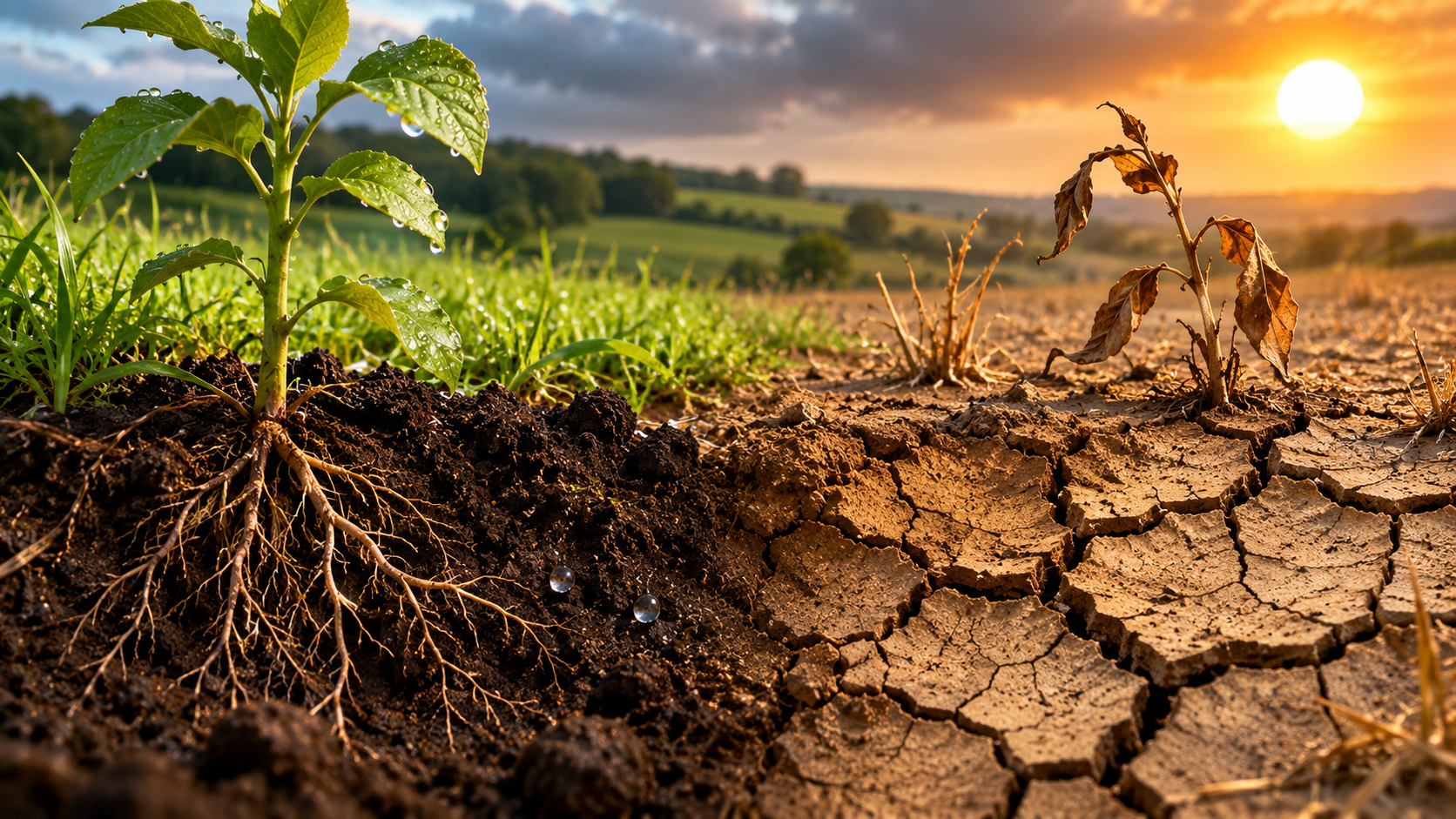
Two areas of land can experience similar weather conditions and respond very differently. One may retain sufficient moisture to sustain vegetation, while the other dries out rapidly, leaving plants stressed and the surface increasingly vulnerable to erosion. The difference is not necessarily the amount of rain that has fallen. It can be the ability of the soil to capture, hold and make that water available.
Soil degradation can undermine this ability. The loss of organic matter, declining soil structure, compaction and removal of vegetation all affect how water moves through the ground. As drought becomes a growing concern for agriculture, ecosystems and land management, understanding the relationship between soil health and water retention is becoming increasingly important.
Healthy soil performs several functions that influence how land responds to dry conditions. It allows rainfall to infiltrate, stores moisture within its pore spaces and makes water available to plant roots over time.
This is not the same as holding as much water as possible. The amount of water soil can retain, and the proportion that plants can access, depend on factors including texture, depth, structure, organic matter and biological activity.
The United States Department of Agriculture's Natural Resources Conservation Service (USDA NRCS) distinguishes between available water-holding capacity and water retention. The former describes the amount of water soil can hold for plant use, while the latter relates to the water actually present. Its guidance explains that improving organic matter and soil structure can increase water infiltration and storage, helping crops access moisture during periods of limited rainfall.
When these physical properties deteriorate, the consequences can extend beyond the immediate effects of dry weather. Less rainfall may enter the soil, more may run off the surface and plants may have access to a smaller reserve of moisture.
The importance of organic matter
Organic matter is one of the most important components influencing soil structure and water management. It consists of decomposing plant and animal material at different stages of breakdown, together with substances produced through biological activity.
Its contribution goes beyond supplying nutrients. Organic matter helps bind soil particles into aggregates, supporting a structure with spaces through which water and air can move. It also contributes to the soil's capacity to retain moisture.
The FAO identifies soil organic matter as a major influence on soil structure, porosity, water infiltration and moisture-holding capacity. Its guidance on creating drought-resistant soils explains that the management of organic matter is closely connected to the ability of land to make better use of rainfall.
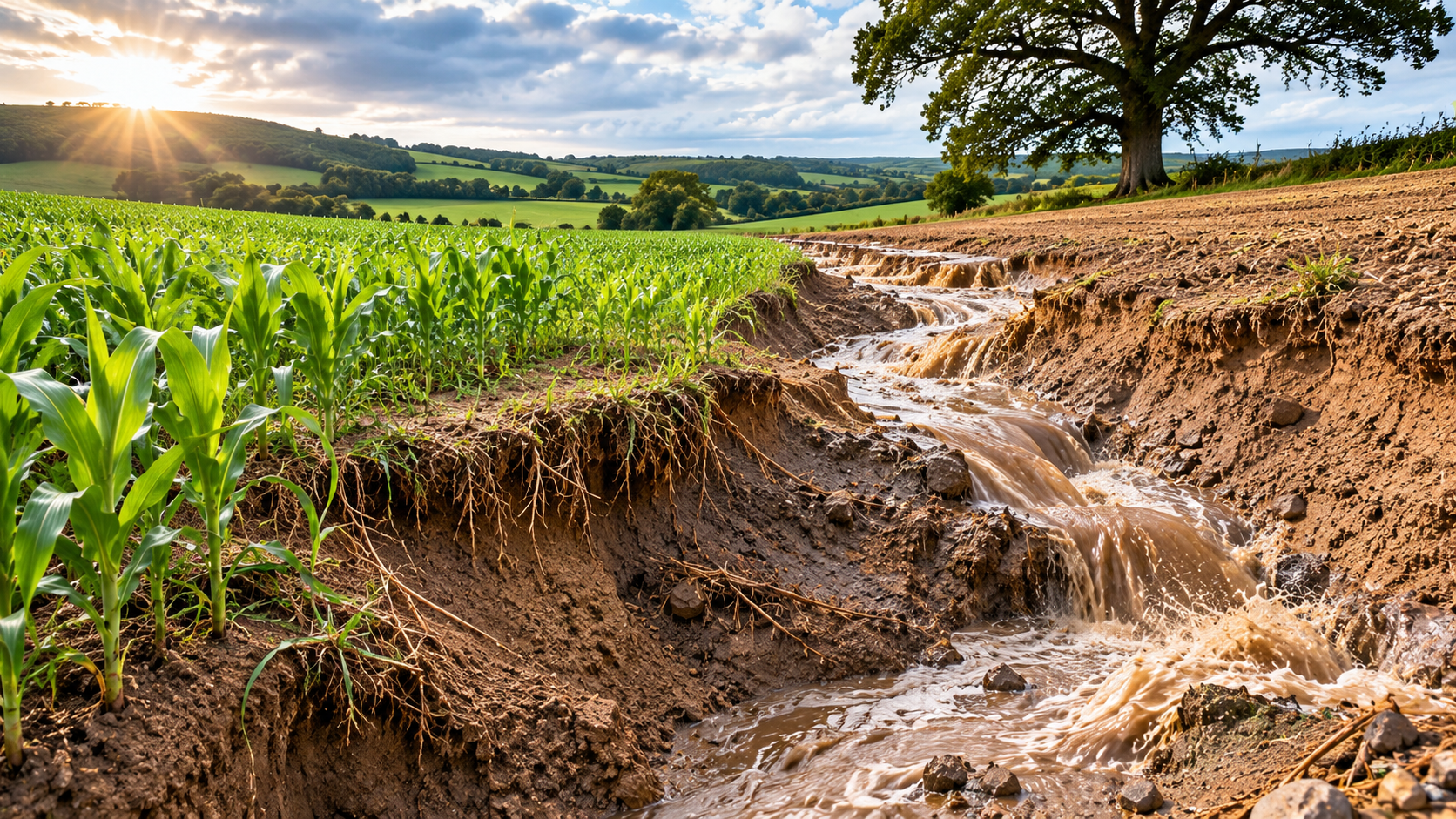
Where organic matter is depleted, soil aggregates can become less stable. The surface may be more vulnerable to crusting, reducing the rate at which rainfall enters the ground. Water that could have replenished soil moisture may instead travel across the surface, taking sediment and nutrients with it.
This creates a damaging cycle. Less organic matter can contribute to poorer structure and reduced water retention. Reduced vegetation growth can then mean fewer plant residues are returned to the soil, making it harder to rebuild organic matter.
Soil structure determines how particles are arranged and how effectively the spaces between them function. A well-structured soil has a network of pores that supports water infiltration, drainage, air movement and root development.
Compaction can disrupt this arrangement. Pressure from machinery, livestock and repeated vehicle movements can compress the soil, reducing pore space and restricting the movement of water and air.
The effects are not limited to wet conditions. Where water infiltration is restricted, rainfall may be lost through surface runoff rather than stored in the soil profile. Roots may also struggle to penetrate compacted layers, limiting their access to moisture at greater depths.
The USDA NRCS identifies soil structure, bulk density, infiltration and water-holding capacity as important indicators when assessing soil health. These physical characteristics influence both water movement and the environment available to plant roots.
For land managers, this means that drought resilience cannot be considered in isolation from soil structure. Improving the condition of the soil can help make more effective use of the rainfall that does occur.
Vegetation provides protection
The relationship between vegetation and soil moisture is particularly important. Plant cover protects the soil surface from direct rainfall impact, reduces exposure to wind and sunlight, and helps limit evaporation. Roots also contribute to soil structure and create pathways through which water can move.
When vegetation is removed, the soil becomes more exposed. Cultivation, deforestation, overgrazing and poorly managed land clearance can reduce protective cover and leave the surface vulnerable to erosion and degradation.
The loss of vegetation can also interrupt the return of organic material to the soil. Fewer roots, leaves and plant residues mean less organic input, weakening one of the natural processes that supports soil structure and moisture retention.
The European Environment Agency identifies land-use change, including deforestation, conversion to intensive agriculture and soil sealing through development, as factors that can increase vulnerability to drought by compromising soil health, water retention and erosion resistance.
Drought is capable of accelerating existing soil problems. Prolonged periods without sufficient moisture can reduce vegetation growth, leaving less protective cover and fewer plant residues to replenish organic matter. Dry, exposed ground can become more vulnerable to wind erosion, while intense rainfall following a dry period can generate runoff where the surface has become sealed or degraded.
The relationship works in both directions. Degraded soil can make the effects of drought more severe, while repeated drought conditions can place further pressure on the soil and vegetation.
The European Commission recognises water regulation as one of the important ecosystem services affected by soil degradation. Its soil health guidance identifies the storage, filtering and transformation of water among the essential functions performed by healthy soils.
This is why drought planning needs to look beyond water supply and irrigation. The condition of the land determines how effectively rainfall is captured and used and how well ecosystems can withstand periods of water stress.
Improving soil water retention
There is no universal solution for every soil type or land-use system. Effective management needs to reflect local conditions, but several established practices can help improve soil structure and water retention.
Maintain organic matter. Returning suitable crop residues, applying compost and using diverse crop rotations can help replenish organic inputs and support soil structure.
Keep soil covered. Cover crops, vegetation, crop residues and appropriate mulches can protect the surface from erosion, reduce exposure and help limit evaporation.
Reduce unnecessary disturbance. Intensive cultivation can disrupt soil aggregates and accelerate the loss of organic matter. Reduced tillage may help retain structure and surface cover where it is appropriate for the farming system.
Avoid compaction. Managing machinery movements, avoiding operations on vulnerable wet soils and controlling livestock access can help preserve pore space and infiltration.
Maintain living roots. Cover crops and diverse planting systems can keep roots in the ground for longer, contributing organic inputs and supporting soil structure.
The USDA NRCS identifies minimising disturbance, maximising soil cover, maintaining living roots and increasing biodiversity as core principles of soil health management. It also highlights the contribution these practices can make to water storage, infiltration and resilience to drought.
Water management will remain a critical part of responding to drought. Irrigation, water storage, drainage and responsible allocation all have important roles, but these measures cannot replace the contribution made by healthy soil.
Land that has lost organic matter, structure and vegetation is less able to make effective use of available rainfall. Addressing those underlying problems can help improve water infiltration, reduce runoff and support the moisture reserves on which plants depend.
For farmers, landowners, developers and those responsible for managing natural assets, soil condition needs to become a more prominent part of drought planning. The question should not only be how much rain has fallen, but how much of it the land can retain and use.
Soil degradation is often treated as a separate environmental issue. In reality, it is closely connected to water security, agricultural productivity and the resilience of landscapes. Protecting the soil is therefore an important part of preparing for a future in which managing water is likely to become an increasingly demanding challenge.
Frequently Asked Questions About Soil Degradation, Drought and Water Retention
1. Why can two neighbouring fields respond differently to the same drought?
Even when neighbouring fields experience identical weather, their soils may behave differently because of variations in soil texture, depth, organic matter, structure and previous land management. One field may be better able to absorb and retain rainfall, while another loses more water through runoff or has limited moisture available to plant roots. The condition of the soil can therefore influence how severely crops and vegetation experience drought.
2. What is plant-available water and why is it important?
Plant-available water is the moisture held in soil that plant roots can absorb and use. Not all water retained in the ground is accessible to plants. Some drains away under gravity, while some is held so tightly by soil particles that roots cannot extract it. The amount of available water influences how long plants can continue growing between periods of rainfall.
3. Can soil become water-repellent during prolonged dry weather?
Yes. Some soils, particularly those containing certain types of organic matter, can develop water-repellent characteristics when they become very dry. Instead of soaking in evenly, rainfall may bead on the surface or move through preferential channels, leaving other areas relatively dry. This phenomenon, known as soil hydrophobicity, can affect water infiltration and increase uneven wetting.
4. What is the difference between water infiltration and water retention?
Water infiltration describes how quickly water enters the soil from the surface. Water retention describes the soil's ability to hold that moisture within its structure. Both are important for drought resilience. A soil may allow rainfall to enter quickly but have limited capacity to retain it, while another may hold moisture effectively but absorb intense rainfall slowly.
5. Why can intense rainfall fail to relieve drought conditions?
After prolonged dry weather, degraded or poorly structured soil may absorb rainfall unevenly. Water can run off compacted or sealed surfaces, while some areas may become saturated before moisture reaches deeper layers. Intense rainfall can therefore increase surface runoff and erosion without fully replenishing the water reserves available to plant roots. The distribution and intensity of rainfall matter as much as the total amount received.
6. How does soil depth influence drought resistance?
Deeper soils can provide a larger volume in which water may be stored and accessed by plant roots. Shallow soils have less capacity to hold moisture, making vegetation more dependent on regular rainfall. However, depth alone does not determine drought resistance: soil texture, structure, organic matter and root development also influence how much water is available.
7. What is the relationship between soil moisture and groundwater recharge?
Some rainfall infiltrates beyond the root zone and can eventually contribute to groundwater recharge. However, the amount depends on soil characteristics, vegetation, geology, drainage and local water conditions. Degraded soil and increased surface runoff can alter how rainfall is distributed between plant use, evaporation, surface water and deeper infiltration.
8. Can planting cover crops help land withstand prolonged dry periods?
Cover crops can protect the soil surface, contribute organic matter and support soil structure. Their roots can also help maintain biological activity and improve the movement of water through the soil. However, cover crops use water themselves, so their selection and management need to reflect local rainfall patterns, soil conditions and the needs of the following crop.
9. How can land managers measure whether soil is retaining enough water?
Soil moisture sensors can monitor water content at different depths, helping land managers understand how moisture changes over time. Soil sampling and laboratory analysis can also assess characteristics such as texture, organic matter and water-holding capacity. Combining measurements with field observations and weather information provides a more useful picture than relying on surface appearance alone.
10. Why should drought planning include soil health assessments?
Drought planning often concentrates on water availability, irrigation infrastructure and emergency responses. Soil health assessments add another important dimension by examining how effectively land can absorb, store and supply water. Understanding organic matter, structure, infiltration and rooting conditions can help identify vulnerable areas and inform longer-term land management decisions.