The Hidden Problem of Soil Salinity - When the Ground Becomes Too Salty
We tend to think of soil degradation in terms of erosion, pollution, compaction or the loss of organic matter, but there is another problem developing beneath our feet that receives far less attention. Soil salinity, caused by the gradual accumulation of salts in the ground is affecting agricultural land across the world. It can make it harder for plants to absorb water, disrupt the living organisms that maintain soil health and in severe cases, turn productive farmland into land that is difficult to cultivate - and some of the causes are directly connected to the way we manage water.
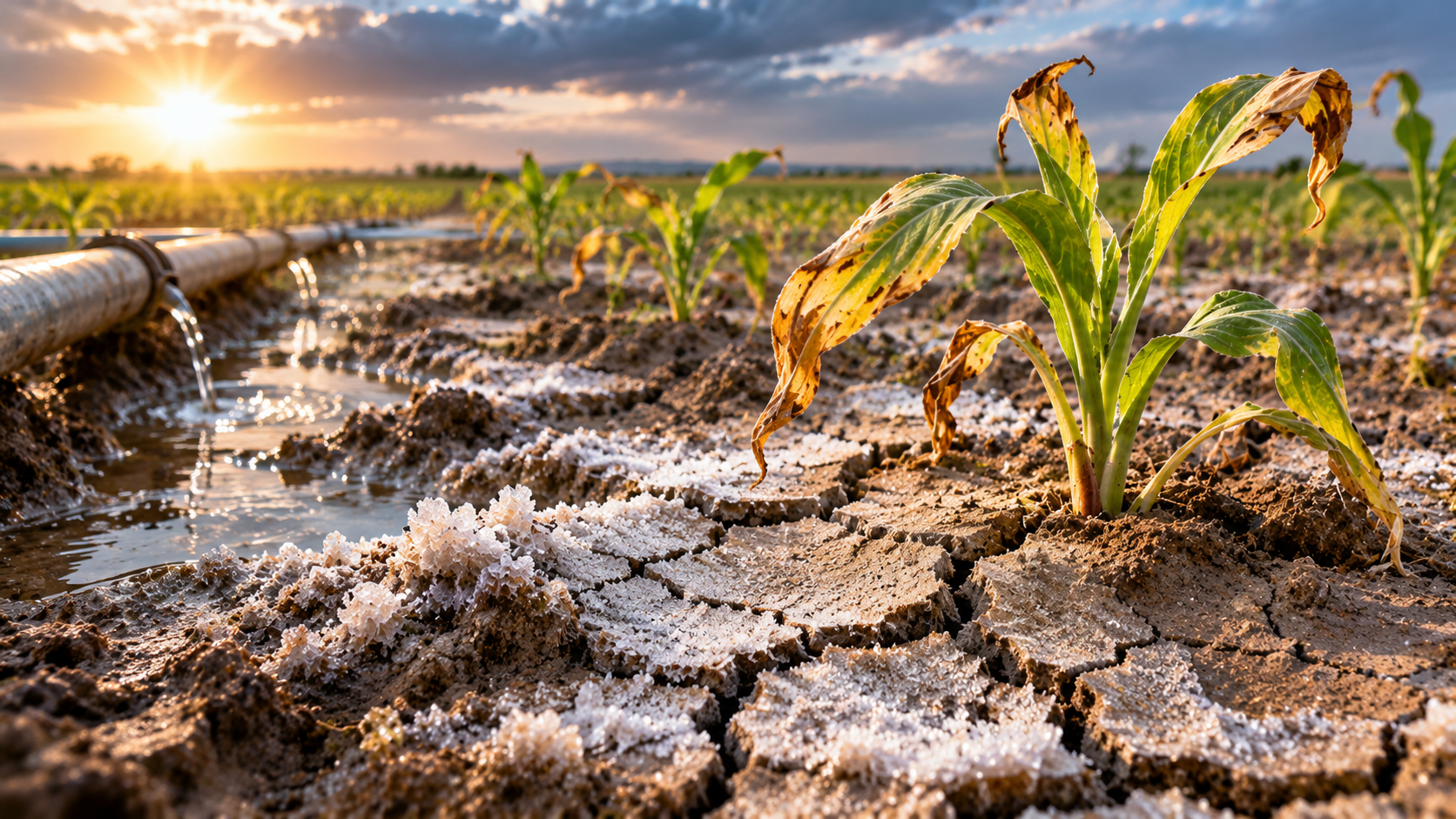
Imagine a field where crops are struggling despite regular irrigation. The plants look stressed, growth is uneven and yields are falling. The farmer applies more water, hoping to solve the problem, but the underlying issue is not a shortage of water. It is what the water is leaving behind - salt.
It is an uncomfortable contradiction. Water is essential to healthy soil and successful agriculture, yet the way we use it can contribute to a problem that eventually makes soil less productive.
Soil salinity is not a new phenomenon. Salt-affected soils occur naturally in many parts of the world, particularly in dry regions and coastal areas. But agricultural practices, inadequate drainage and changing weather patterns are increasing the risk in places where salinity was not previously a major concern.
According to the Food and Agriculture Organization (FAO), more than 1.38 billion hectares of land worldwide are affected by salinity, representing approximately 10.7% of the global land area. The organisation has also warned that a further billion hectares could be at risk because of climate change and unsustainable land and water management.
This is not just an agricultural problem. It is a soil health issue with consequences for food production, biodiversity, water resources and the resilience of entire landscapes.
What exactly is soil salinity?
All soils contain some salts. These are naturally occurring minerals, including compounds containing sodium, calcium, magnesium, chloride and sulphate. In healthy soil, their concentrations are generally low enough not to interfere significantly with plant growth. The problem begins when these salts accumulate faster than they can be removed.
This process is known as soil salinisation. It occurs when dissolved salts become concentrated in the soil, particularly around the root zone where plants obtain water and nutrients.
As water evaporates from the soil or is absorbed by plants, the water disappears, but the dissolved salts remain. If rainfall or irrigation does not move those salts deeper into the ground, or if drainage is insufficient to carry them away, concentrations gradually increase. Eventually, the soil can contain enough salt to affect plant growth and the wider soil ecosystem.
There is also an important distinction between saline and sodic soils. Saline soils contain excessive soluble salts, while sodic soils have an excessive proportion of sodium attached to soil particles. The two conditions can occur together, but they are not identical.
This distinction matters because high sodium levels can damage soil structure, causing clay particles to disperse, blocking pores and reducing the movement of water and air. A soil can therefore suffer physical deterioration as well as chemical imbalance.
How does salt get into the soil?
Some soil salinity is entirely natural. Weathering rocks release minerals into the surrounding soil, while groundwater can carry dissolved salts towards the surface. Coastal areas may also experience salt accumulation through seawater flooding, tidal movement and the intrusion of saltwater into freshwater supplies. However, human activity can accelerate the process and one of the biggest contributors is irrigation.
Irrigation is essential to agriculture in many parts of the world, particularly in regions where rainfall is unreliable, but irrigation water is not completely free of dissolved minerals.
Every time water is applied to a field, it brings some salts with it. Under normal conditions, rainfall and carefully managed irrigation can help move these salts down through the soil and away from plant roots. Problems develop when that process does not happen effectively.
If too little water is applied to flush salts beyond the root zone, they begin to accumulate. If the irrigation water itself has a high salt content, the problem can become more serious.
Over-irrigation can also contribute to salinity. Excess water may raise the groundwater level, bringing salty water closer to the surface. As this water moves upwards through the soil and evaporates, it leaves salts behind.
This is particularly problematic in hot, dry environments where evaporation rates are high. The irony is that an irrigation system intended to support agricultural productivity can, if poorly managed, gradually undermine the soil on which that productivity depends.
The importance of proper drainage
Water needs somewhere to go. If excess water cannot drain away, salts can become trapped within the soil profile. A rising water table can also bring dissolved salts towards the surface, where evaporation concentrates them around the roots.
Drainage is therefore an essential part of managing soil salinity. It helps prevent waterlogging and allows salts to be moved away from the areas where crops are growing.
But drainage needs to be properly designed and managed. Removing salty water from agricultural land without considering where it goes can transfer the problem into rivers, lakes or other water supplies. Managing salinity is not just about getting salt out of one field. It is about managing the movement of water and dissolved minerals across the wider landscape.
Climate change adds another layer of complexity. Higher temperatures can increase evaporation, leaving greater concentrations of salt behind in the soil. Longer periods of drought can reduce the amount of rainfall available to flush salts down through the ground.
In coastal regions, rising sea levels increase the risk of saltwater moving into agricultural land and freshwater aquifers. In some areas, changing rainfall patterns and increased pressure on water supplies may also encourage the use of lower-quality irrigation water.
These pressures do not affect every region in the same way, but they create conditions in which existing salinity problems can become more severe and new ones can develop.
What does salt do to plants?
One of the most damaging effects of soil salinity is that it makes it harder for plants to absorb water. This might sound strange. After all, the soil can be moist, and water may be readily available around the roots. But high salt concentrations change the balance between the water inside plant roots and the water surrounding them.
The plant has to work harder to extract water from the soil. As salinity increases, this becomes progressively more difficult. The result can resemble drought stress, even when the ground contains plenty of moisture.
Seeds may struggle to germinate. Young plants can fail to establish properly, while established crops may grow more slowly, develop damaged leaves and produce smaller yields. High concentrations of particular ions can also cause direct toxicity, while excess salts can interfere with the uptake of essential nutrients such as potassium and calcium.
Different plants have different tolerances. Some crops are particularly sensitive to salt, while others can survive in more saline conditions. Barley, for example, is generally more salt-tolerant than wheat, but tolerance is not the same as immunity. Even salt-tolerant crops can suffer when concentrations become too high.
For farmers, the consequences can be considerable. Lower yields mean reduced income, while attempts to compensate through additional irrigation, fertilisers and other inputs can increase costs. In the most severely affected areas, agricultural production may no longer be viable.
The impact on the living world beneath our feet
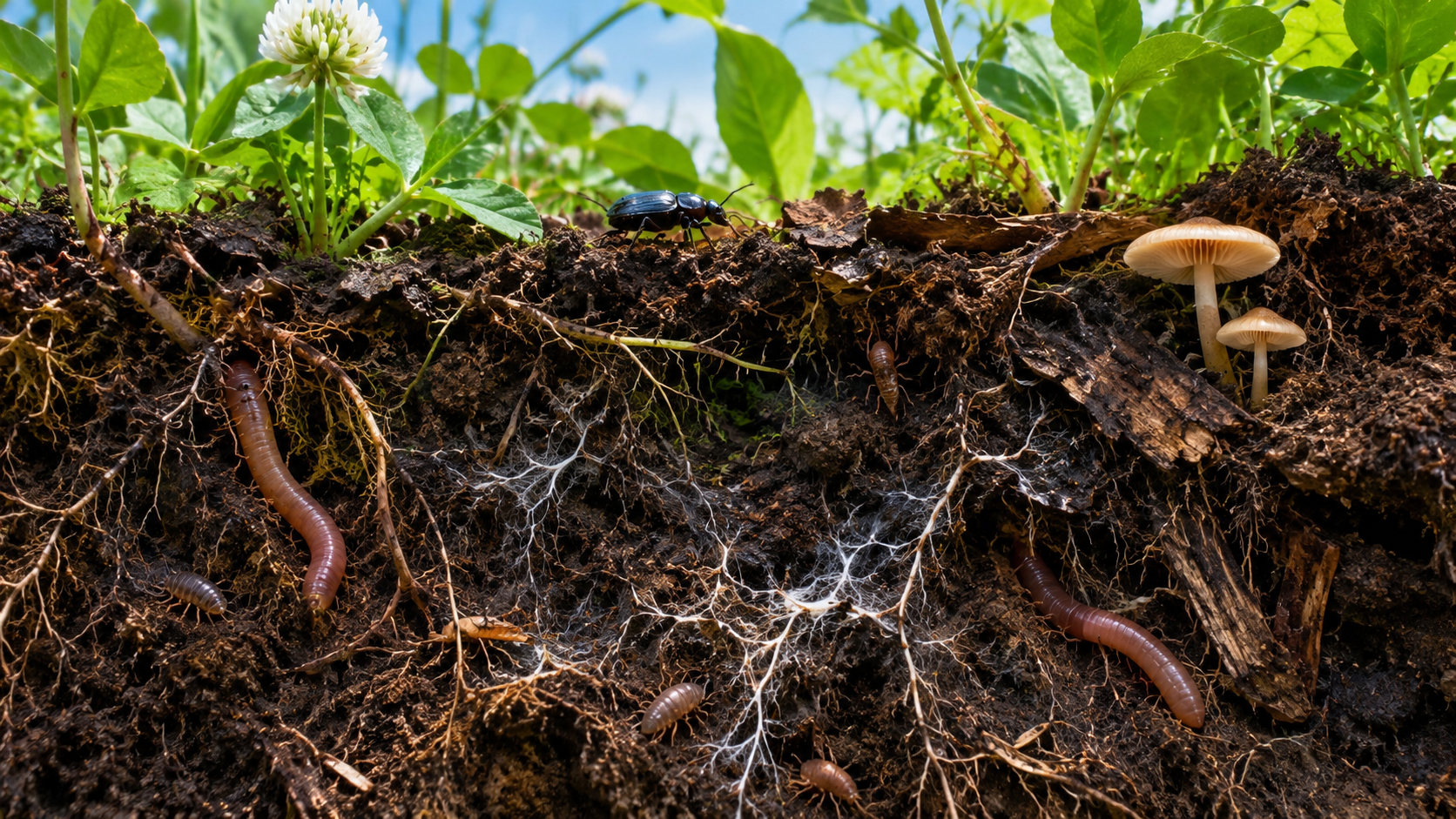
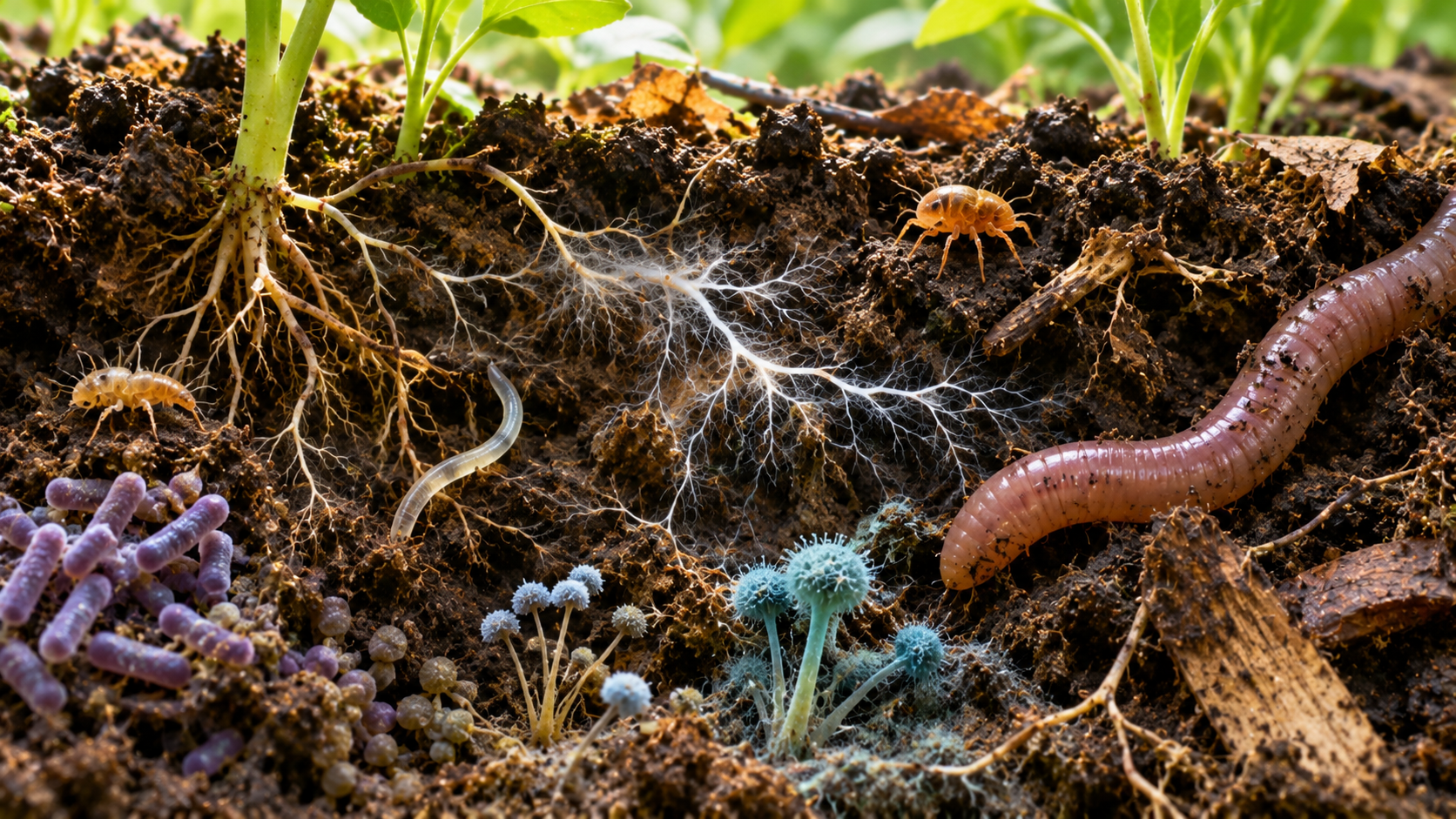
The effects of soil salinity do not stop with plants. Healthy soil depends on a diverse community of bacteria, fungi, earthworms, nematodes and other organisms. These living components help break down organic matter, recycle nutrients, maintain soil structure and support plant growth. Salt accumulation can change the conditions in which these organisms live.
High salt concentrations can create physiological stress for microorganisms, affecting their growth, activity and ability to carry out essential biological processes. Different species respond differently, and some salt-tolerant organisms can survive where others struggle. The balance of the microbial community may therefore change as salinity increases.
This matters because soil microorganisms are involved in many of the processes that keep soil functioning. Bacteria and fungi help decompose organic material and release nutrients. Other microorganisms contribute to nitrogen cycling, while mycorrhizal fungi form relationships with plant roots that help them access water and nutrients. If microbial activity is reduced or the composition of the community changes significantly, nutrient cycling and the wider soil food web can be affected.
Salinity can also damage the physical structure of some soils, particularly where sodium levels are high. When soil particles disperse, water infiltration becomes more difficult and the movement of air through the ground can be restricted. The result is a combination of chemical, physical and biological pressures.
In other words, when soil becomes too salty, we risk disrupting much more than the plants growing above it.
How do we recognise a salt-affected soil?
One of the difficulties with soil salinity is that it can develop gradually. By the time the effects become obvious, the problem may already be well established.There are, however, some warning signs.
White or pale crusts on the soil surface can indicate that salts are accumulating. Plant growth may become uneven, with some areas of a field performing noticeably worse than others. Crops may show poor germination, leaf-tip damage, reduced vigour or signs of water stress despite adequate moisture.
Waterlogging and poor drainage can also be associated with salt-affected soils, but visual inspection alone is not enough to confirm the problem. White deposits can have different causes and not every poorly growing crop is suffering from salinity.
Proper assessment involves soil testing, including measurement of electrical conductivity, which indicates the concentration of soluble salts. Where sodium-related structural problems are suspected, additional measurements may be needed to assess sodicity. Understanding the type and extent of the problem is essential before deciding how to manage it.
Can we restore soil affected by salinity?
The encouraging news is that salt-affected soils are not necessarily beyond recovery, but restoring them requires an understanding of how the salts entered the soil and why they are accumulating. There is no single solution that works everywhere.
In many situations, improving drainage is essential. Where suitable water is available, carefully managed leaching can move soluble salts below the root zone and towards a drainage system. However, this needs to be planned properly. Adding more water to poorly drained land can make the problem worse.
Where sodicity is present, the approach may need to be different. Soil amendments such as gypsum can be used in suitable circumstances to supply calcium, helping to replace exchangeable sodium and improve soil structure. The correct treatment depends on the soil's chemical properties and should be based on testing rather than guesswork.
Growing salt-tolerant crops can also help maintain productivity while longer-term improvements are made. Some plants are better adapted to saline conditions and can provide a practical option in areas where other crops struggle. Maintaining organic matter, protecting the soil surface and improving water management can also form part of a wider rehabilitation strategy.
The most important lesson is that recovery requires more than treating the visible symptoms. If the underlying causes of salt accumulation remain, the problem is likely to return.
We need to think differently about how we use water
Soil salinity is a reminder that soil health is connected to much more than what happens on the surface. It is connected to rainfall, groundwater, irrigation, drainage, vegetation and the way we manage the wider landscape. A decision made to increase agricultural production today can have consequences for soil productivity years later if the movement of water and salts is not properly understood. As climate change places increasing pressure on freshwater supplies and agricultural land, these decisions will become even more important.
We need irrigation systems that use water efficiently. We need drainage that prevents salts accumulating without transferring pollution elsewhere. We need better monitoring of soil conditions and greater awareness of the relationship between water management and soil health.
And we need to recognise that healthy soil is not just about having enough nutrients or organic matter. The balance of minerals, the movement of water and the living organisms beneath our feet all contribute to its ability to support life.
Soil salinity may be a hidden problem, but its consequences are anything but small. The ground does not have to look damaged to be losing its ability to support life. Sometimes, the problem is accumulating quietly beneath the surface.
Frequently Asked Questions About Soil Salinity
1. What are the early warning signs of soil salinity?
Early signs include poor seed germination, uneven crop growth, leaf-tip damage and plants showing signs of water stress despite adequate moisture. White salt deposits on the soil surface can also indicate salinity, although soil testing is needed to confirm the problem.
2. Can soil become too salty from watering plants?
Yes. Irrigation water contains dissolved minerals and salts. As water evaporates or is absorbed by plants, these salts remain in the soil. Without sufficient drainage and water movement to carry them away, repeated irrigation can gradually increase salt concentrations.
3. Which crops are most sensitive to salty soil?
Many common crops, including beans, strawberries, onions and some fruit trees, are relatively sensitive to salinity. Barley, cotton and certain forage grasses are generally more tolerant. However, crop tolerance varies with growing conditions and the level of salt exposure.
4. Does soil salinity affect earthworms and beneficial microorganisms?
Yes. High salt concentrations can create stressful conditions for earthworms, bacteria, fungi and other soil organisms. Their responses vary between species, but excessive salinity can reduce biological activity and disrupt processes such as organic matter decomposition and nutrient cycling.
5. What is the difference between saline soil and sodic soil?
Saline soil contains excessive concentrations of soluble salts, which make it difficult for plants to absorb water. Sodic soil contains excessive exchangeable sodium, which can cause soil particles to disperse, damaging soil structure and reducing water infiltration. Some soils experience both conditions.
6. Can heavy rainfall remove salt from the soil?
Rainfall can help flush soluble salts deeper into the soil, provided there is sufficient drainage to carry them away. However, heavy rainfall alone will not solve salinity where drainage is poor or groundwater levels are high. In some circumstances, waterlogging can make the problem worse.
7. How do you test soil for salinity?
Soil salinity is commonly assessed by measuring electrical conductivity (EC), which indicates the concentration of dissolved salts. A laboratory soil test can establish the level of salinity and help determine whether further testing is needed to assess sodium levels and soil structure.
8. Can saline soil be restored to healthy agricultural land?
Yes, many salt-affected soils can be improved through appropriate management. Depending on the problem, this may involve improving drainage, carefully flushing salts from the root zone, applying suitable soil amendments such as gypsum to sodic soils, and selecting more salt-tolerant crops.
9. Does climate change make soil salinity worse?
Climate change can increase salinity risks through higher temperatures, greater evaporation, prolonged droughts and changing rainfall patterns. Rising sea levels can also increase saltwater intrusion into coastal farmland and freshwater supplies. The impact varies between regions.
10. Why is soil salinity a threat to global food security?
Salinity makes it harder for crops to absorb water and nutrients, reducing germination, growth and yields. As more agricultural land becomes salt-affected, the amount of productive farmland available can decline, placing additional pressure on food production and farming communities.