The Problem With Artificial Turf and what Are We Doing to the Soil Beneath It?
Artificial grass is increasingly appearing in gardens, school grounds, sports facilities and public spaces. It offers a neat, green surface without mowing, watering or the maintenance associated with natural grass, but there is a question we should be asking before replacing living ground with synthetic material. What happens to the soil underneath? Beneath the plastic blades, there is still a natural ecosystem that needs water, air, organic matter and sunlight to function. Covering it with an artificial surface can change those conditions, potentially affecting everything from water movement and soil temperature to the organisms that keep the ground alive.
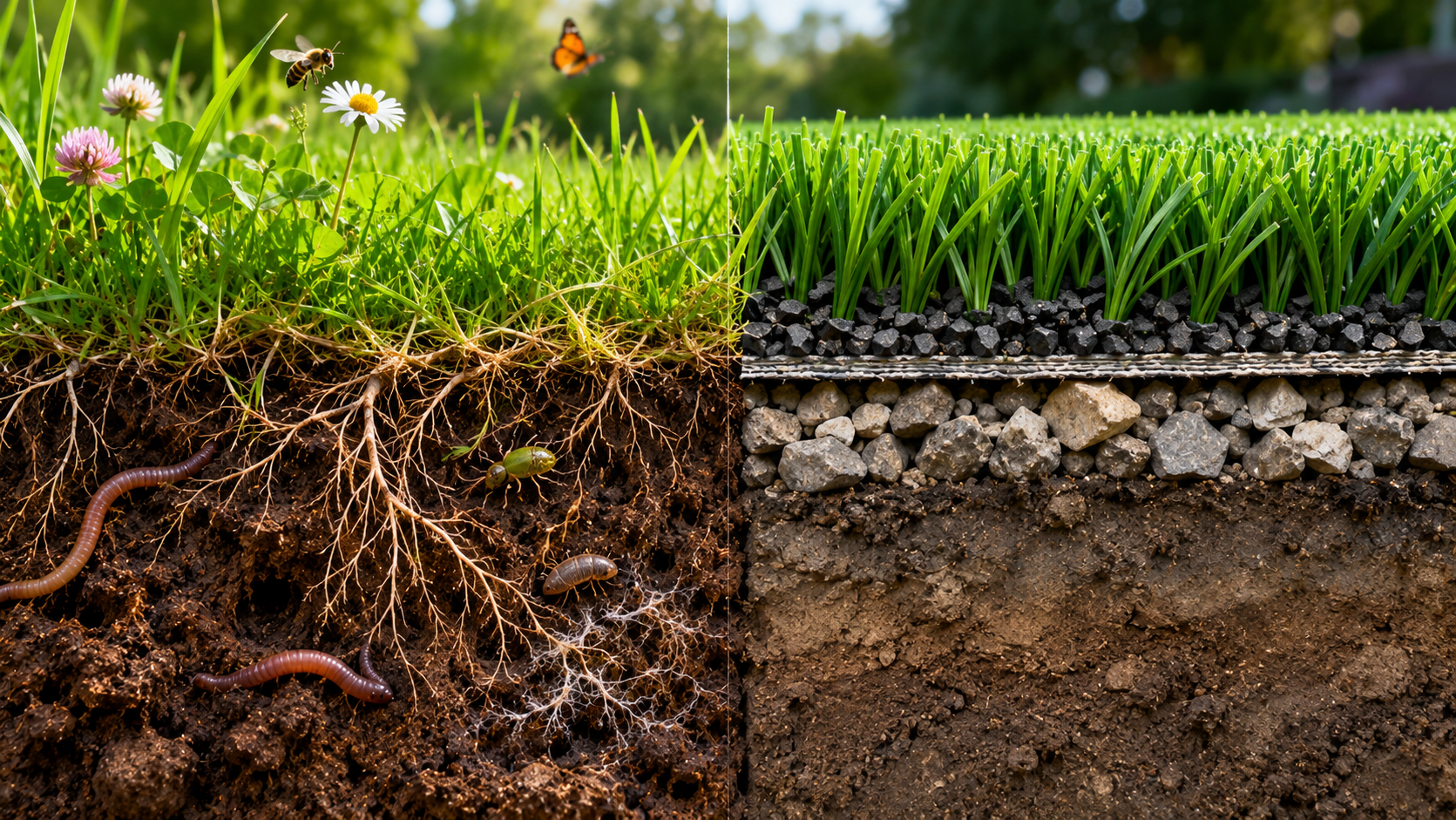
The appeal is understandable. A lawn that remains green throughout the year, requires little attention and does not become muddy after heavy rain sounds like an attractive proposition. For sports facilities, artificial turf can also provide a consistent playing surface that can be used more frequently than some natural grass pitches, but there is a difference between a surface that looks like grass and one that behaves like a living landscape.
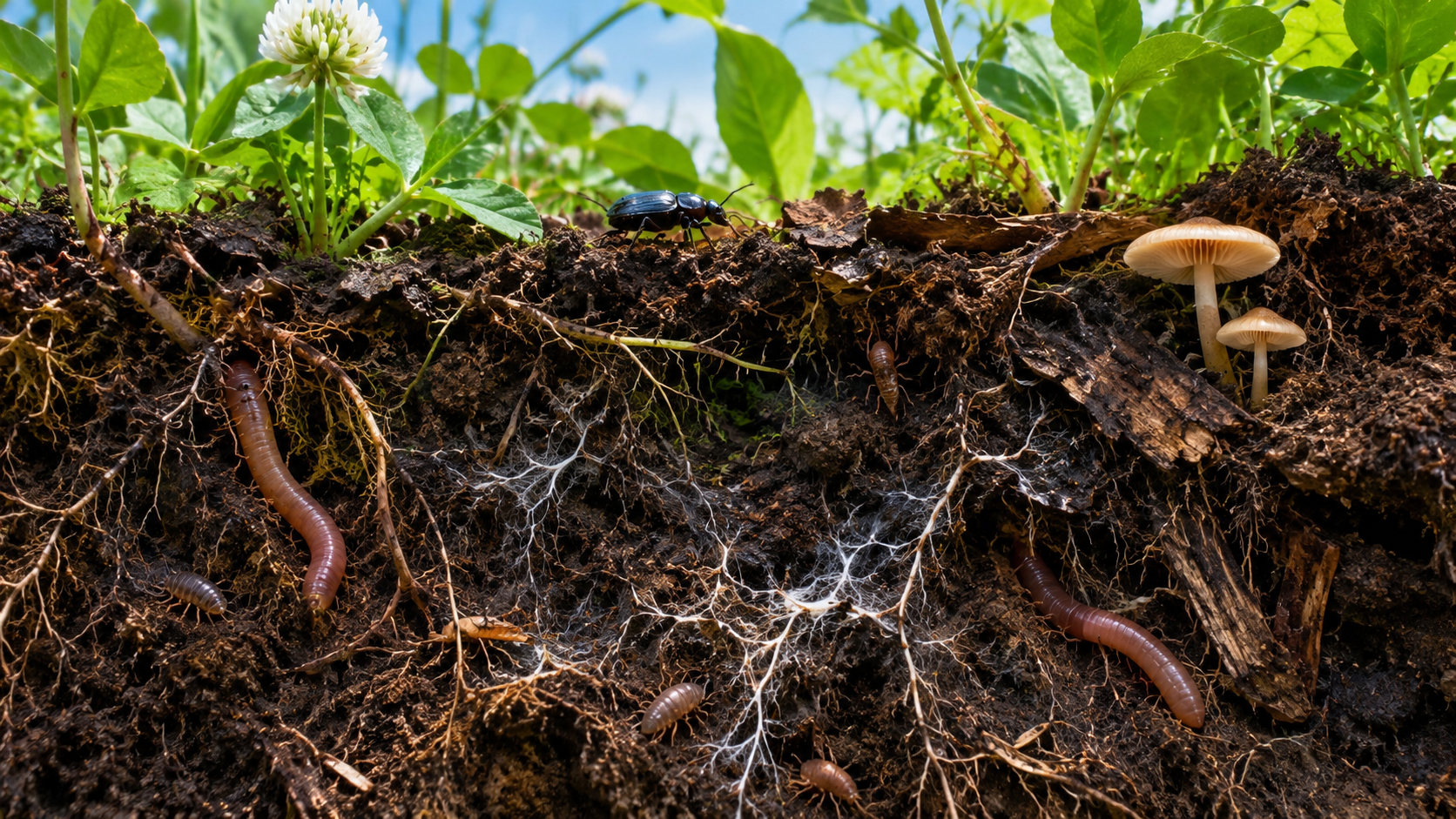
Natural grass is part of a wider ecosystem. Its roots penetrate the soil, absorb water and nutrients, release organic compounds and support relationships with microorganisms. Rainfall can infiltrate the ground, while earthworms, fungi, bacteria and other organisms help maintain its structure and biological activity.
Artificial turf replaces much of that living vegetation with manufactured fibres, backing materials and in some systems, layers of rubber or other infill. The installation may also involve excavation, compacted stone, drainage layers and membranes. The result can be a significant change to the environment beneath the surface.
It is not accurate to suggest that every artificial turf installation completely seals the ground or prevents water from passing through. Many systems are designed to be permeable and include drainage holes. But permeability does not mean that the underlying soil continues to function as it did before and that distinction is important.
What happens to the soil when we cover it?
A healthy soil needs a balance of water, air and organic material. Its structure contains pores and channels that allow water to infiltrate, air to circulate and roots to grow. These spaces also provide habitats for the organisms that make soil function.
When artificial turf is installed, the ground is often prepared by removing existing vegetation and sometimes stripping away the upper layer of soil. A compacted aggregate sub-base may then be laid, with a geotextile membrane, shock pad or other materials forming part of the system.
For a sports pitch, this construction can be substantial. For a domestic garden, the preparation may be less extensive, but it commonly involves removing the natural lawn, laying a compacted base and installing a synthetic surface. These changes can affect the soil in several ways.
The removal of vegetation reduces the supply of living roots and plant residues. Compaction changes the size and distribution of soil pores. The layers above can alter how water and gases move between the atmosphere and the underlying ground. The soil may still be physically present, but the conditions that support its natural processes have changed.
Water needs somewhere to go
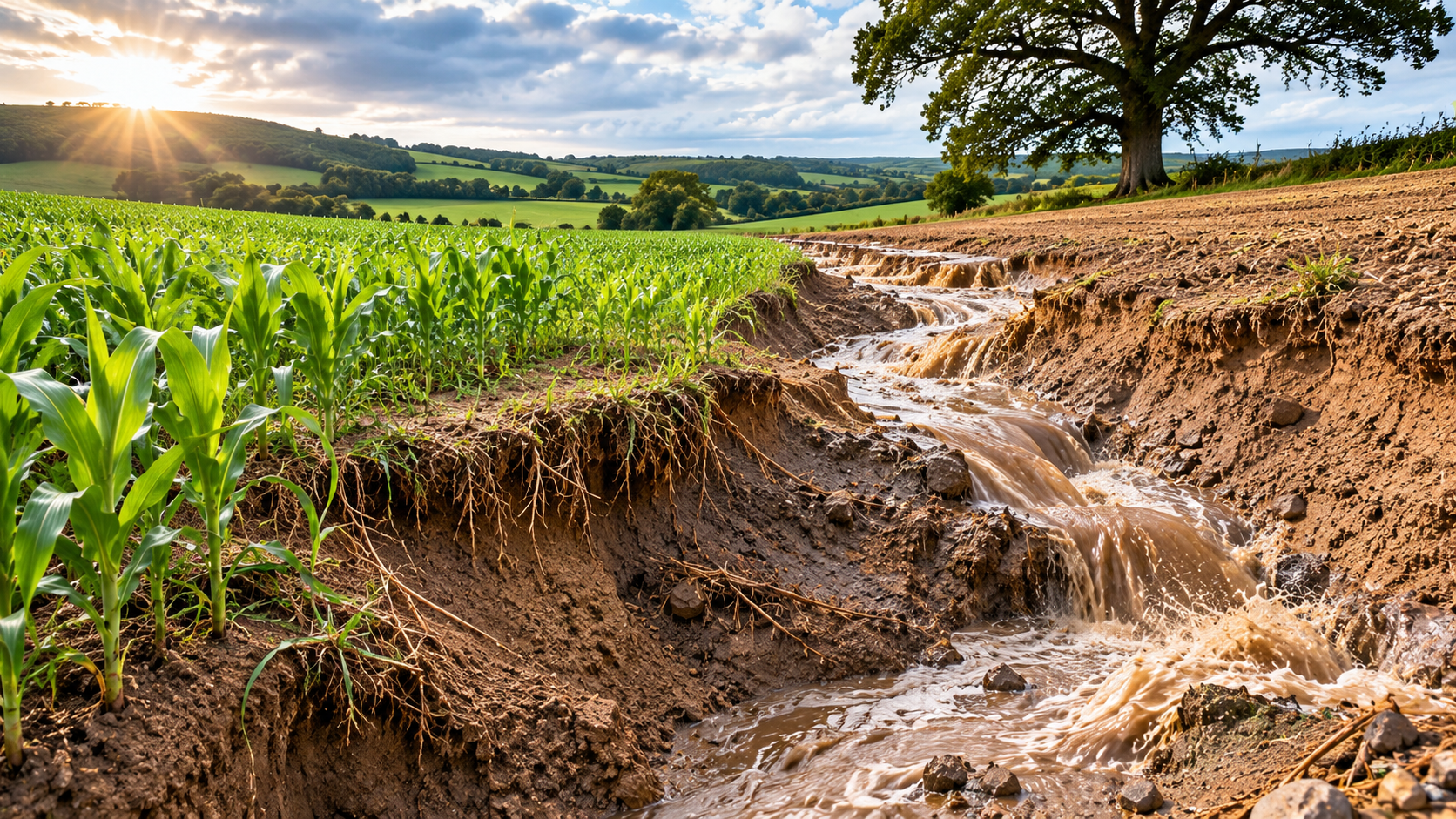
One of the most important functions of healthy soil is its ability to absorb and store water. When rain falls on natural grassland, some water is intercepted by vegetation, some runs across the surface and some infiltrates the soil. The amount that enters the ground depends on soil texture, structure, compaction, vegetation and how wet the soil already is. Artificial turf changes this relationship.
Some products have perforated backing that allows water to pass through. Sports systems may also incorporate drainage layers and carefully designed sub-bases to manage rainfall.
However, the water passing through an artificial surface does not necessarily enter the underlying natural soil in the same way it would beneath a living lawn. It may move through the manufactured layers and be directed into drainage pipes or collection systems.
Where the underlying ground has been heavily compacted or covered by less permeable materials, natural infiltration can be restricted. This matters because soil is an important part of the natural water cycle. It helps absorb rainfall, replenish groundwater and regulate the movement of water through landscapes. When natural ground is replaced by engineered surfaces, some of those functions can be reduced or altered.
The wider concern is not confined to artificial grass. Roads, paving, car parks and buildings all contribute to the loss of permeable natural ground. Artificial turf can add to that problem, particularly where it replaces a previously healthy lawn or green space.
The soil needs to breathe
Water is only part of the equation. Soil also needs air. The spaces between soil particles contain air as well as water. Oxygen moves through these pores, allowing plant roots and aerobic microorganisms to function. Carbon dioxide and other gases produced by biological activity can also move out of the soil.
When soil becomes compacted, these spaces can become smaller and less connected. Water infiltration may decline, while the movement of air becomes more difficult.
Artificial turf installations can contribute to this through the preparation of the ground, particularly where machinery is used and the sub-base is heavily compacted. The synthetic surface and its underlying construction can also change the exchange of gases between the soil and the atmosphere.
The degree of impact depends on the design. A permeable installation with a suitable construction may allow some movement of water and air, whereas a more restrictive system can create a much greater barrier.
But the important point is that soil is not an inert material that can be covered without consequence. It is a living environment that needs the right physical conditions to remain biologically active.
What happens to the organisms living beneath the surface?
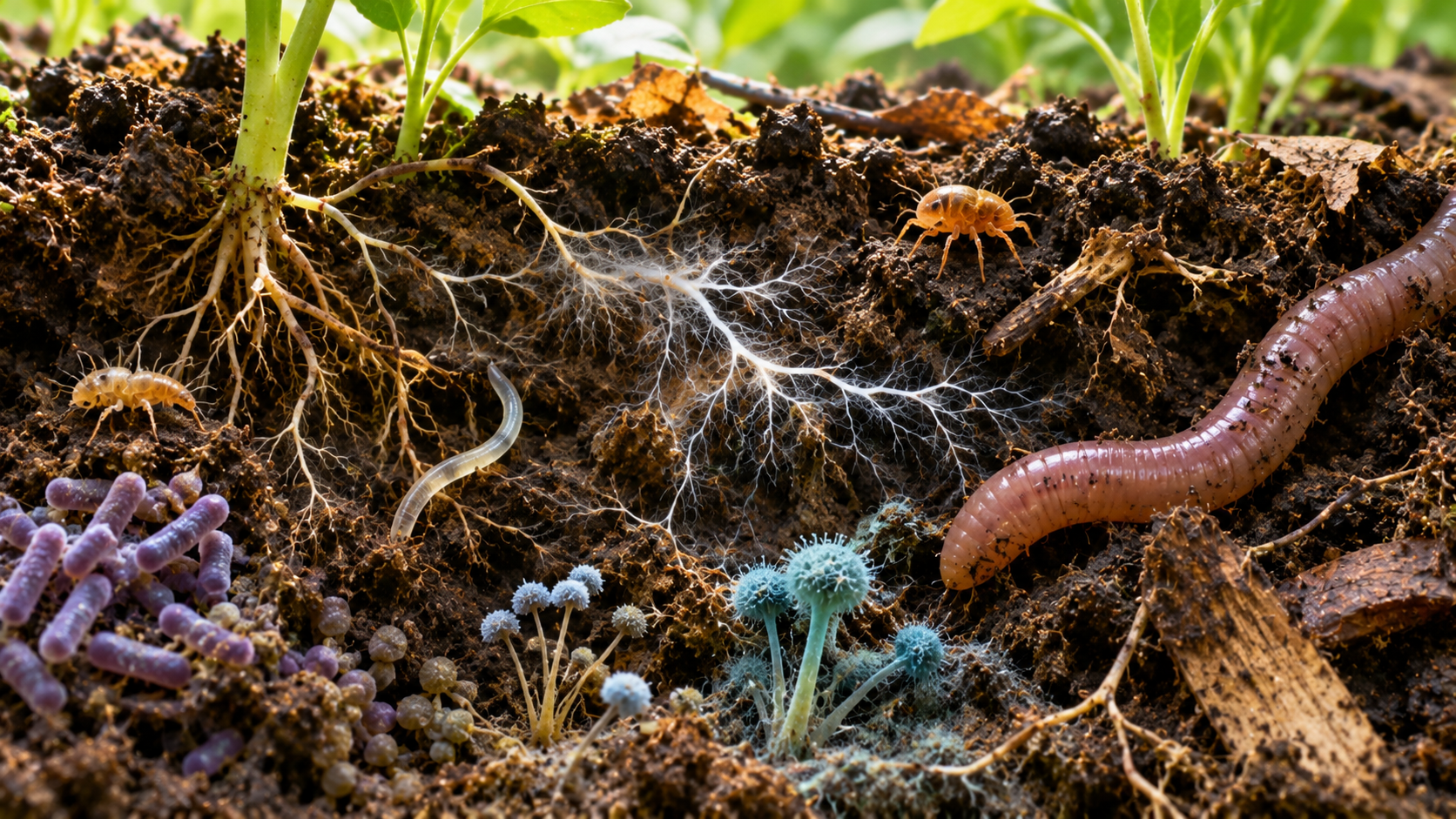
Beneath a natural lawn is a community of organisms that most people never see. Bacteria and fungi break down organic matter and help recycle nutrients. Earthworms move through the soil, creating channels and incorporating plant material. Nematodes, mites, springtails and other small creatures contribute to the soil food web.
Living grass roots also provide a continuing source of food for microorganisms through the release of organic compounds. When grass dies back or is cut, plant residues can return organic matter to the soil. Remove the grass and replace it with synthetic fibres and that supply of living root material is lost.
The consequences can extend beyond the absence of roots. Changes to moisture, temperature, oxygen availability and organic matter can alter the habitats in which soil organisms live.
For example, earthworms need suitable moisture and oxygen conditions. Many beneficial fungi depend on relationships with living plant roots. Microbial communities respond to changes in temperature, moisture and the availability of organic material. It is therefore reasonable to expect that replacing a living lawn with an artificial surface can change the biological activity of the underlying soil.
However, the extent of these changes is not yet fully understood across all types of artificial turf installation. Research into artificial turf has concentrated heavily on material loss, chemical release and microplastic pollution. There is less published evidence directly measuring long-term changes in the soil ecosystem beneath different types of artificial grass.
That research gap matters. We should be careful not to claim that every installation destroys soil biodiversity, but equally we should not assume that the soil remains unaffected.
Artificial grass can make the ground hotter
Temperature is another important consideration. Natural grass helps regulate the temperature of its surroundings. Plants absorb water through their roots and release some of it into the atmosphere through a process called transpiration. Evaporation from moist soil also helps dissipate heat. Artificial turf does not provide the same natural cooling processes.
Synthetic fibres can absorb and retain considerable amounts of solar energy, particularly in direct sunlight. The surface can become much hotter than natural grass, creating uncomfortable conditions for people using it and changing the local microclimate.
A 2024 systematic review of 23 studies comparing synthetic sports surfaces with natural grass found that surface temperatures were consistently higher on synthetic grass. The differences ranged from 9.4°C to 33.7°C, depending on the conditions and surfaces studied. The review also found that air temperatures immediately above synthetic surfaces were higher, although the wider implications for human heat stress require further investigation.
The effects vary between products. Some newer systems use alternative infills, cooling technologies or specialist fibres intended to reduce surface temperatures, but the temperature difference is not just a concern for people walking or playing on the surface.
This matters because soil organisms are sensitive to their environment. Changes in soil temperature can influence microbial activity, organic matter decomposition and the conditions in which roots and soil animals survive.
The problem does not stop at the edge of the lawn
Artificial turf is made from synthetic materials, usually including plastics such as polyethylene and polypropylene. Sports installations may also contain shock pads, backing materials and performance infill. Some systems use crumb rubber made from recycled tyres. Others use sand, cork, organic materials or alternative synthetic infills.
These materials have different environmental characteristics, but none should be assumed to be entirely without impact. Over time, sunlight, temperature changes, rainfall and mechanical wear can cause synthetic fibres and infill materials to break down or escape from the surface. Particles can be carried away by wind, attached to footwear and maintenance equipment, or washed into drainage systems.
A 2026 review published in Environmental Science: Advances, involving researchers at Loughborough University, examined how ultraviolet exposure, temperature changes, rainfall and mechanical wear contribute to the breakdown of artificial turf materials.
This raises an important question about what happens when particles escape the surface. They may enter surrounding soil, drainage systems, rivers and other natural environments.
A separate 2026 study published in Environmental Science: Processes & Impacts found that artificial sports fields using recycled tyre crumb infill could also release tyre-derived chemicals into stormwater. The researchers identified substances including 6PPD-quinone, highlighting the potential for artificial turf to act as a continuing source of pollutants in water run-off.
The exact risks depend on the materials used, the design of the installation and the surrounding environment, but it is clear that artificial turf should be considered as more than a surface covering. It is a manufactured system with a lifecycle and an environmental footprint.
What about gardens and small areas of artificial grass?
Much of the published research focuses on large sports facilities, where the quantities of synthetic material and infill can be substantial, but artificial grass is also increasingly used in domestic gardens, balconies, school grounds, play areas and commercial landscaping. The scale may be smaller, but the same underlying questions apply.
What happens to the natural soil before installation? Is the surface permeable? What materials are being used? Where does rainfall go? What happens to the soil beneath the compacted base? And how will the artificial grass be disposed of when it reaches the end of its useful life?
In a garden, replacing natural grass with artificial turf also removes an opportunity to support biodiversity. A natural lawn, particularly one managed with reduced mowing and a wider range of plants, can provide habitat for insects and other wildlife. It can support soil organisms, contribute organic matter and form part of a connected green space. Artificial grass may look green, but it does not provide the same ecological functions. There is a difference between creating the appearance of nature and supporting nature itself.
Can artificial turf be made more environmentally responsible?
There are ways to reduce the environmental impact of artificial turf, particularly in situations where it is required for a specific purpose. The choice of infill material can make a difference. Systems that avoid conventional crumb rubber may reduce certain chemical and microplastic concerns, although alternative materials also need to be assessed for their environmental performance.
Good design and installation can help manage water. Permeable construction, appropriate drainage and measures to prevent infill and fibre loss can reduce the amount of material escaping into the surrounding environment.
Maintenance also matters. Regularly collecting loose fibres and infill, managing waste carefully and preventing particles from being washed into drainage systems can help limit pollution.
Manufacturers and facility owners should also consider the full lifecycle of the product. How long will it last? Can its components be separated and recycled? What happens when it is removed? Is there a credible end-of-life route?
The environmental impact of artificial turf does not begin and end with installation. It includes the extraction and manufacture of materials, transportation, maintenance, replacement and disposal.
Where artificial turf is necessary, these considerations should form part of the specification and procurement process, but in gardens and other areas where natural vegetation could thrive, it is worth asking whether synthetic grass is needed at all, because we should stop treating soil as something that can be covered without consequence
Artificial turf offers practical advantages in certain settings. It can provide a durable playing surface, reduce some maintenance requirements and allow sports facilities to be used in conditions where natural grass might struggle, but convenience should not be confused with environmental benefit.
The soil beneath an artificial surface is still part of the natural world. It contains organisms, stores carbon, regulates water and supports the wider ecosystem. Its value does not disappear because we can no longer see it.
We need to think more carefully about the consequences of replacing living ground with manufactured materials. We need better evidence about the long-term effects on soil biology, water movement and the wider environment. And we need to consider whether the benefits of an artificial surface justify the loss of natural functions.
Perhaps the most important question is not whether artificial grass looks like the real thing. It is whether we are prepared to sacrifice the real thing for the convenience of something that only looks the same.
Frequently Asked Questions About Artificial Turf and Soil Health
1. Does artificial grass damage the soil underneath it?
Artificial grass can change the conditions in which soil functions. Installation may involve removing natural vegetation, compacting the ground and adding layers of aggregate and synthetic materials. This can affect water movement, air circulation, soil temperature and the organisms living beneath the surface. The extent of the impact depends on the installation method and materials used.
2. Does artificial turf stop rainwater reaching the soil?
Not necessarily. Some artificial turf systems have perforated backing and permeable drainage layers that allow water to pass through. However, the water may be channelled away through an engineered drainage system rather than infiltrating the natural soil as it would beneath a living lawn.
3. Why does artificial grass get hotter than natural grass?
Synthetic fibres absorb and retain heat from sunlight. Unlike natural grass, artificial turf does not provide the same cooling effect through transpiration and evaporation. As a result, its surface temperature can become significantly higher, particularly during hot, sunny weather.
4. Does artificial grass affect earthworms and soil microorganisms?
It can. Removing living grass roots reduces an important source of food for soil microorganisms, while changes to moisture, temperature and oxygen availability can affect their habitats. Earthworms, fungi, bacteria and other soil organisms may therefore experience different conditions beneath artificial turf.
5. Does artificial turf contribute to microplastic pollution?
Yes. Synthetic fibres and infill materials can break down through sunlight, weather exposure and everyday wear. Small plastic particles can escape from the surface and be carried into surrounding soil, drainage systems and waterways.
6. Can chemicals from artificial grass pollute the soil and water?
Some artificial turf products and infill materials contain substances that may be released through weathering, wear and rainfall. Recycled rubber infill, for example, can contain chemicals derived from tyres. The substances released and their potential environmental effects depend on the materials used and the conditions of exposure.
7. Is artificial grass environmentally friendly compared with natural grass?
There is no straightforward answer. Artificial grass avoids mowing and can reduce the need for irrigation, but it is manufactured from synthetic materials, has a finite lifespan and creates end-of-life waste. Natural grass supports soil organisms, provides habitat and contributes to natural water and temperature regulation. The environmental comparison depends on how each surface is produced, installed, maintained and eventually replaced.
8. Can soil recover after artificial grass is removed?
Yes, but recovery depends on the condition of the underlying soil. Removing the artificial surface and compacted layers, improving soil structure, adding suitable organic matter and reintroducing vegetation can help restore biological activity. Where soil has been heavily compacted or contaminated by infill materials, additional investigation and remediation may be needed.
9. Is artificial grass suitable for gardens and school grounds?
Artificial grass may be practical in some locations, but its environmental consequences should be considered alongside convenience and maintenance. In gardens and school grounds, natural planting can provide habitat for wildlife, support soil biodiversity and help manage rainfall. The suitability of artificial turf depends on the intended use and whether a natural alternative could meet the same requirements.
10. What are the alternatives to artificial grass?
Alternatives include natural grass, clover lawns, wildflower areas, meadow planting, low-growing ground cover and permeable landscaping. The best option depends on how the space will be used, the soil conditions and the level of maintenance available. A mixture of natural planting and durable surfaces can often provide a practical balance between usability and environmental value.