The Soil Food Web Explained or Who Eats Whom Beneath Our Feet?
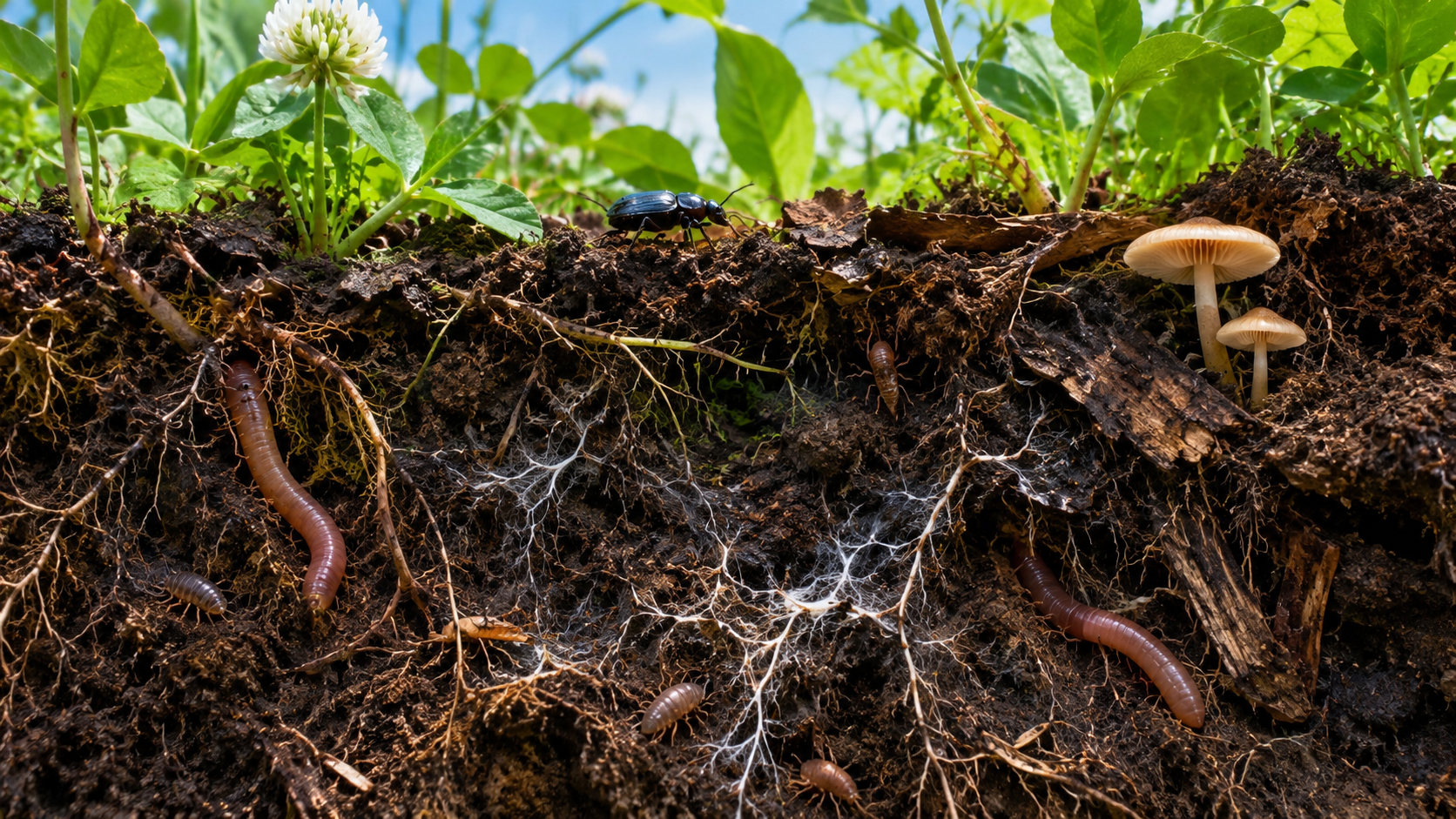
Beneath our feet, an extraordinary world is constantly at work. Bacteria, fungi, microscopic organisms, mites, springtails and earthworms are connected through an intricate network of feeding relationships that keeps soil alive. This is the soil food web and understanding how it works helps explain why healthy soil is about far more than the ground we grow things in.
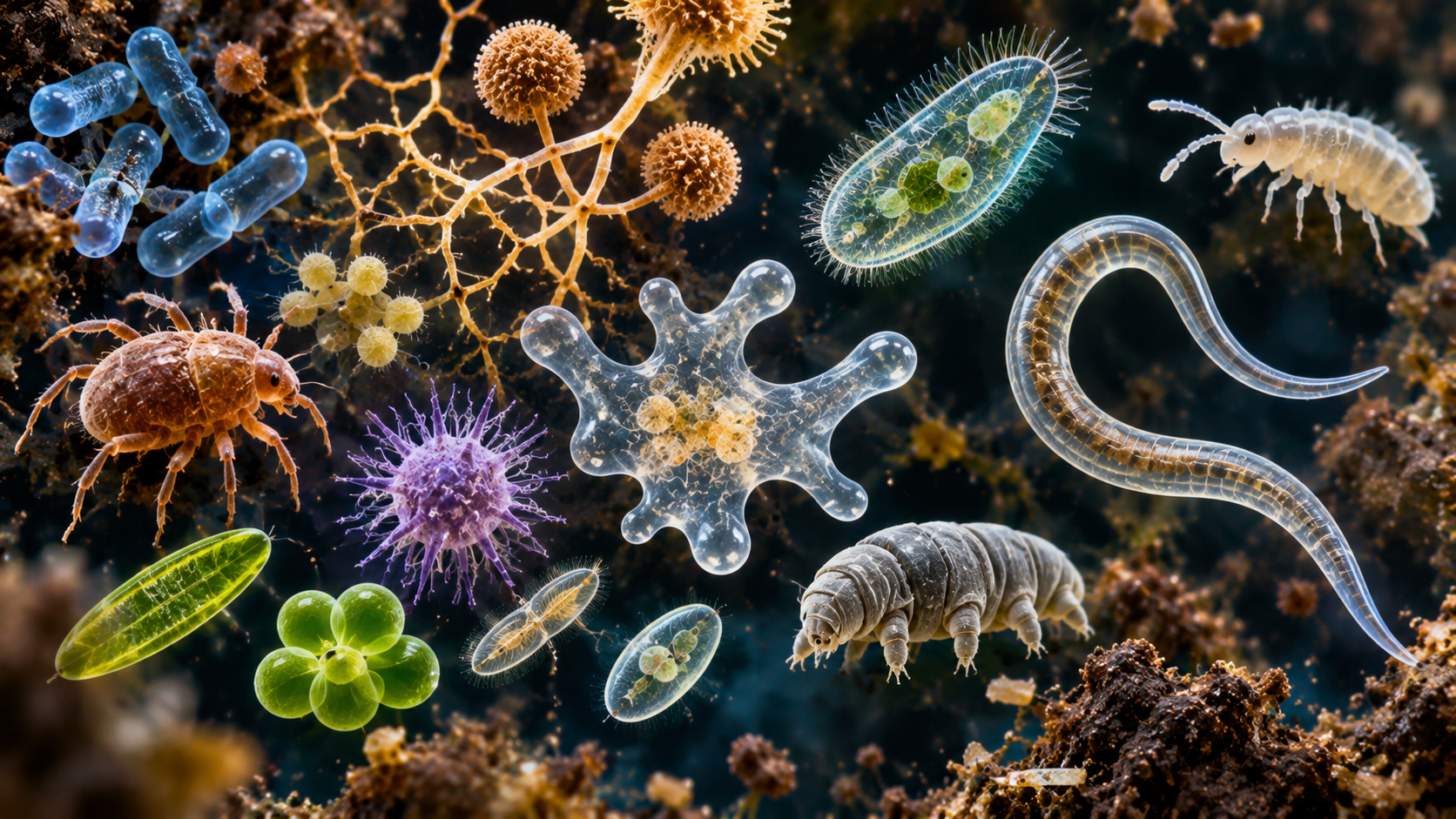
Take a handful of healthy soil and look at it closely. What appears to be an ordinary collection of earth, stones and organic matter is actually a busy living community. Millions of organisms may be present in a small quantity of soil, each playing a part in a system that recycles nutrients, breaks down dead material, supports plant growth and helps maintain the structure of the ground beneath us.
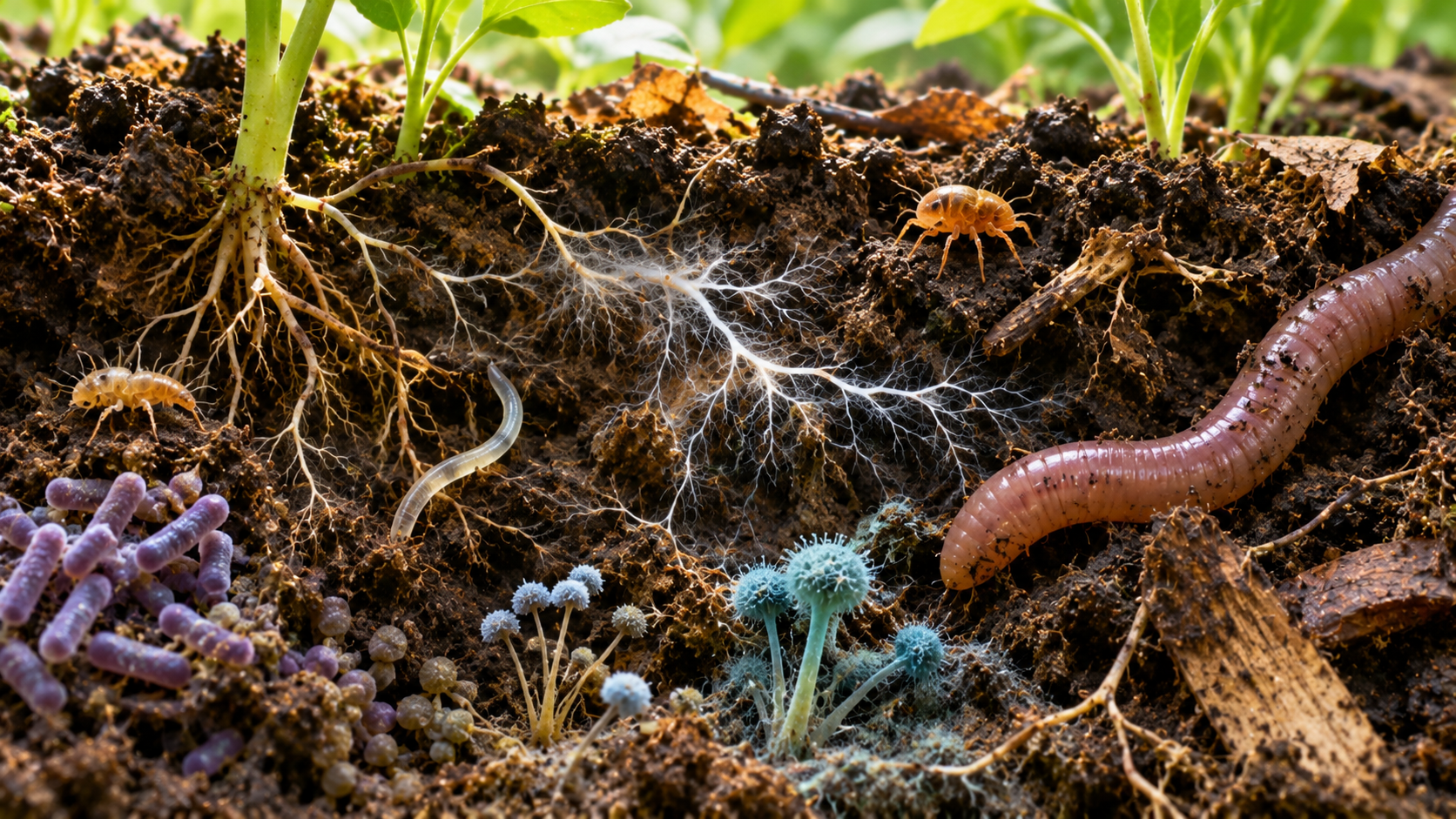
Some are so small that they can only be seen under a microscope. Others, such as earthworms, are familiar visitors to our gardens and fields, but they are all connected. One organism feeds on another, waste becomes food for something else and nutrients are continually released, absorbed and recycled. This interconnected community is known as the soil food web. It is one of the most important natural systems on Earth, yet it is something most of us rarely think about.
Every food web needs an energy source. In the soil food web, that energy begins with sunlight. Plants capture energy from the sun through photosynthesis, using it to grow roots, stems, leaves, flowers and seeds, but their contribution to soil life goes much further than the material we see above ground.
Living roots release a mixture of sugars, amino acids and other organic compounds into the surrounding soil. These substances, known collectively as root exudates, provide food for bacteria, fungi and other microorganisms living around the roots.
Plants also contribute when leaves fall, roots die back and plant material decomposes. This organic matter becomes another source of energy for soil organisms. In other words, plants are not just growing in soil. They are actively feeding the living community around their roots.
This relationship is fundamental. The energy captured by plants is transferred into the soil food web, where it supports a remarkable range of organisms and biological processes.
The bacteria and fungi doing the groundwork
Two of the most important groups in the soil food web are bacteria and fungi. Although they are often overlooked, they perform much of the work involved in breaking down organic material.
Bacteria are microscopic organisms found throughout the soil, particularly where moisture, nutrients and organic matter are available. They feed on a wide range of organic substances, including compounds released by plant roots and material left behind by dead organisms.
As they grow and reproduce, bacteria help break down complex organic materials and transform nutrients into forms that can become available to plants and other organisms.
Fungi perform a similar role, but often work on different materials and in different ways. Their thread-like structures, called hyphae, spread through the soil, connecting particles and exploring spaces that are inaccessible to larger organisms.
Many fungi are particularly effective at breaking down tougher plant materials, including cellulose and lignin found in leaves, stems and woody residues. Some fungi also form beneficial partnerships with plant roots. Known as mycorrhizal fungi, they extend the effective reach of a plant's root system, helping it access water and nutrients, particularly phosphorus. In return, the plant supplies the fungi with energy in the form of carbon compounds.
These relationships demonstrate that soil organisms are not working independently. They are part of a network in which different species perform different functions, often relying on one another to survive.
Who eats the bacteria and fungi?
If bacteria and fungi are busy breaking down organic material, what happens next? They become food for other organisms. Two important groups of microscopic soil predators are protozoa and nematodes.
Protozoa are single-celled organisms that feed on bacteria, fungi and other microorganisms. By consuming bacteria, they help regulate microbial populations and release nutrients, including nitrogen, in forms that plants can use.
Nematodes are tiny, usually transparent roundworms that live in the thin films of water surrounding soil particles. They are an incredibly diverse group, and not all of them have the same diet.
Some feed on bacteria, others consume fungi, while predatory nematodes feed on other nematodes and small soil organisms. There are also plant-parasitic nematodes that feed on plant roots and can cause significant agricultural damage.
This diversity matters. Nematodes are not automatically beneficial or harmful. Their role depends on the species and where they sit within the food web. By feeding on bacteria and fungi, certain nematodes and protozoa help release nutrients that might otherwise remain locked up in microbial biomass. This process is an important part of nutrient cycling, helping to make nutrients available to growing plants.
The smaller creatures that keep everything moving
Move beyond the microscopic world and the soil food web becomes even more interesting. Mites and springtails are among the many small creatures living within soil and decomposing organic material. They are often found in leaf litter, compost and the spaces between soil particles.
Springtails are tiny, wingless animals that feed on fungi, bacteria, algae and decaying plant material. Some species help break down organic matter directly, while others graze on fungal growth and influence the balance of microbial communities.
Soil mites are equally varied. Different species feed on fungi, bacteria, decaying material, other small organisms and even nematodes. These creatures help fragment organic matter, regulate populations of microorganisms and transfer energy through the food web. Their feeding activity also creates smaller pieces of material that can be processed more easily by bacteria and fungi. Although they are rarely noticed, they are an essential part of the underground community.
Earthworms – the engineers of the soil
Few soil organisms are as familiar or as important to soil structure as earthworms. Their contribution goes well beyond breaking down organic material. As they move through the ground, earthworms create channels that help water infiltrate and air circulate. Their burrowing can improve the movement of water through soil and provide pathways for plant roots.
They consume dead leaves, decomposing organic material and soil containing microorganisms. As this material passes through their digestive systems, it is transformed into nutrient-rich casts.
These casts can contain plant-available nutrients and contribute to the formation of stable soil aggregates. This helps create the crumb-like structure associated with many healthy soils. Earthworms also influence other members of the soil food web by mixing organic material into the soil and changing the environment in which microorganisms live.
Not all soils support large earthworm populations, and their abundance varies with soil type, climate and land management, but where conditions are suitable, they can make a substantial contribution to soil health.
It is tempting to imagine soil life as a straightforward sequence: plants feed bacteria, bacteria are eaten by protozoa, protozoa are eaten by larger organisms, and the cycle continues, but the reality is much more complicated.
A food chain has a relatively simple direction. A food web describes the many overlapping relationships that connect different organisms. A single organism may have several food sources. It may also be eaten by different predators. Some organisms change their diets as they develop, while others occupy several different positions within the food web.
This complexity is important because it creates a degree of resilience. When one food source becomes less available, some organisms may be able to use alternatives. Different groups can also perform overlapping functions, helping the wider system continue to operate.
However, that does not mean the food web is indestructible. If a particular group is severely reduced, the consequences can spread through the community. For example, a decline in beneficial fungi can affect organisms that depend on them for food. It can also disrupt relationships between fungi and plant roots. Changes in bacterial populations can affect the organisms that graze on them, influencing nutrient release and availability. The health of the whole system depends on the relationships between its individual parts.
What happens when we disrupt the soil food web?
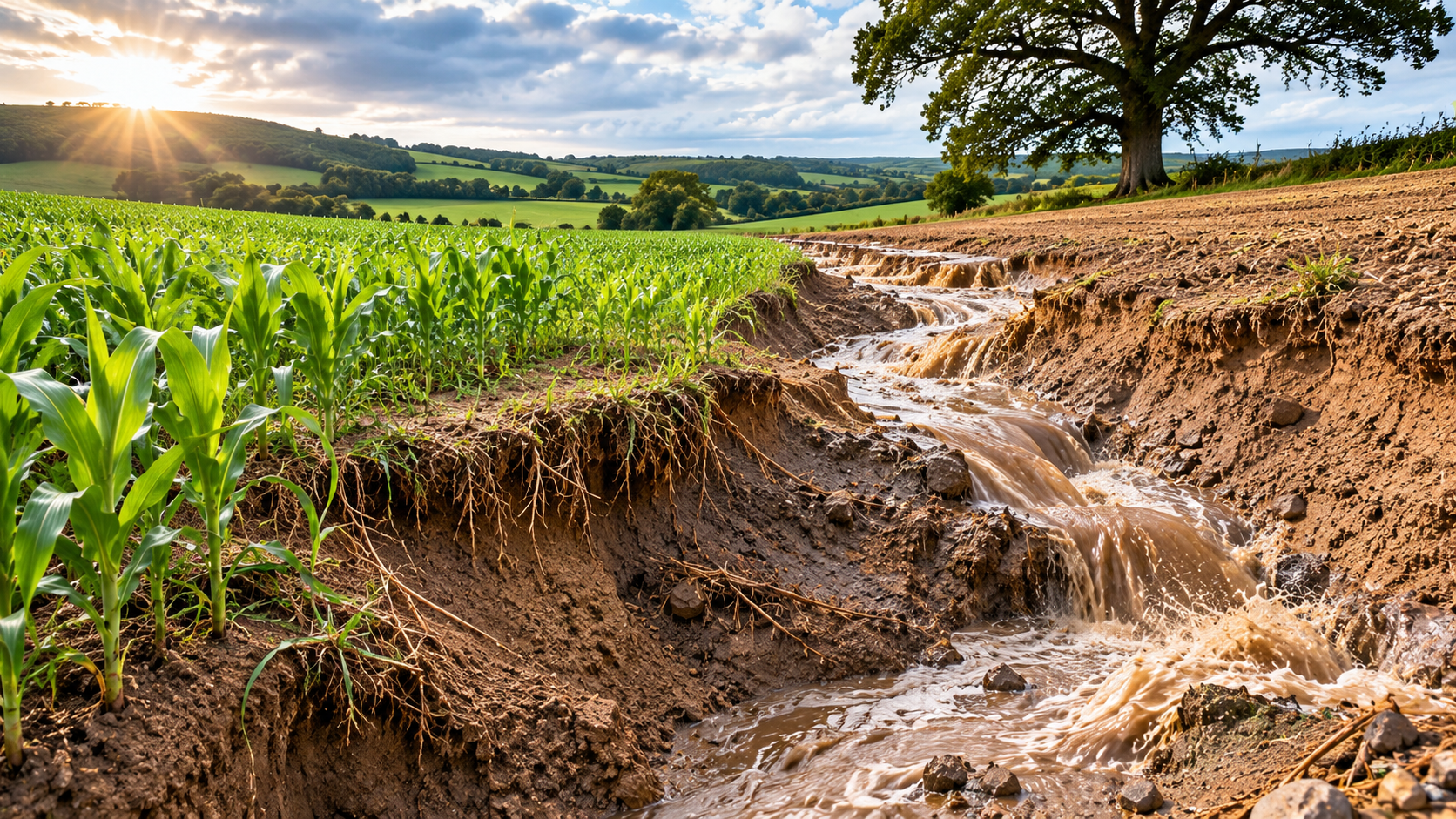
Soil is remarkably capable of supporting life, but it is also vulnerable to the way we manage it. Repeated intensive cultivation can physically disturb fungal networks, break down soil aggregates and expose organic matter to faster decomposition. Heavy machinery can compact soil, reducing the spaces needed for air, water and organisms to move. Removing organic matter, leaving soil bare for long periods and relying on practices that reduce biological diversity can also affect the organisms living beneath the surface.
Chemical inputs require careful consideration too. Different pesticides, herbicides and fertilisers have different effects, depending on their formulation, dose, frequency of application and the conditions in which they are used. Some can affect non-target soil organisms, while excessive nutrient inputs can alter the balance of soil biology and contribute to pollution.
The important point is that soil management decisions rarely affect just one organism. They can change the conditions in which entire communities live, feed and reproduce. A soil that has lost much of its biological diversity may still support plant growth, particularly when supplied with fertilisers and other inputs. But it may have lost some of the natural processes that help maintain fertility, regulate nutrients and support long-term resilience.
That is why soil health cannot be judged by looking at what grows above the ground alone.
How can we protect the soil food web?
The good news is that many of the practices that support a healthy soil food web are practical and achievable. Keeping living roots in the ground for as much of the year as possible provides a continuing source of food for soil microorganisms. Cover crops and diverse planting can help achieve this while protecting the surface from erosion.
Returning organic matter to the soil through compost, suitable organic residues and other amendments provides food and habitat for decomposers. The quality and suitability of these materials matter, and they should be chosen with the soil and intended use in mind.
Reducing unnecessary cultivation can help protect fungal networks, soil structure and the habitats occupied by smaller organisms. Avoiding compaction, particularly when soil is wet, also helps maintain the spaces through which air, water and roots move.
Maintaining plant diversity is another important consideration. Different plants release different compounds through their roots and contribute different types of organic material. A wider range of plants can therefore support a wider range of soil organisms.
None of these practices offers an instant solution. Soil biology takes time to respond, and what works best will depend on the soil, climate, land use and existing condition of the ground, but the principle is straightforward - give soil life the food, habitat and conditions it needs, and allow natural processes to do more of the work.
For generations, soil has often been treated as a growing medium: something that holds plants in place and provides the nutrients they need, but that description misses something fundamental.
Soil is a living ecosystem. It contains an extraordinary variety of organisms, all connected through relationships that help sustain the natural world. Bacteria break down organic material. Fungi connect with plant roots. Protozoa and nematodes regulate microbial populations. Mites and springtails help process organic matter. Earthworms move through the ground, creating channels and returning nutrients.
Together, they create a system that supports plant growth, recycles nutrients, helps regulate water and contributes to the long-term health of our landscapes. We cannot protect something we do not understand and we cannot restore soil health if we ignore the life that makes it possible.
The next time you walk across a field, a garden or a patch of woodland, remember that the ground beneath your feet is not an inert surface. It is a living community, constantly working, feeding and renewing itself. Healthy soil starts with healthy soil life and protecting that life is something we all have a part to play in.
Frequently Asked Questions About the Soil Food Web
1. What is the soil food web?
The soil food web is the network of living organisms found in soil and the feeding relationships between them. It includes bacteria, fungi, protozoa, nematodes, mites, springtails and earthworms, all contributing to the movement of energy and nutrients through the soil ecosystem.
2. Why is the soil food web important for soil health?
The soil food web helps break down organic matter, recycle nutrients, support plant growth and maintain soil structure. It also contributes to water movement and the natural processes that help soil remain fertile and biologically active.
3. What organisms make up the soil food web?
The soil food web includes microorganisms such as bacteria, fungi and protozoa, alongside larger organisms including nematodes, mites, springtails and earthworms. Each group has a different role, from decomposing organic material to feeding on other soil organisms and releasing nutrients.
4. What do bacteria and fungi do in healthy soil?
Bacteria and fungi help break down organic matter and transform nutrients into forms that can become available to plants. Fungi also form networks through the soil, with some species developing beneficial relationships with plant roots through mycorrhizal associations.
5. What role do earthworms play in the soil food web?
Earthworms help break down and incorporate organic matter into soil. Their burrowing creates channels that improve water infiltration and air movement, while their nutrient-rich casts contribute to soil fertility and structure.
6. How do nematodes benefit soil?
Some nematodes feed on bacteria and fungi, helping regulate microbial populations and release nutrients into the soil. Others are predators of smaller soil organisms. However, certain species feed on plant roots and can damage crops, so not all nematodes are beneficial.
7. What are mycorrhizal fungi and why are they important?
Mycorrhizal fungi form partnerships with plant roots. Their thread-like networks extend into the surrounding soil, helping plants access nutrients and water, particularly phosphorus. In return, plants supply the fungi with carbon compounds produced through photosynthesis.
8. How does intensive farming affect the soil food web?
Practices such as repeated intensive cultivation, heavy machinery use and the removal of organic matter can disturb soil habitats, damage fungal networks and reduce biological diversity. The effects depend on the soil, farming system and management practices, but sustained disturbance can undermine important natural soil processes.
9. How can I improve the soil food web in my garden?
You can support soil biology by adding suitable organic matter, keeping the ground covered with plants or mulch, growing a variety of plants, reducing unnecessary digging and avoiding soil compaction. These practices help provide food and suitable habitats for beneficial soil organisms.
10. How does the soil food web help plants grow?
The soil food web supports plant growth by breaking down organic matter, recycling nutrients and helping maintain the conditions plants need to access water and nutrients. Relationships between plants and beneficial soil organisms, including mycorrhizal fungi, can also improve nutrient uptake and root development.