The True Cost of Intensive Tillage and What Happens When We Keep Turning the Soil?
For generations, ploughing has been regarded as an essential part of preparing land for food production. Turning the soil creates a seedbed, buries weeds and incorporates crop residues, but repeated cultivation also disrupts the complex physical, chemical and biological systems that make soil productive. As agricultural pressures increase around the world, it is time to ask whether our dependence on intensive tillage is costing us more than we realise.
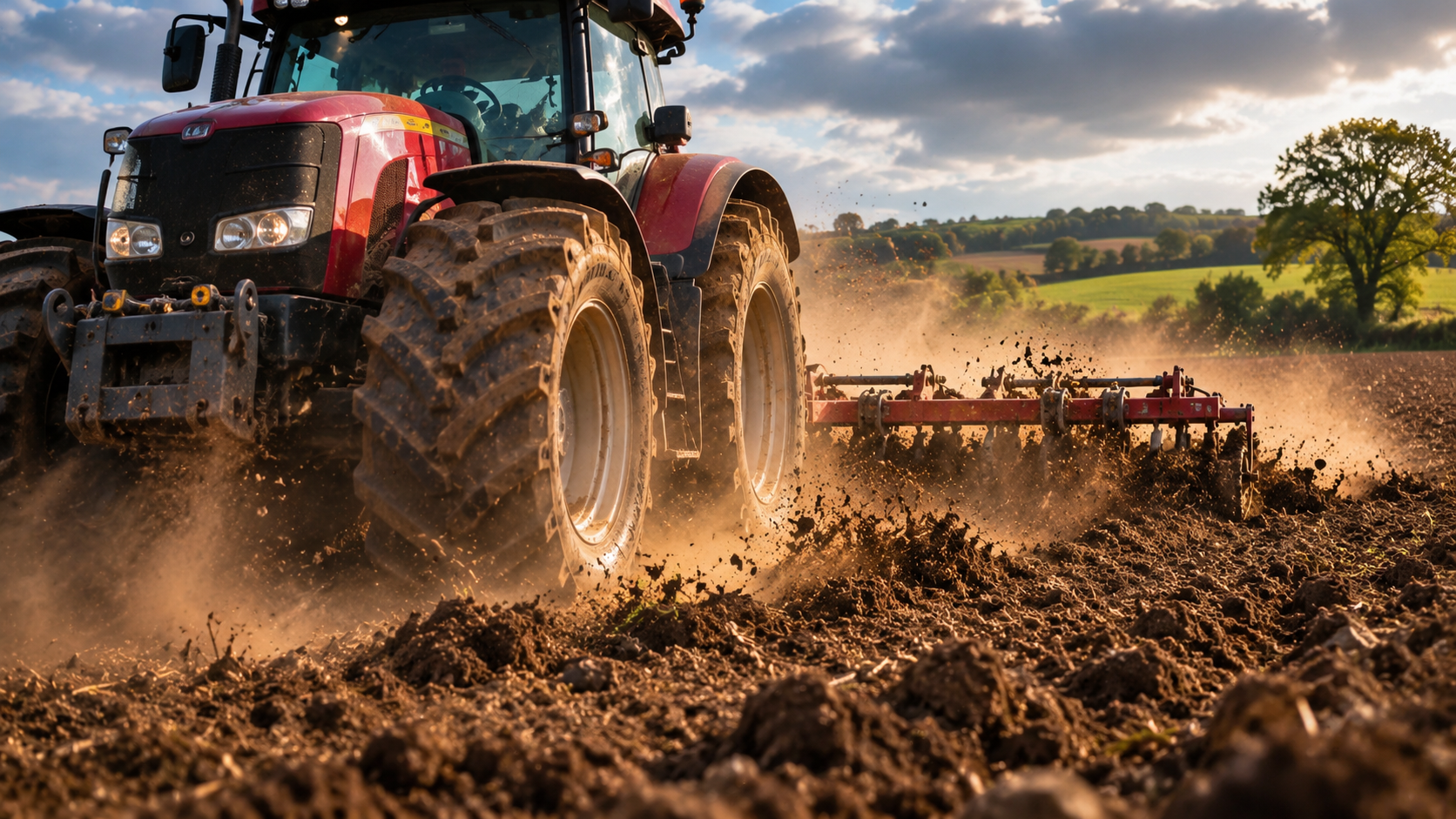
There is something deeply familiar about the sight of a farmer ploughing a field. Long, straight furrows stretch across the landscape, the dark earth turned over in neat lines, ready for another growing season. It is an image that has become synonymous with agriculture itself.
For thousands of years, cultivation has been central to food production. Turning the soil can make it easier to establish crops, control weeds, incorporate organic material and create the conditions needed for seeds to germinate. Modern machinery has made the process faster, more powerful and capable of working much larger areas of land, but beneath the apparent simplicity of ploughing lies a more complicated story.
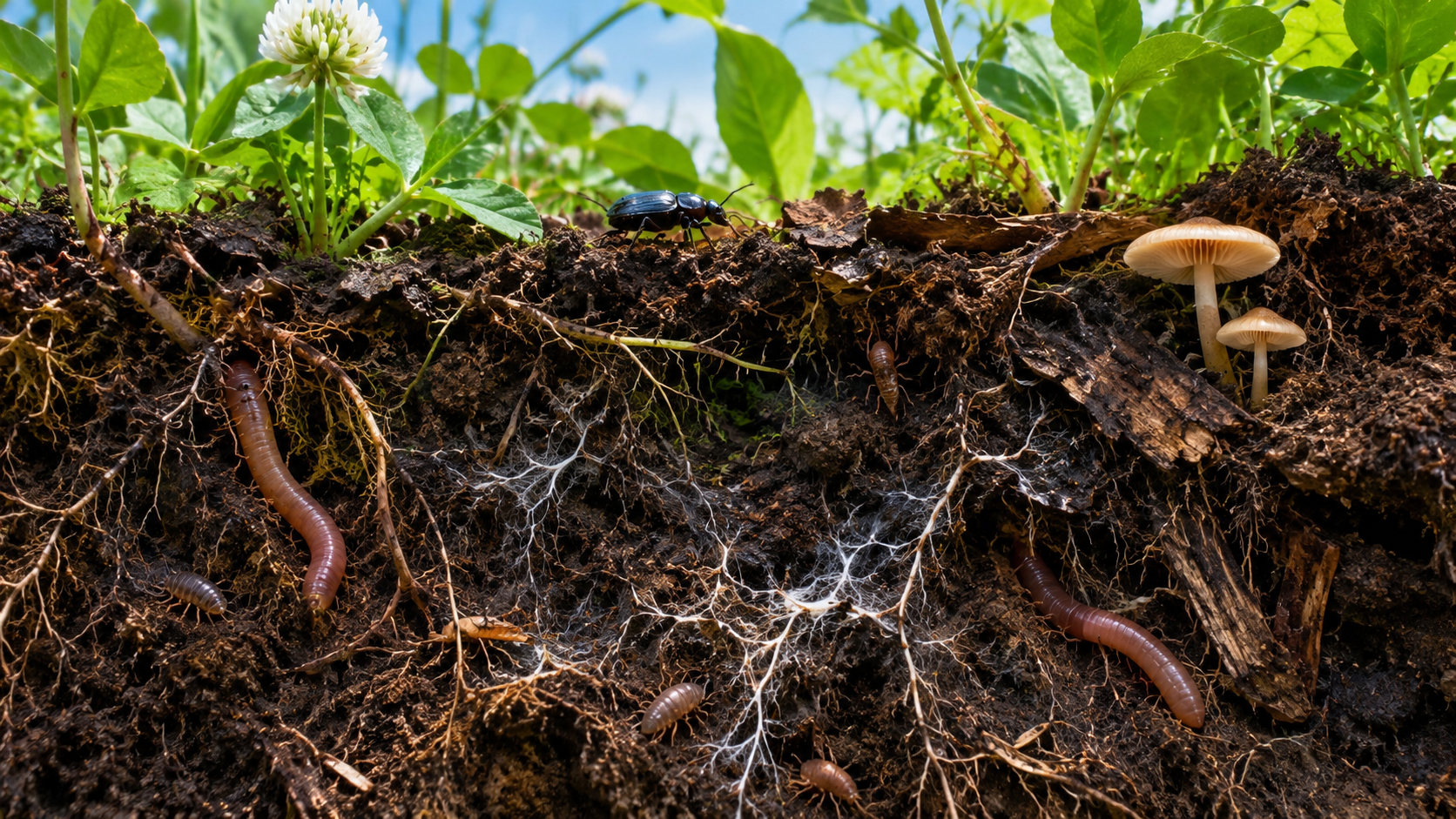
Soil is not an inert material that can be repeatedly turned, broken apart and rearranged without consequence. It is a living ecosystem, containing minerals, organic matter, microorganisms, fungi, insects, worms, roots and an intricate network of spaces through which air and water move. Its structure has developed through countless biological and physical processes, often over hundreds or thousands of years.
Every cultivation operation disturbs that system. One operation may have relatively little impact, but repeated disturbance can gradually change the physical structure of soil, accelerate the breakdown of organic matter, disrupt microbial communities and increase the risk of erosion.
The question is not whether the plough has a place in agriculture. It does. The question is whether intensive cultivation, repeated year after year, is always the best way to manage a resource on which global food security depends.
What happens when we turn the soil?
Conventional tillage usually involves ploughing to invert the soil, followed by additional cultivation to break down larger clods and produce a seedbed. Depending on the crop, soil type and farming system, this may involve several passes with increasingly powerful machinery.
The immediate benefits are understandable. Weeds are buried, crop residues can be incorporated and the soil surface is prepared for planting. Cultivation can also temporarily loosen compacted surface layers and improve conditions for seed establishment. However, disturbing soil also breaks apart the natural aggregates that hold it together.
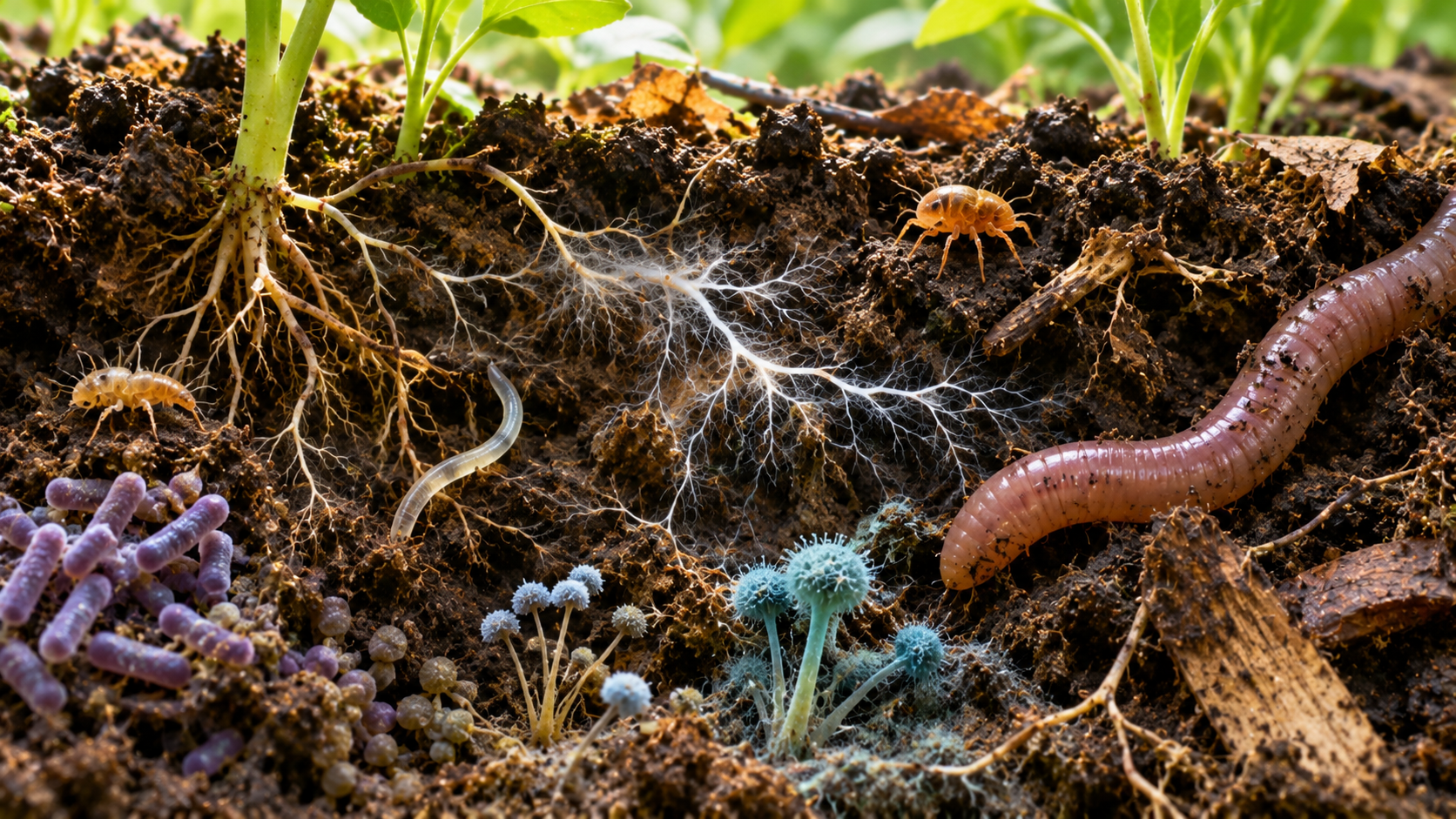
Soil aggregates are clusters of mineral particles, organic matter and biological material bound together by substances produced by roots, fungi and microorganisms. They are fundamental to soil structure.
These aggregates create a network of pores and spaces that allow water to infiltrate, air to circulate and roots to penetrate. They also provide protected environments in which microorganisms live and organic matter can become stabilised.
Repeated cultivation can break down these aggregates, leaving smaller particles more exposed to wind and water erosion. The loss of stable structure can reduce the soil's ability to absorb rainfall, retain moisture and resist physical damage. In effect, the farmer may be creating a convenient seedbed at the expense of some of the natural structure that makes the soil resilient.
The destruction of soil aggregates
Healthy soil is built around a balance between solid particles, organic material, water and air. Its structure is not accidental. It is created and maintained by a combination of biological activity, root growth, fungal networks, organic compounds and physical processes.
Fungal hyphae help bind particles together. Plant roots produce substances that encourage aggregation, while bacteria and other microorganisms contribute to the formation of stable organic compounds. When soil is repeatedly cultivated, these relationships are disturbed.
Ploughing physically breaks apart aggregates and exposes previously protected organic material to oxygen and microbial activity. This can accelerate the decomposition of soil organic matter and release some of the carbon stored within it as carbon dioxide. The consequences are not always immediately visible. A field can look beautifully prepared while its underlying structure is becoming less stable.
Research published in Geoderma in 2022, involving a global meta-analysis of 91 studies, examined the relationship between no-tillage and soil aggregates. Compared with conventional tillage, no-tillage was associated with a 49.5% increase in the proportion of large macroaggregates and an 6.1% increase in small macroaggregates. Soil organic carbon concentrations also increased across the different aggregate sizes.
The findings demonstrate the importance of reducing physical disturbance when trying to maintain stable soil structure. However, the benefits varied according to soil conditions and management practices.
The hidden casualties – soil microorganisms
Perhaps the most significant consequences of intensive tillage occur in a world that cannot be seen with the naked eye. A healthy handful of soil can contain billions of microorganisms, including bacteria, fungi, archaea and other microscopic organisms. Together with larger organisms such as earthworms and nematodes, they form an extraordinary biological community responsible for many of the processes that keep soil functioning. They break down organic material, recycle nutrients, support plant growth, contribute to soil structure and help regulate the movement of carbon and nitrogen.
Fungi are particularly important because their fine networks extend through the soil, connecting particles, roots and other organisms. Some form mutually beneficial relationships with plants, helping roots access water and nutrients in exchange for energy produced through photosynthesis.
Intensive cultivation physically disrupts these networks. It breaks fungal hyphae, changes the distribution of organic matter and exposes microorganisms to different conditions of temperature, moisture and oxygen. This can alter the composition and activity of microbial communities.
The effects are complex. Cultivation can stimulate some microbial activity in the short term by exposing fresh organic material and increasing aeration. But repeated disturbance can also undermine the biological relationships that help maintain stable soil structure and long-term nutrient cycling.
A 2025 review published in Soil Use and Management examined the effects of conventional, reduced and conservation tillage on soil health and greenhouse gas emissions. It reinforces the importance of considering cultivation as more than a mechanical operation: it influences the biological, chemical and physical processes that determine how soil functions.
The important point is that soil microorganisms are not incidental occupants of the ground. They are essential workers in the ecosystem. Disturbing their environment repeatedly has consequences for the wider system.
Organic matter – the carbon we cannot afford to lose
Soil organic matter is one of the foundations of healthy soil. It includes decomposing plant and animal material, living organisms and more stable organic compounds that contribute to soil structure and fertility. It improves the ability of soil to retain water and nutrients, supports microbial activity and helps bind mineral particles into stable aggregates. It is also an important store of carbon.
When soil is cultivated, aggregates are broken apart and previously protected organic material can become more accessible to microorganisms. Increased aeration can accelerate decomposition, potentially releasing carbon dioxide into the atmosphere.
This does not mean every ploughing operation results in a measurable or immediate loss of the same amount of carbon. The outcome depends on soil type, climate, cultivation depth, crop rotation, organic inputs and the wider management system.
Nevertheless, repeated disturbance can contribute to the depletion of soil organic carbon, particularly when cultivation is combined with the removal of crop residues, limited organic inputs and insufficient vegetation cover. This matters globally.
Agricultural soils represent an enormous carbon reservoir. Protecting that carbon is important not only for soil fertility and agricultural productivity, but also for climate change mitigation.
Reducing unnecessary disturbance, maintaining living roots, returning organic material to the soil and protecting the surface can all help support the processes through which soil organic carbon is maintained.
Erosion – when cultivated soil becomes a global problem
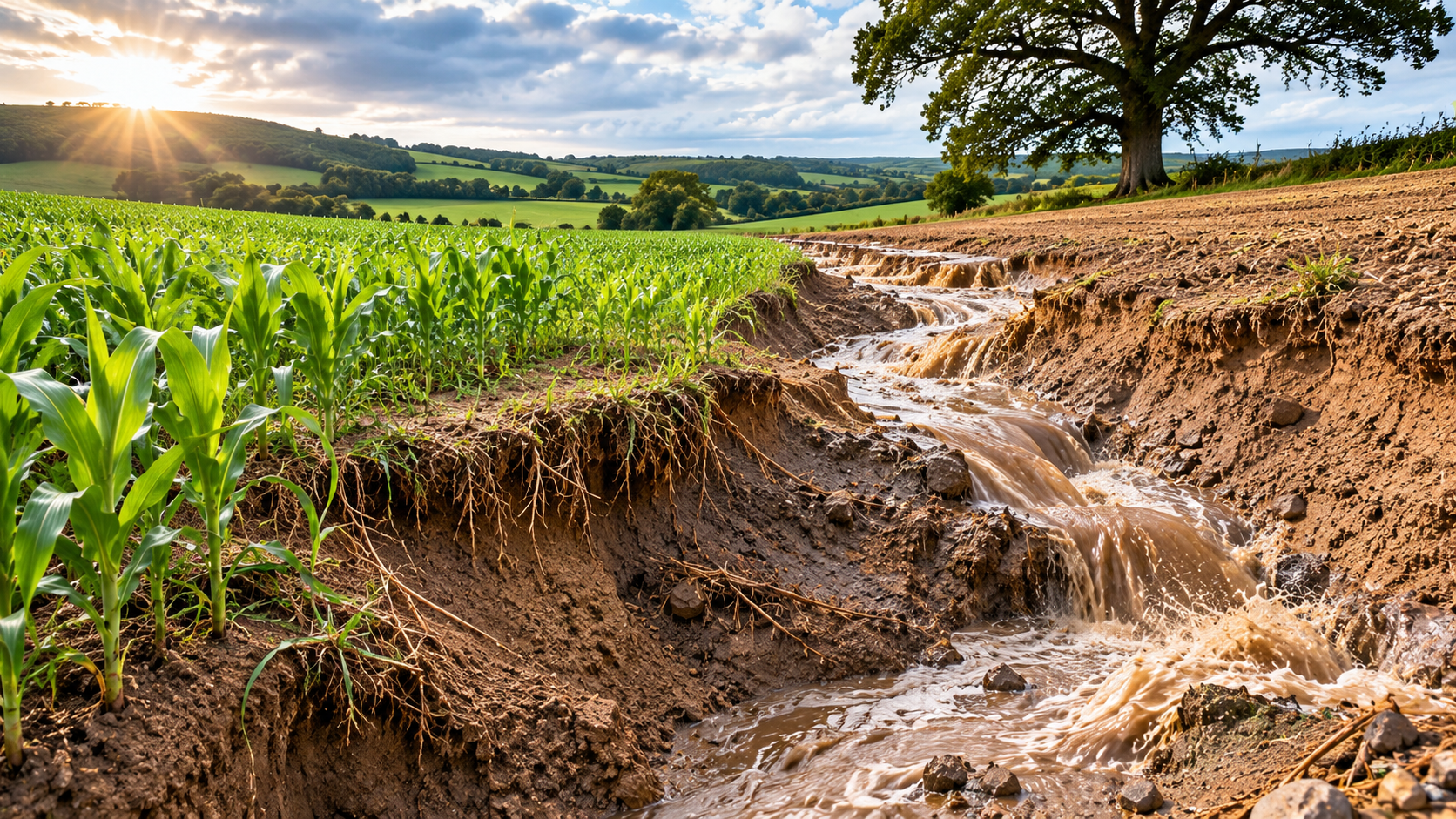
One of the most visible consequences of intensive tillage is increased vulnerability to erosion. When cultivation leaves soil exposed, breaks down aggregates and removes protective vegetation, wind and rainfall can carry particles away from the field. The finest and most fertile material is often among the first to be lost. This includes topsoil rich in organic matter, nutrients and biological activity.
Water erosion can carry sediment into rivers and lakes, contributing to pollution and damaging aquatic habitats. Wind erosion can transport fine particles over considerable distances, affecting air quality and depositing material far from its original source.
The Food and Agriculture Organization of the United Nations (FAO) identifies soil erosion as one of the world's major threats to soil resources. Its global soil erosion assessment explains that unsustainable human activities, including intensive agriculture, deforestation and overgrazing, can accelerate erosion by up to 1,000 times compared with natural processes.
The FAO also warns that soil formation is far slower than the rates at which soil can be lost through erosion. This makes the loss of productive topsoil a long-term environmental and economic problem, not just a temporary agricultural inconvenience.
The irony is that cultivation intended to improve agricultural productivity can, if poorly managed, contribute to the gradual loss of the very resource on which that productivity depends.
Different approaches to cultivation
There is growing international interest in farming systems that reduce soil disturbance. These are often grouped under the term conservation agriculture, although the techniques used vary considerably.
The objective is not necessarily to eliminate cultivation altogether. It is to reduce unnecessary disturbance while maintaining productive farming systems. Three broad approaches illustrate the differences.
1. Conventional tillage
This generally involves ploughing to invert the soil, followed by secondary cultivation to produce a seedbed. Its advantages include effective weed burial, incorporation of crop residues, rapid seedbed preparation and the ability to address certain soil conditions mechanically.
However, repeated ploughing can damage soil aggregates, disrupt biological networks, increase erosion risk and accelerate organic matter decomposition. Multiple machinery passes can also increase fuel consumption, labour requirements and the risk of compaction, particularly when operations take place on wet ground.
Conventional tillage is not inherently damaging in every situation, but its long-term effects need to be considered alongside its immediate benefits.
2. Reduced or minimum tillage
Reduced tillage involves using shallower or less intensive cultivation, often avoiding full soil inversion. Rather than turning the entire soil profile, farmers use equipment such as discs, tines or cultivators to prepare a seedbed while leaving more crop residue on the surface.
This can reduce the number of machinery passes, conserve moisture, protect soil structure and lower the risk of erosion. It can also provide a practical transition for farmers who want to reduce disturbance without moving immediately to a complete no-till system.
However, reduced tillage is not automatically low-impact. Machinery can still compact soil, and cultivation can continue to disturb aggregates and biological communities. The benefits depend on the depth, frequency and type of operation.
3. No-till or direct drilling
No-till farming takes the reduction of disturbance further. Instead of ploughing or preparing a conventional seedbed, crops are planted directly into the previous crop's residues using specialist drilling equipment. The soil is left largely undisturbed, while crop residues provide surface protection.
This can help maintain aggregate stability, reduce erosion, conserve moisture and support soil biological activity. It can also reduce fuel use and the time spent on cultivation. However, no-till is not a universal solution.
Some soils can become compacted, particularly where machinery continues to travel over the same ground. Weed management can become more challenging, and some systems become heavily reliant on herbicides. Crop residues may also create difficulties with planting, pests and disease management.
In cooler or wetter environments, reduced soil disturbance can delay warming and drying in spring, affecting the timing of planting and crop establishment. The performance of no-till therefore depends on the wider farming system, including crop rotations, cover crops, organic matter inputs, drainage and machinery management.
Is no-till always better?
It would be easy to conclude that the answer to the problems associated with intensive tillage is to stop cultivating altogether, but soil management is rarely that straightforward.
Soils differ enormously around the world. A heavy clay soil in a wet climate presents different challenges from a sandy soil in an arid region. A farmer growing cereals faces different requirements from someone producing root vegetables, rice or horticultural crops.
There are also economic considerations. Farmers must manage weeds, pests, diseases, crop residues, planting windows, machinery costs and market pressures. A system that works successfully on one farm may not be practical on another.
Research published in the journal Soil in 2023, examining European agricultural evidence, highlighted some of the trade-offs associated with reduced and no-till systems. While reduced disturbance can improve soil protection, bulk density and penetration resistance can increase in some circumstances, particularly where machinery traffic continues without mechanical loosening.
The review also emphasised that the effects depend on soil characteristics and management. Occasional targeted cultivation may sometimes be necessary to address particular problems.
This is an important distinction. The objective should not be to replace one rigid cultivation system with another. It should be to manage soil according to its needs, minimising unnecessary disturbance and protecting the processes that maintain its health.
What does the global evidence tell us?
The case for reducing unnecessary soil disturbance is supported by an expanding body of international research. A major global meta-analysis published in Global Change Biology in April 2026 brought together evidence from 69 published meta-analyses examining conservation tillage and its effects on agricultural productivity and ecosystem services.
The researchers reported that, globally, conservation tillage was associated with:
5% lower greenhouse gas emissions.
21% higher soil organic carbon sequestration.
11% higher soil fertility.
12% lower soil erosion.
The analysis also found that crop yields were comparable to conventional tillage overall. However, the researchers stressed that results varied according to climate, soil characteristics and management intensity. In some circumstances, improvements in environmental outcomes involved trade-offs with crop productivity.
These figures provide encouraging evidence that reducing soil disturbance can deliver multiple benefits. They should not, however, be interpreted as guaranteed improvements on every farm or as a promise that every conservation tillage system will deliver the same results. The wider message is that how we cultivate soil has consequences extending far beyond the immediate crop.
A different way of thinking about cultivation
For too long, agricultural success has often been judged by what happens above the ground. How quickly can a field be prepared? How efficiently can a crop be planted? How much can be harvested? These are important questions, but they do not tell the whole story.
We also need to consider what is happening beneath the surface. Are soil aggregates becoming more stable? Is organic matter being maintained? Are microbial communities functioning effectively? Is water infiltrating rather than running off? Is the soil becoming more resilient to drought, flooding and changing climatic conditions? These are measures of long-term productivity, not just the success of the next harvest.
The challenge is to move towards cultivation systems that recognise soil as a living resource. That means reducing unnecessary disturbance, maintaining ground cover, increasing organic inputs, using diverse crop rotations and managing machinery to avoid compaction.
It also means recognising that the best approach may involve a combination of conventional, reduced and no-till techniques, applied according to local conditions rather than ideological preference.
The farmer's role is not to leave the soil untouched at all costs. It is to understand what the soil needs and avoid damaging the natural processes that make it productive.
We cannot keep treating soil as an expendable resource
The world's agricultural systems face enormous pressure. A growing population, changing diets, climate instability, water shortages and competition for land all place increasing demands on the soil beneath our feet.
Yet soil is not a resource that can be manufactured when it runs out. Its structure, organic matter and biological communities develop over long periods, and once degraded, recovery can be difficult and slow.
Intensive tillage may deliver short-term practical benefits, but repeated disturbance can create costs that accumulate quietly over time. Weakened structure, declining organic matter, disrupted microbial communities and increased erosion all threaten the long-term capacity of land to support food production. This is not an argument against cultivation. It is an argument for thinking more carefully about why, when and how often we cultivate.
The plough has helped shape agriculture and human civilisation, but the fact that we have always turned the soil does not mean we should continue doing so without questioning the consequences.
Perhaps the most important change required is not a new machine or another cultivation technique. It is a change in how we think about soil itself. Instead of seeing it as something to be worked, broken up and prepared for the next crop, we need to recognise it as a living system that deserves to be protected.
Because every time we turn the soil, we are doing more than preparing a seedbed. We are disturbing an ecosystem. And the true cost of that disturbance may be measured not in the hours spent cultivating a field, but in the soil health, biodiversity, carbon and productivity we risk losing for generations to come.
Soil Matters. Not just for the next harvest, but for the future of the land and the life it supports.
Frequently Asked Questions About Intensive Tillage and Soil Health
1. What is intensive tillage in agriculture?
Intensive tillage is a farming practice involving repeated mechanical disturbance of the soil, usually through ploughing and secondary cultivation. It is used to prepare seedbeds, control weeds and incorporate crop residues. However, repeated cultivation can damage soil structure, disrupt biological activity and increase the risk of erosion.
2. How does ploughing affect soil structure?
Ploughing breaks apart natural soil aggregates, which are clusters of mineral particles and organic matter held together by biological and physical processes. Repeated disturbance can reduce aggregate stability, damage pore networks and make soil more vulnerable to compaction, water run-off and erosion.
3. Does intensive tillage reduce soil organic matter?
Intensive tillage can accelerate the decomposition of soil organic matter by breaking apart aggregates and exposing previously protected organic material to oxygen and microbial activity. Over time, this can contribute to losses of soil organic carbon, particularly where crop residues are removed and organic inputs are limited.
4. How does tillage affect soil microorganisms?
Cultivation physically disrupts microbial habitats and fungal networks, changes soil aeration and exposes microorganisms to different moisture and temperature conditions. Although tillage can temporarily stimulate some microbial activity, repeated disturbance can undermine the biological relationships that support nutrient cycling, soil structure and plant growth.
5. What is the difference between conventional tillage and no-till farming?
Conventional tillage uses ploughing and additional cultivation to prepare the soil for planting. No-till farming involves planting crops directly into the previous crop's residues without routinely turning or preparing the soil. No-till can help protect soil structure, conserve moisture and reduce erosion, although it requires different approaches to weed, pest and residue management.
6. What are the benefits of reduced tillage?
Reduced tillage involves cultivating the soil less intensively or at shallower depths than conventional ploughing. Potential benefits include less disruption to soil aggregates, lower fuel consumption, improved moisture retention, reduced erosion risk and better protection of soil biological communities. Results depend on soil type, climate and the wider farming system.
7. Is no-till farming better for the environment?
No-till farming can deliver environmental benefits by reducing soil disturbance, protecting surface cover, supporting soil organic carbon and limiting erosion. However, it is not suitable for every soil or farming situation. Weed control, machinery compaction, drainage, soil temperature and crop establishment all need to be considered when assessing its suitability.
8. How does intensive tillage increase soil erosion?
Repeated cultivation can break down soil aggregates and leave the surface exposed to rainfall and wind. This makes it easier for water and air movement to carry soil particles away. The resulting erosion removes valuable topsoil and can transport sediment and nutrients into rivers, lakes and other ecosystems.
9. Can soil recover after years of intensive cultivation?
Yes. Soil health can improve through better management, although recovery rates depend on the extent of degradation, soil type and local climate. Reducing unnecessary cultivation, maintaining living plant cover, introducing diverse crop rotations, adding organic matter and managing machinery traffic can all help restore soil structure and biological activity.
10. What is conservation agriculture and how does it protect soil?
Conservation agriculture is an approach to farming based on three main principles: minimising soil disturbance, maintaining permanent organic soil cover and diversifying crop species. These practices aim to protect soil structure, reduce erosion, support biological activity and improve resilience. They need to be adapted to local agricultural and environmental conditions.