What Happens to Soil When We Use Pesticides?
Pesticides are designed to protect crops, control weeds and tackle unwanted pests, but once they enter the environment, their effects can extend beyond the organisms they are intended to target. Beneath the surface, where billions of microorganisms and other living creatures help keep soil healthy, some pesticides can disrupt relationships that are essential to the natural world. The question is not just what a pesticide kills, but what else it might affect along the way.
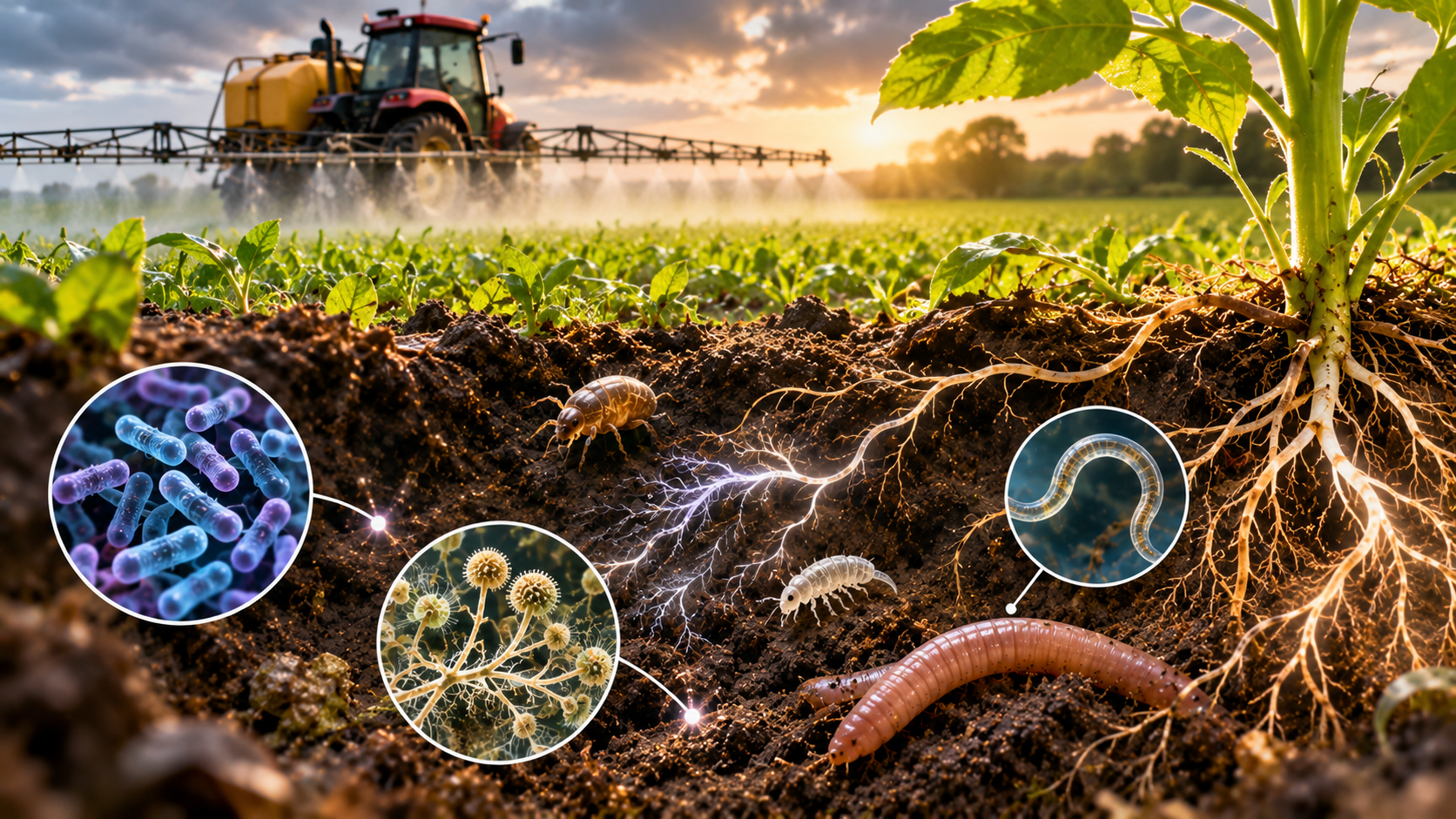
A farmer sprays a field to control an insect pest. A weedkiller is applied to prevent unwanted plants from competing with a crop. A fungicide is used to protect leaves from disease. The immediate purpose is clear. Protect the crop, reduce losses and maintain production, but what happens after the application?
Some of the pesticide may land on the plant. Some may drift beyond the intended area. Some may wash from leaves into the ground, while other applications are deliberately made to the soil or used as seed treatments. Once there, the active ingredients can interact with an ecosystem that is far more complicated than it might appear.
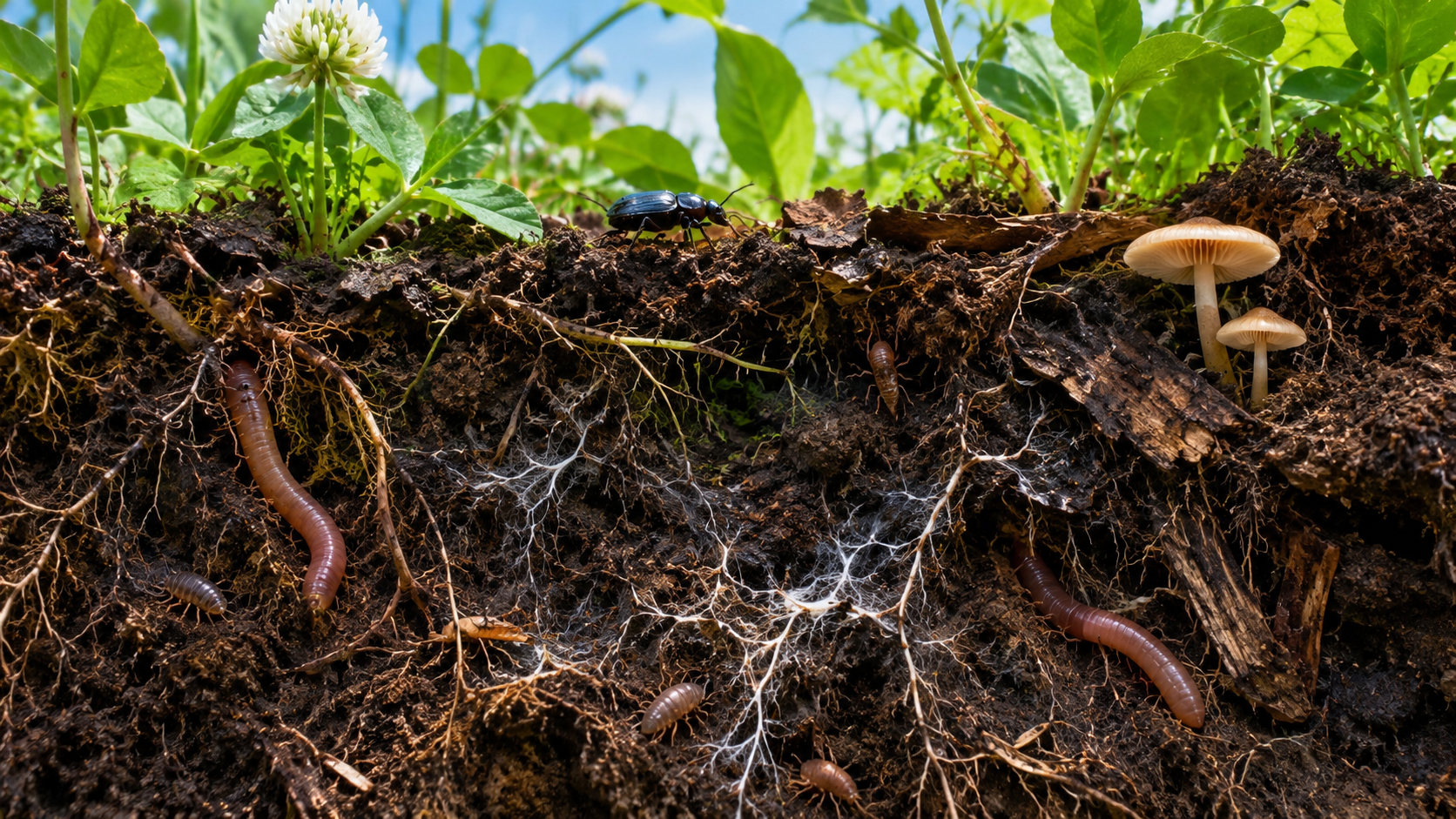
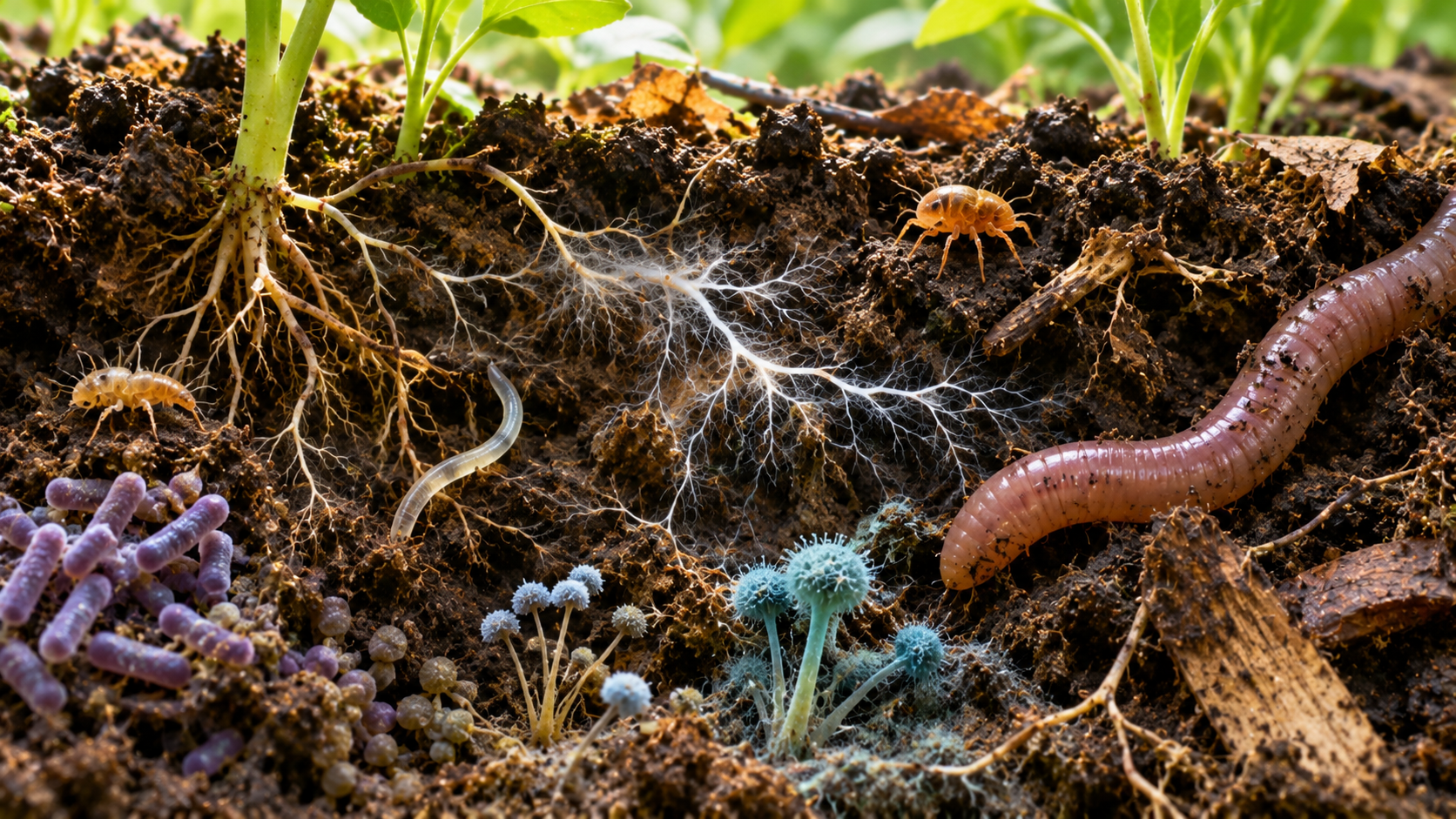
Soil is home to bacteria, fungi, earthworms, nematodes, mites, springtails and countless other organisms. They are not just living in the ground. They are responsible for many of the processes that make healthy soil possible, from breaking down organic matter and recycling nutrients to supporting plant roots and maintaining soil structure. When pesticides affect these organisms, the consequences can reach beyond the original target.
It is easy to think of soil as the material that holds crops in place and supplies them with nutrients, but soil is a living environment, containing an extraordinary diversity of organisms that work together to keep natural systems functioning.
Bacteria and fungi break down dead plant material and help release nutrients. Mycorrhizal fungi form partnerships with plant roots, extending their reach into the surrounding soil and helping them access water and nutrients. Earthworms mix organic matter into the ground, create channels for water and air, and contribute to soil structure. Nematodes, protozoa, mites and springtails all play their part in regulating populations and moving energy through the soil food web.
These relationships are interconnected. Change the abundance or activity of one group and the effects can spread to others. This is why the impact of pesticides cannot be judged solely by whether they successfully control the pest they were designed to target. Their effects on non-target organisms matter too.
Not all pesticides do the same thing
The word pesticide covers a broad range of products designed to control different organisms. Insecticides target insects, herbicides control unwanted plants, fungicides tackle fungal diseases, and other products are designed to control mites, nematodes and other pests. Their chemistry, persistence and behaviour in soil can vary considerably. It would be misleading to suggest that every pesticide has the same effect on soil life.
An insecticide designed to affect an insect pest may also affect certain non-target invertebrates if they are exposed. A fungicide intended to control a plant disease may affect some beneficial fungi, depending on the active ingredient and exposure. Herbicides can influence soil organisms indirectly by changing the plants growing above ground, reducing the roots and organic material entering the soil.
Even products within the same category can behave differently. Their effects depend on the active ingredient, formulation, application rate, frequency of use, soil type, moisture, temperature and the organisms present.
A pesticide that breaks down relatively quickly under one set of conditions may persist for longer under another. Some substances bind to soil particles, while others are more mobile and can move through the soil with water.
The important distinction is between the potential hazard of a product and the actual risk under particular conditions. A substance may have properties that could harm a soil organism, but the level of risk also depends on whether that organism is exposed, how much exposure occurs and for how long. The Food and Agriculture Organization (FAO) recognises this distinction in its guidance on assessing pesticide risks to soil organisms.
The organisms we don't intend to kill
One of the concerns surrounding pesticide use is the possibility of harming organisms that provide valuable services to soil. Consider earthworms. They help incorporate organic matter, improve soil structure and create channels that allow water to move through the ground. Some pesticides can affect their survival, growth, behaviour or reproduction. The extent of the impact varies between substances and exposure conditions.
Then there are the microscopic organisms that are even harder to see. Certain bacteria are involved in nitrogen cycling, helping transform nitrogen into forms that plants can use. Other microorganisms contribute to the breakdown of organic matter and the cycling of phosphorus and other nutrients.
Mycorrhizal fungi are particularly important because of their relationships with plant roots. If a pesticide affects these fungi, it may influence the ability of some plants to access nutrients and water through those partnerships.
Research into pesticide effects on soil organisms has identified concerns across a wide range of species. A review published in Frontiers in Environmental Science, examining nearly 400 studies, found negative effects in 70.5% of the tested parameters relating to soil invertebrates. The research covered different pesticide types and a wide range of organisms and biological responses. It also found that the nature and severity of effects varied between products and species.
This is not evidence that every pesticide application causes widespread damage. It is evidence that the organisms outside the intended target deserve much greater attention.
What happens to the soil food web?
The soil food web depends on relationships between organisms. Bacteria and fungi process organic material. Protozoa and certain nematodes feed on microorganisms, helping regulate their populations and release nutrients. Other organisms consume fungi, bacteria and smaller soil animals. When pesticides affect one part of this network, the consequences may not stop there.
If populations of beneficial fungi decline, organisms that depend on them for food may also be affected. If bacteria involved in nutrient cycling are disrupted, the availability and movement of nutrients can change. If earthworm populations are reduced, the physical processes that help maintain soil structure may be affected.
These changes can be difficult to detect immediately. A field may continue to produce a healthy-looking crop even when some of the biological relationships beneath it have been altered. That is one of the challenges of assessing soil health. What happens above ground does not always reveal what is happening below it.
Research published in Nature in January 2026 has added important evidence to the debate. Scientists examined 63 pesticides across 373 sites in 26 European countries, covering woodlands, grasslands and agricultural land. Pesticide residues were detected at 70% of the sites studied. The researchers found that pesticide residues were the second strongest driver of soil biodiversity patterns after soil properties.
The study also identified changes affecting bacteria, fungi, protists, nematodes and other soil organisms. Some of the observed effects involved the suppression of beneficial mycorrhizal fungi and bacterivore nematodes, alongside changes to microbial functions associated with nitrogen and phosphorus cycling.
The significance of this research is that it looks beyond individual laboratory tests and examines what is happening across real landscapes. It does not mean every pesticide residue will cause the same damage, or that every site where residues are detected has suffered the same biological effects. But it does demonstrate that pesticide exposure is a factor that needs to be considered when assessing soil biodiversity.
It also raises an important question. If soil is essential to food production, carbon storage, water regulation and biodiversity, should we be paying greater attention to the effects of agricultural chemicals on the organisms that make these functions possible?
The problem with looking at pesticides one at a time
Another complication is that soil organisms are rarely exposed to just one substance throughout their lifetime. Agricultural soils may contain residues from different applications, previous seasons and multiple sources. These substances can occur together, creating exposure to mixtures rather than individual chemicals.
The effects of mixtures are not always predictable from studying each substance separately. Depending on the chemicals involved, their concentrations and the organisms exposed, combined effects may be greater or smaller than expected.
The European Environment Agency has highlighted the potential risks associated with pesticide mixtures in its assessment of impacts on ecosystems. Its work also points to the importance of considering the wider environmental effects of substances that may be used for a specific purpose.
This makes the assessment of pesticide impacts more complicated. Understanding what happens to soil requires looking at the combined effects of exposure over time, not just the immediate consequences of a single application.
Can we protect crops without damaging soil life?
This is where the debate needs to become more constructive. Farmers face real challenges. Insects, weeds and plant diseases can destroy crops, reduce yields and threaten the financial viability of agricultural businesses. Pesticides have a role in managing these problems and it would be unrealistic to suggest that every agricultural system can operate without them, but using pesticides responsibly should involve looking beyond the immediate problem.
Integrated Pest Management, or IPM, offers an approach that considers a range of ways to prevent and control pests. Rather than relying on routine chemical treatment, it combines different techniques and uses pesticides where they are necessary and appropriate.
These approaches can include crop rotation, resistant crop varieties, biological pest control, habitat management, monitoring pest populations and using targeted treatments when intervention is justified.
The aim is not to replace one rigid system with another. It is to reduce unnecessary pesticide use, make better-informed decisions and consider the wider environmental consequences of each intervention.
There is also a need for more research into the effects of different active ingredients on soil organisms, particularly the microorganisms and less visible species that are difficult to monitor.
Pesticide approval and environmental risk assessments are important parts of this process. But protecting soil health also requires attention to how products are used in practice, how residues accumulate and what happens to soil communities over time.
We cannot afford to ignore what happens underground
Soil is one of the most valuable natural resources we have, yet much of the life it supports remains invisible to us. We can see the crops growing, the weeds disappearing and the insects being controlled. What we cannot see so easily are the changes taking place among the bacteria, fungi, earthworms and other organisms that keep soil functioning.
The answer is not to label all pesticides as harmful or suggest that every application causes lasting damage. Different products have different properties and their effects depend on how, where and when they are used, but neither should we assume that a product is harmless to the wider environment just because it does the job it was designed to do.
Healthy soil depends on a living community. It needs organisms that break down organic matter, recycle nutrients, build soil structure and maintain the relationships that support plant growth. Protecting those organisms must be part of how we think about farming and land management.
The next time we consider what a pesticide is intended to kill, we should also ask what else might be affected. Because protecting the crop should never mean forgetting the soil that makes the crop possible.
Frequently Asked Questions About Pesticides and Soil Health
1. How long do pesticides remain in the soil?
The length of time pesticides remain in soil varies considerably. Some active ingredients break down within days or weeks, while others can persist for months or longer. Factors such as soil type, temperature, moisture, sunlight, microbial activity and the chemical properties of the pesticide all influence how quickly it degrades.
2. Can pesticide residues affect soil health after spraying has stopped?
Yes. Some pesticide residues can remain in soil after an application has ended. Depending on the substance and its persistence, organisms may continue to be exposed over time. This is one reason why understanding the history of pesticide use on agricultural land is important when assessing soil health.
3. Do pesticides affect the bacteria responsible for nitrogen cycling?
Some pesticides can affect bacteria involved in nitrogen cycling, although the effects vary between products and environmental conditions. These microorganisms help transform nitrogen into different forms within the soil. Disrupting their activity can influence nutrient availability and the natural processes that support plant growth.
4. Can pesticides damage mycorrhizal fungi?
Certain pesticides, particularly some fungicides, can affect mycorrhizal fungi. These beneficial fungi form partnerships with plant roots, helping plants access nutrients and water. The extent of any impact depends on the active ingredient, application method, exposure and fungal species involved.
5. Are organic farming methods completely free from pesticide risks?
No. Organic farming can use certain approved pesticides, including products derived from natural sources. Natural origin does not automatically mean a substance is harmless to soil organisms. Its environmental impact depends on its properties, application and exposure conditions, just as it does with other pesticides.
6. Can pesticides affect earthworm populations?
Some pesticides can affect earthworms, influencing their survival, growth, reproduction or behaviour. Because earthworms help incorporate organic matter, create soil channels and contribute to soil structure, changes in their populations can have wider implications for soil health.
7. What is the difference between pesticide persistence and pesticide toxicity?
Persistence describes how long a pesticide remains in the environment before it breaks down or is removed. Toxicity describes its potential to cause harmful effects in an organism. A pesticide can be highly toxic but break down quickly, while another may persist for longer but have different levels of toxicity. Both characteristics matter when assessing environmental risk.
8. Can pesticides move from agricultural soil into rivers and groundwater?
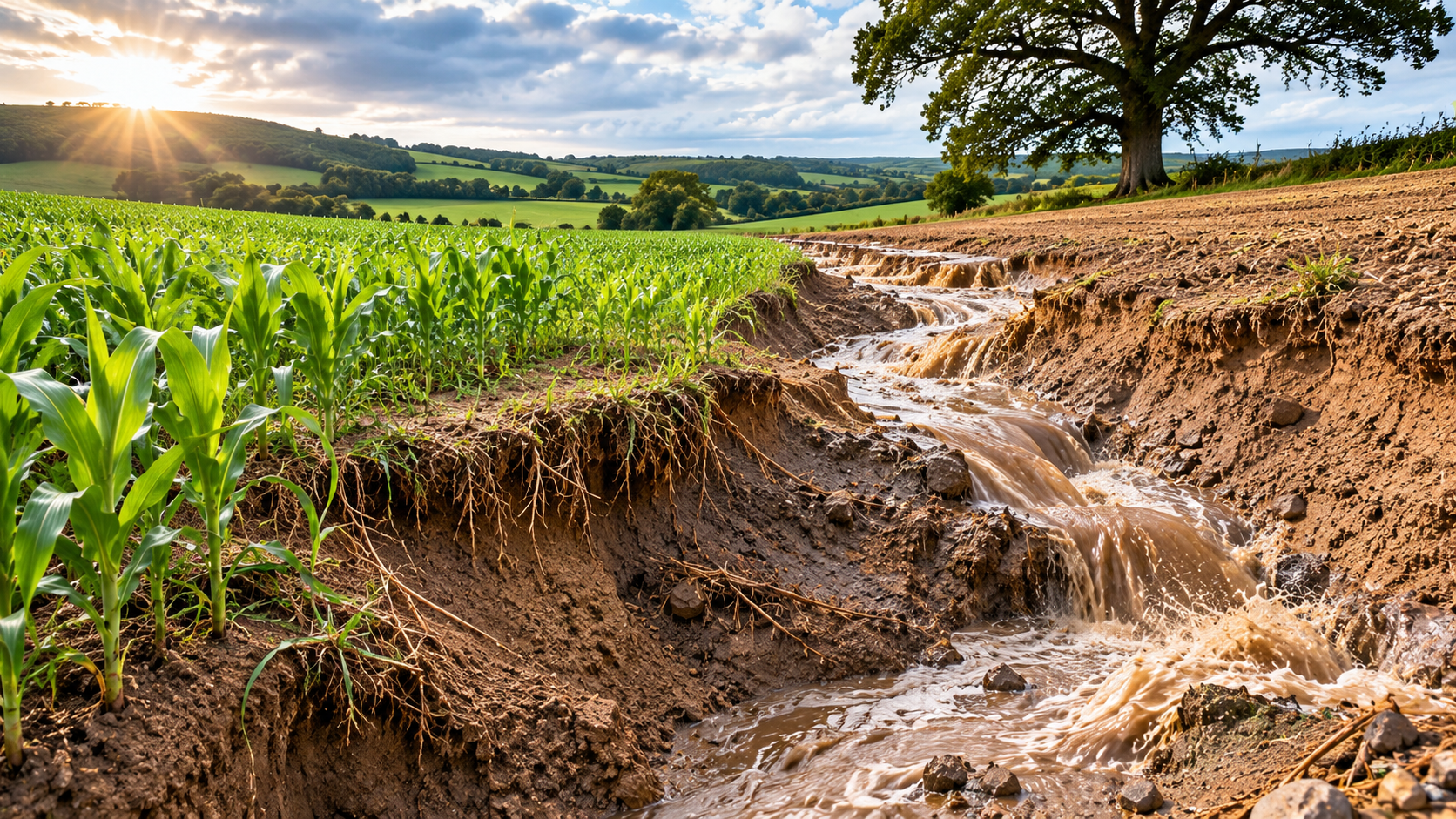
Yes. Some pesticides can move away from treated areas through surface run-off, soil erosion, drainage or leaching through the ground. Their movement depends on factors including their solubility, how strongly they bind to soil particles, rainfall, soil structure and application conditions. This can create risks for aquatic ecosystems and water supplies.
9. How can farmers reduce the impact of pesticides on soil biodiversity?
Farmers can reduce unnecessary exposure through integrated pest management, crop rotation, biological controls, careful monitoring and targeted pesticide applications. Maintaining organic matter, reducing soil disturbance and supporting diverse habitats can also help sustain soil biodiversity. The most appropriate approach depends on the crop, pest and local conditions.
10. How can you tell if pesticides are affecting the health of your soil?
There is no single visual sign that proves pesticide damage. Assessing soil health can involve laboratory testing for pesticide residues, measuring microbial activity and diversity, examining earthworm populations and evaluating indicators such as organic matter, soil structure and nutrient cycling. Comparing results over time can help identify changes that might otherwise go unnoticed.