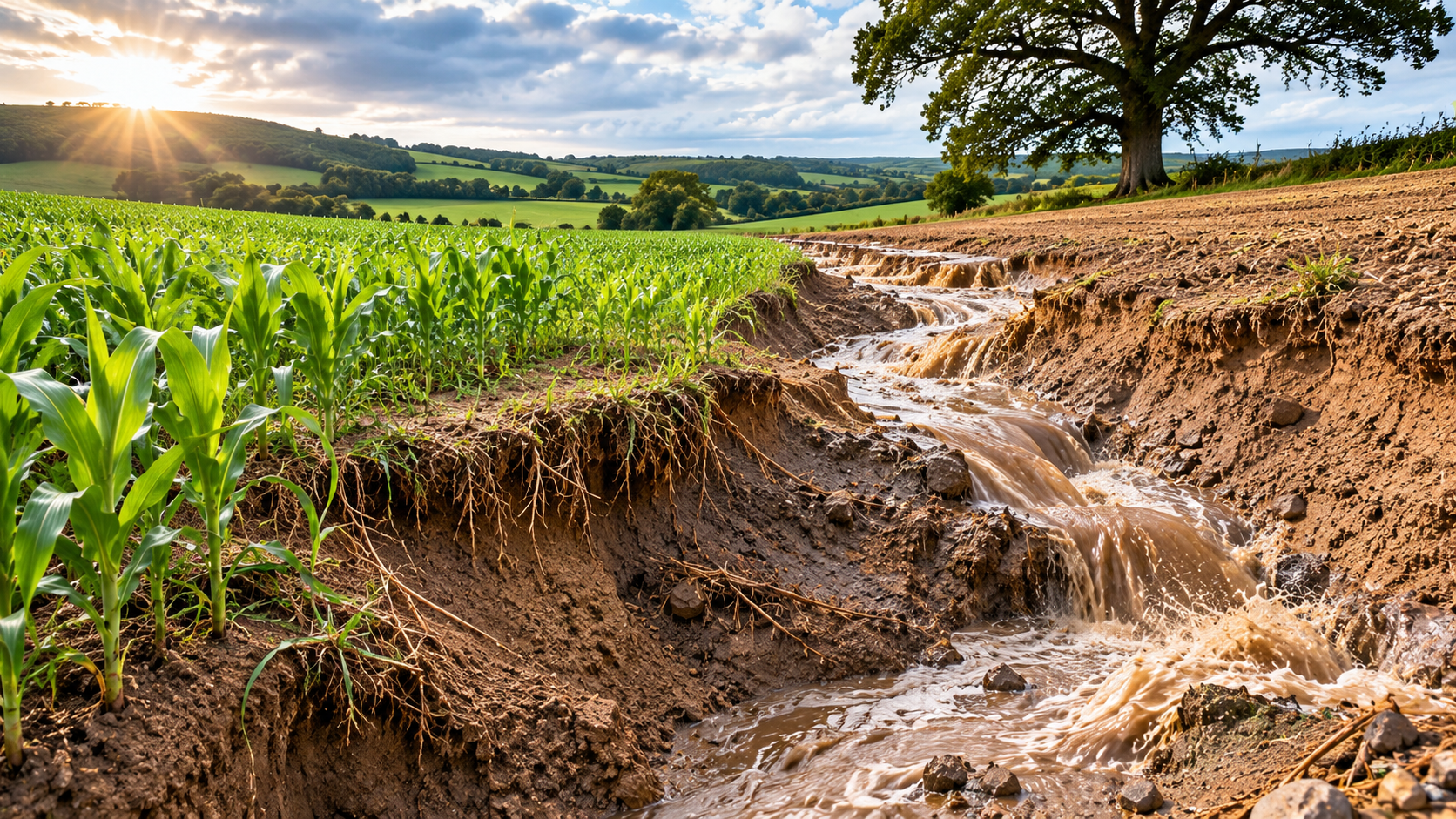
What Happens When Soil Becomes Contaminated?
The ground beneath a former factory, an agricultural field or a proposed housing development may look much like any other piece of land. Its surface may support vegetation, accommodate machinery or appear suitable for construction, but beneath it, substances left behind by previous activities can present a very different picture.
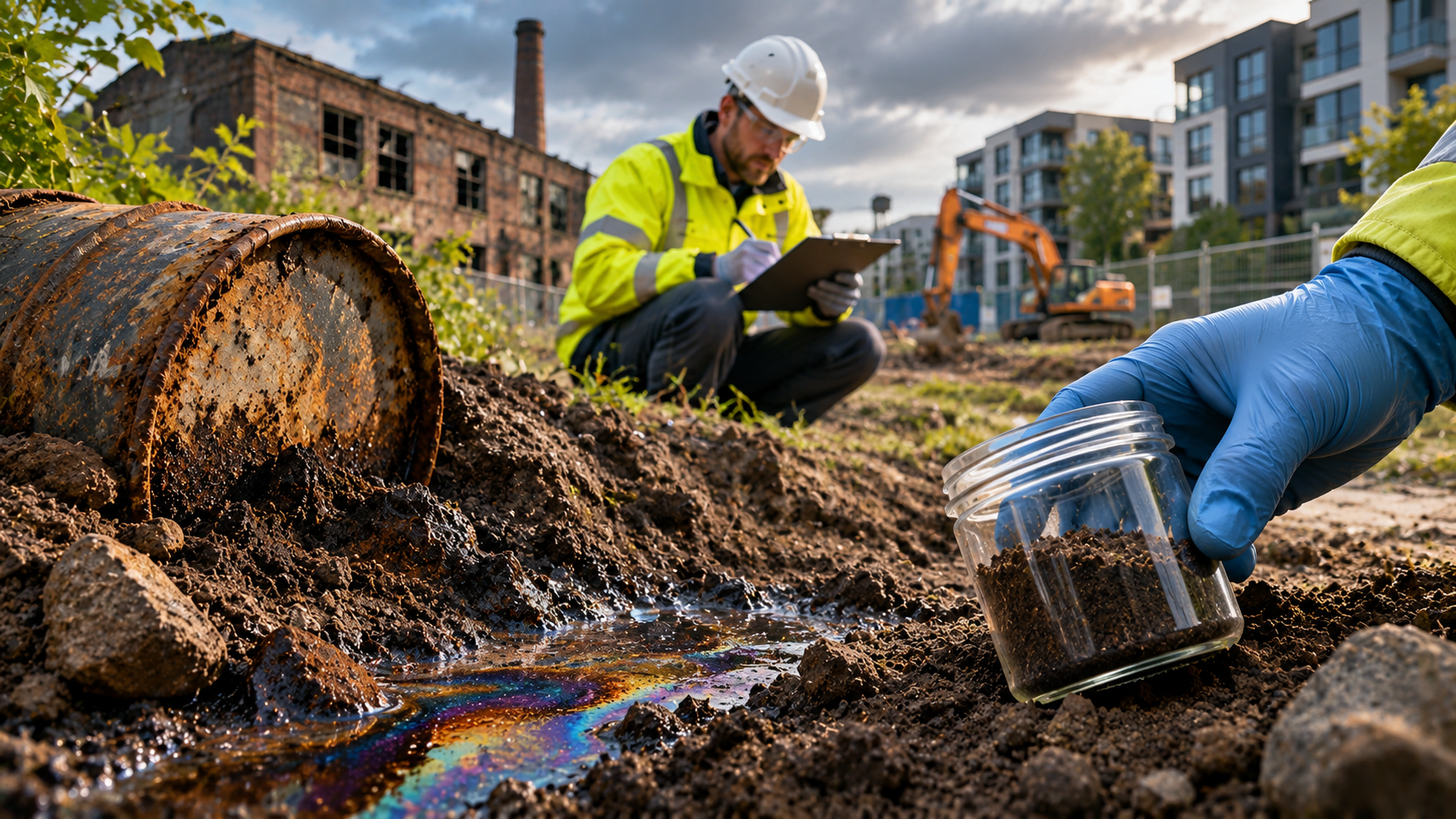
Soil contamination is an environmental issue with implications for public health, water quality, biodiversity, food production and land development. It can result from decades of industrial activity, poorly managed waste, fuel leaks, mining, inappropriate chemical use and accidental pollution. Some contaminants remain in the ground for long periods, while others can migrate through soil and groundwater, creating risks beyond the original source.
The challenge is not just identifying what is present. It is understanding whether contamination can reach people, plants, animals or water resources, and determining what needs to be done to manage the risk.
Soil contamination can originate from a wide range of activities and not all pollution is the result of a recent incident. Industrial sites are a significant source of historic contamination. Former factories, gasworks, steelworks, refineries, chemical works and engineering facilities may have handled or stored substances that entered the ground through spills, leaking infrastructure, waste disposal or historic operating practices.
Mining and mineral processing can also leave a legacy of contamination, including elevated concentrations of metals and other potentially harmful materials. Former landfill sites and areas where industrial waste has been deposited may contain a mixture of substances, making investigation particularly important.
The Environment Agency's Land Contamination Risk Management guidance identifies historical industrial use, mining, waste deposits, accidental releases and the movement of contaminants through soil and groundwater among the potential causes of land contamination. It also recognises that naturally occurring substances can be present at elevated concentrations in some locations.
Agricultural activity can also contribute. Pesticides, herbicides and fertilisers are used to support crop production, but inappropriate application, poor storage, spills or excessive use can introduce substances into the soil. The spreading of unsuitable materials, including contaminated sludge or waste, can create additional risks.
Heavy metals and hydrocarbons present different challenges
Not all contaminants behave in the same way. Their characteristics influence how they move through the ground, how long they remain and the risks they may present. Heavy metals such as lead, arsenic, cadmium, chromium and nickel can be associated with industrial processes, mining, waste disposal and other activities. Some metals also occur naturally in soil, so their presence does not automatically indicate pollution.
Unlike many organic contaminants, metals cannot be broken down through natural biological processes. Their mobility and availability depend on factors including soil chemistry, pH, organic matter and the form in which they occur. Some may bind strongly to soil particles, while others can become more mobile under particular conditions.
Hydrocarbons are another important group of contaminants. These include substances associated with petrol, diesel, heating oil, lubricants and industrial processes. Leaking fuel tanks, damaged pipelines, spills and poorly managed storage areas can all introduce hydrocarbons into the ground.
Some petroleum-derived compounds can migrate through soil, contaminate groundwater or produce vapours that move into buildings. The behaviour depends on the specific substance, the geology and the conditions beneath the site.
However, the presence of a potentially harmful substance does not, by itself, establish that land poses an unacceptable risk. The important consideration is whether there is a route through which the contaminant can affect something vulnerable. This is known as the source-pathway-receptor model.
The source is the contaminant itself. The pathway is the route through which it can travel or cause exposure. The receptor is the person, animal, plant, water resource, building or ecosystem that could be affected.
For example, lead in soil may present a different level of risk depending on its concentration, location, accessibility and the intended use of the land. A site proposed for residential development, with gardens and areas where children may play, requires different considerations from land intended for a restricted industrial use.
Potential pathways include direct contact with soil, accidental ingestion, inhalation of contaminated dust, uptake by plants, migration into groundwater and the movement of gases or vapours into buildings.
Why soil testing matters
Contamination is not always visible. A site may have no obvious discolouration, unusual vegetation or chemical odour, while still containing substances that require investigation. Equally, unusual-looking ground does not necessarily mean that harmful contamination is present.
Historical land use provides an important starting point. Former industrial activities, fuel storage, waste disposal, vehicle maintenance and chemical handling can indicate where potential problems may exist.
A preliminary assessment will usually examine historic maps, previous site uses, available environmental records, geological information and a physical inspection. This helps develop an initial understanding of potential contamination sources and the pathways through which they could affect receptors.
Where necessary, intrusive investigation follows. This may involve trial pits, boreholes and soil sampling, alongside groundwater or ground-gas monitoring where relevant. Samples are analysed by laboratories to identify contaminants and establish their concentrations and distribution.
The results are then interpreted by competent professionals, taking account of the proposed land use and site-specific conditions. The objective is not to produce a list of substances in isolation, but to establish whether they create an unacceptable risk and what action is required.
Where contamination presents an unacceptable risk, remediation may be necessary. The appropriate solution depends on the contaminants involved, their concentrations, the ground conditions, the proposed use of the site and the risks that need to be controlled.
Excavation and removal is one option. Contaminated soil can be dug out and taken to an appropriately authorised facility, with suitable replacement material brought in where required. This can be effective for localised contamination, although transport, disposal and replacement costs need to be considered.
Other approaches include containment, where contaminated material is isolated to prevent exposure or migration, and treatment techniques designed to reduce the concentration, mobility or toxicity of contaminants.
Some methods treat soil in situ, without removing it from the ground. Others involve excavating material for treatment elsewhere on the site or at a specialist facility. Depending on the contaminant, techniques can include physical separation, chemical treatment and biological processes such as bioremediation, which uses microorganisms to break down certain organic pollutants.
There is no single remediation method suitable for every site. A solution must be selected through a structured assessment of the available options, taking account of environmental performance, practicality, cost and the intended future use.
The role of contaminated land in regeneration
Contaminated land is often associated with the legacy of industrial development, but it can also represent an opportunity for regeneration. Former industrial sites, redundant facilities and previously developed land may be suitable for new housing, commercial buildings, infrastructure or public spaces once the risks have been properly assessed and managed.
For developers and contractors, this makes early investigation essential. Discovering contamination after construction has started can create delays, additional costs and complications for the project programme. Understanding the site's history and commissioning proportionate investigations at the outset can help inform design, procurement and remediation strategies.
It is also important to recognise that remediation is not necessarily about removing every trace of every contaminant. The objective is to manage the risks so that land is suitable for its intended use and does not create unacceptable harm to people or the environment.
Understanding the ground beneath future development
Soil contamination is a legacy that can remain hidden long after the activities responsible have disappeared. Its effects can extend beyond individual sites, influencing groundwater, ecosystems, neighbouring land and the safety of future development.
The response requires more than identifying pollutants. It demands a clear understanding of how contaminants behave, where they can travel and what they could affect. Testing, risk assessment and appropriate remediation provide the evidence needed to make informed decisions.
As pressure to reuse previously developed land continues, contaminated land assessment will remain an important part of responsible planning and construction. Understanding what lies beneath a site is not an administrative exercise to be completed before the real work begins. It is fundamental to ensuring that regeneration is safe, sustainable and fit for the future.
Frequently Asked Questions About Soil Contamination
1. Can contamination spread from one property to neighbouring land?
Yes. Contaminants can move beyond the boundaries of the original site through groundwater, surface-water runoff, migrating soil gases, airborne dust or the movement of contaminated soil during excavation. The extent of migration depends on the substance, ground conditions, drainage and local geology. This is why investigations may need to consider neighbouring land as well as the site itself.
2. Can contaminated soil affect the foundations of a building?
Certain contaminants and ground conditions can affect buildings and infrastructure. For example, aggressive substances may damage some construction materials, while ground gases and vapours can migrate into buildings if suitable precautions are not taken. A site assessment should consider both risks to human health and potential harm to the wider environment.
3. What happens if contaminated soil is excavated and moved elsewhere?
Excavation does not remove the environmental risk unless the material is managed appropriately. Moving contaminated soil can spread pollutants to previously unaffected areas. Its classification, transport, treatment and disposal must be considered under the relevant waste and environmental regulations. Depending on the circumstances, permits may be required for treatment or redeposition.
4. Can imported topsoil introduce contamination to a development site?
Yes. Imported soil, topsoil and other fill materials can contain unwanted contaminants if their origin and quality have not been properly established. Developers and contractors should obtain appropriate documentation and testing evidence, particularly where imported material will be used in gardens, landscaped areas or public open spaces. Material suitability should be assessed against its intended use.
5. Does a former industrial site always need complete soil removal before redevelopment?
No. Complete excavation is not always necessary or the most appropriate solution. Depending on the risk assessment, contamination may be treated, contained, isolated or managed through carefully designed site measures. The objective is to make the land suitable for its intended use and ensure that unacceptable risks are addressed.
6. How can contaminated land affect sustainable drainage systems?
Contamination needs to be considered when designing sustainable drainage systems (SuDS). Allowing water to infiltrate through contaminated ground could mobilise pollutants and create a pathway to groundwater or nearby watercourses. Site investigations should therefore establish whether infiltration is appropriate and whether drainage designs need to incorporate lining, controlled discharge or other protective measures.
7. Can contamination remain in the ground after a site has been redeveloped?
Yes. Some remediation strategies leave contaminants in place where they can be safely contained or managed. This may involve protective barriers, restrictions on certain land uses or ongoing monitoring and maintenance. Where this approach is adopted, the relevant records and management requirements are important for future owners, occupiers and those responsible for maintaining the site.
8. Why is groundwater testing sometimes necessary when investigating contaminated soil?
Contaminants can dissolve in water and move through the ground, potentially reaching groundwater beyond the original source. Soil samples alone may not reveal the full extent of the problem. Groundwater monitoring can help establish whether pollutants are migrating, identify potential risks to water resources and inform the appropriate remediation strategy.
9. What should construction workers do if unexpected contamination is discovered during excavation?
Work in the affected area should be stopped and the site procedures for unexpected contamination followed. The area may need to be isolated to prevent exposure or the spread of material by people, vehicles and machinery. The site manager and environmental specialists should be informed so that the material can be assessed and appropriate controls agreed before work resumes.
10. What evidence should a developer receive when contaminated land remediation is complete?
A developer should receive a verification report documenting the remediation work and demonstrating whether the agreed objectives have been achieved. Depending on the project, this may include laboratory results, records of excavated and imported materials, photographs, monitoring data and details of protective measures installed. This evidence provides an important record for planning compliance, future site management and subsequent owners.