Why Cities Need Healthy Soil as Much as Farms Do
A city is often defined by its buildings, roads, transport networks and public spaces, but beneath the pavements, parks, gardens and roadside trees lies another essential part of the urban environment - soil. It is easy to overlook. In many places, it has been covered, compacted, excavated or buried beneath layers of construction material. Where it remains exposed, it may be treated as little more than something to plant a tree in or cover with grass – and that is a mistake.
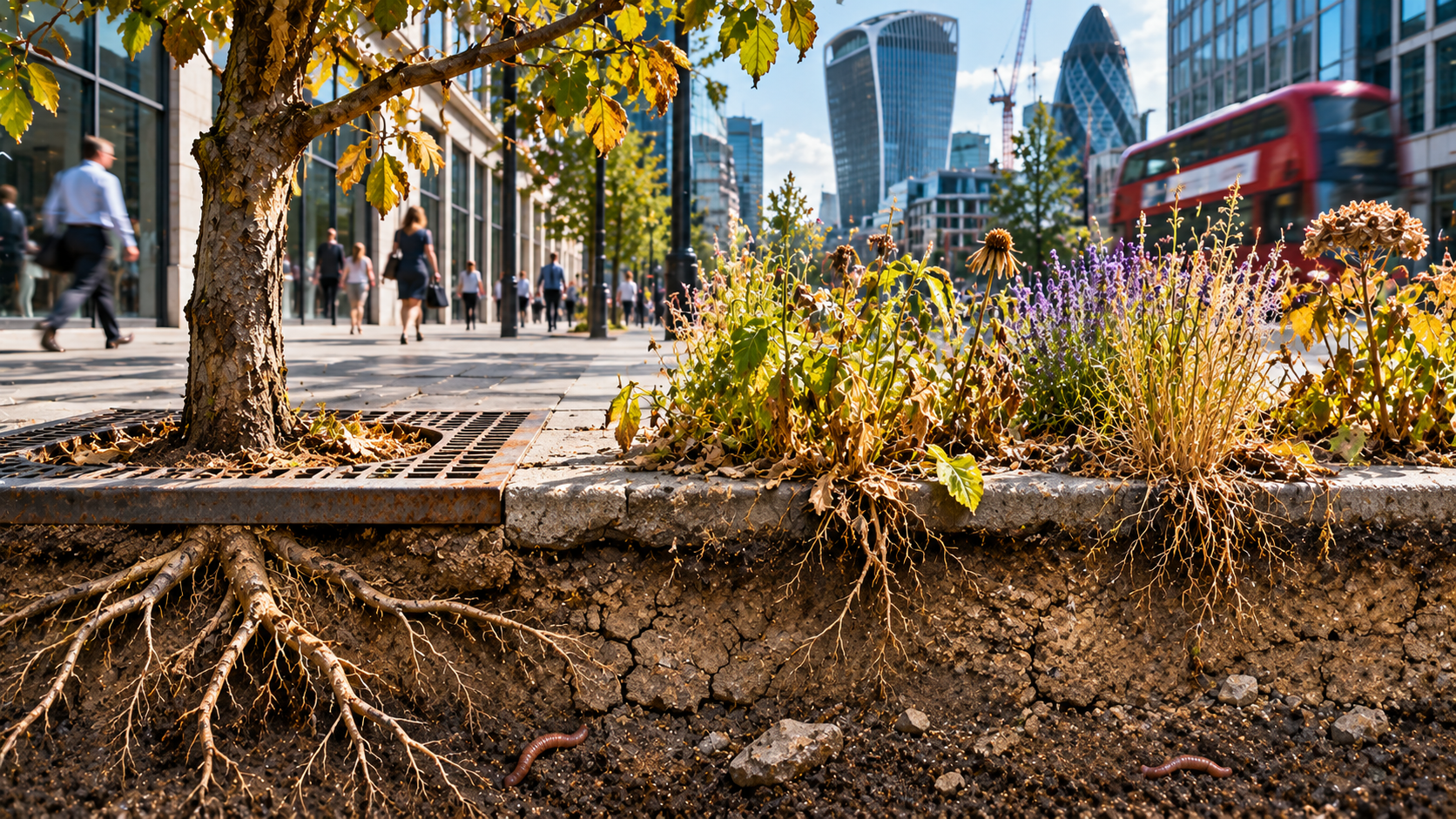
Healthy urban soil is doing far more work than most people realise. It helps manage rainfall, supports trees and vegetation, provides habitats for wildlife, stores carbon, filters water and contributes to cooler, healthier neighbourhoods.
As cities face rising temperatures, more intense rainfall, pressure on green space and declining biodiversity, the condition of the ground beneath them deserves much greater attention. Healthy soil is not just an agricultural concern. It is an essential part of making urban environments more resilient and liveable.
The Food and Agriculture Organization of the United Nations (FAO) has highlighted the importance of soil to the future of cities, pointing out that it underpins biodiversity, food production, climate resilience and the quality of urban environments.
The scale of urbanisation makes this increasingly important. The FAO estimates that around 55% of the world's population currently lives in urban areas, a proportion expected to rise to 68% by 2050.
As cities expand, the pressure on land increases. More housing, roads, commercial buildings and infrastructure are needed, while the remaining green spaces are expected to deliver more environmental and social benefits. But green infrastructure cannot function properly without healthy soil.
A park may look attractive, a newly planted avenue may improve the appearance of a street and a landscaped development may provide welcome greenery. However, the success of these spaces depends on what happens underground. If the soil is compacted, contaminated, poorly drained or lacking organic matter, the trees and plants growing above it will struggle to establish and thrive. The ground is not a passive backdrop to urban development. It is part of the infrastructure itself.
Why city trees need more than a planting hole
Trees are among the most valuable features of a healthy city. They provide shade, help regulate temperatures, capture carbon, support wildlife and make streets and public spaces more pleasant places to live and work, but planting a tree is not the same as creating the conditions in which it can flourish.
Urban trees often face an unforgiving environment. Their roots may be restricted by foundations, underground services, compacted ground and impermeable surfaces. Soil volumes can be limited, while rainfall is directed into drains rather than allowed to reach the root zone.
Compaction is particularly damaging. When heavy machinery, construction traffic or repeated pedestrian pressure squeezes soil particles together, the spaces between them become smaller. These pores are important because they allow air and water to move through the soil and provide space for roots to grow. With less pore space, water infiltration can decline, drainage can become less effective and roots may struggle to establish. Soil organisms can also be affected.
The result can be trees that grow slowly, become stressed or fail prematurely. Replacing them is expensive, but the wider loss is greater - fewer mature trees, less shade, reduced biodiversity and weaker urban green infrastructure.
Planning for healthy urban trees must therefore begin below ground. Adequate rooting space, suitable soil, protection during construction and careful management of surrounding surfaces are all essential.
One of the most important functions of healthy soil is its ability to absorb, store and gradually release water. When rain falls on a natural, well-structured soil, some water infiltrates through the surface, moves into the soil profile and may eventually replenish groundwater. Some is retained for plants and soil organisms, while some moves through the ground towards drainage systems and watercourses.
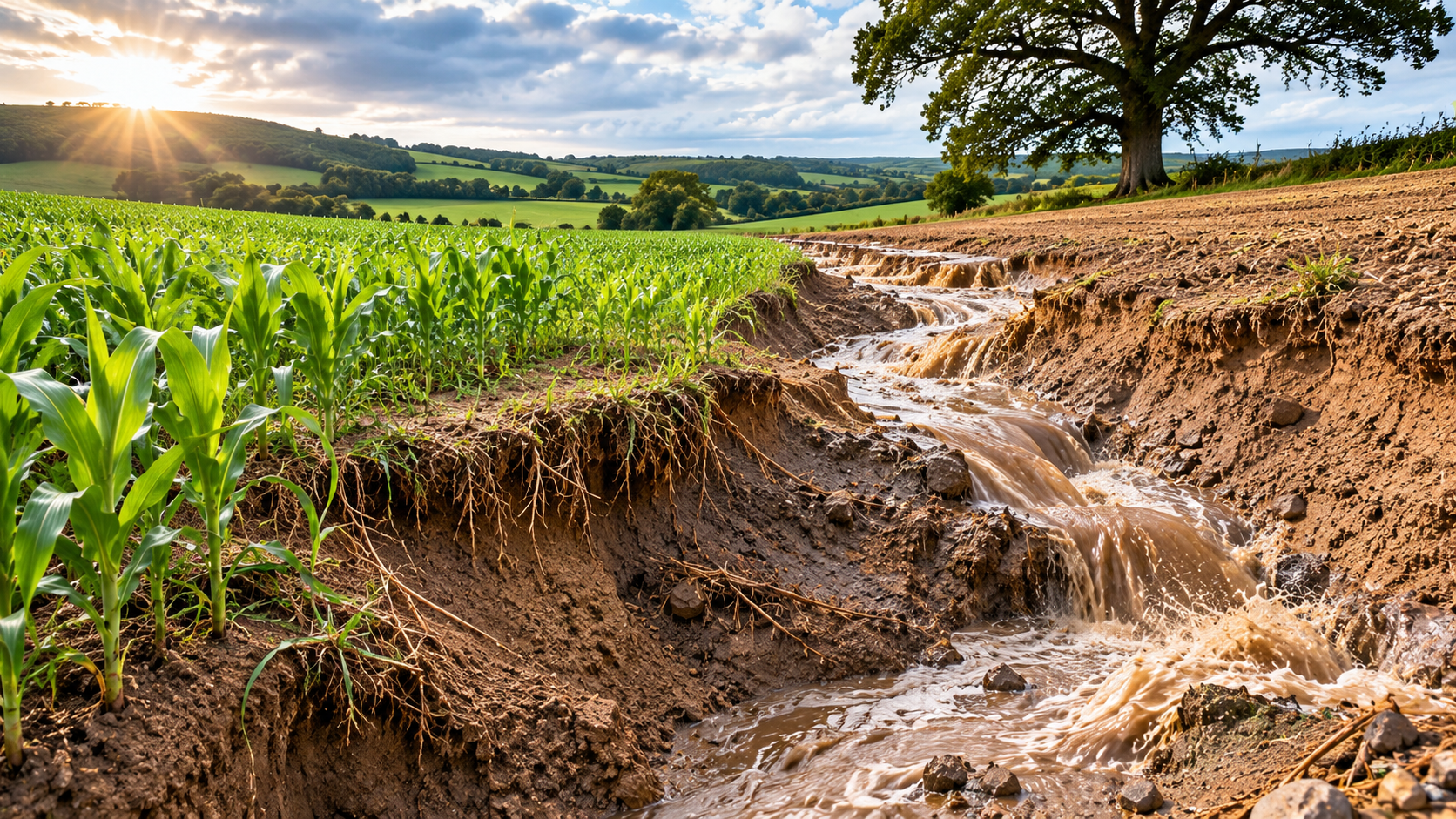
Now consider what happens when the same rainfall lands on a city centre dominated by roofs, roads, car parks and paved surfaces. Much of the water cannot enter the ground. It runs across hard surfaces, collecting pollutants and placing pressure on drains, sewers and watercourses. During intense rainfall, this can contribute to surface water flooding.
Soil sealing – the covering of natural ground with impermeable materials such as concrete and asphalt – removes or severely restricts many of the soil's natural functions. The European Commission identifies soil sealing as a major contributor to soil degradation, with consequences that include increased flood risk, biodiversity loss and greater vulnerability to water scarcity.
This is where healthy urban soil becomes an important part of sustainable drainage. Rain gardens, planted swales, tree pits, green spaces and permeable surfaces can help capture and manage rainfall closer to where it falls. These features are often described as green infrastructure or nature-based solutions. Their effectiveness depends on good design, suitable ground conditions and the ability of the underlying soil to receive and manage water.
The cooling effect beneath the surface
Anyone who has walked from a shaded park into a street surrounded by concrete and buildings on a hot summer's day will understand the difference that green space can make.
Urban areas can experience higher temperatures than their surrounding countryside, a phenomenon known as the urban heat island effect. Buildings, roads and other hard surfaces absorb and retain heat, while limited vegetation reduces the availability of shade and natural cooling.
Trees and green spaces help counter this effect. Their canopies provide shade, while plants release water vapour through transpiration, helping cool the surrounding environment, but again, the soil beneath them matters.
Healthy soil supports vegetation by providing water, nutrients, oxygen and space for roots. It can retain rainfall and make moisture available during dry periods, helping plants remain healthy when temperatures rise.
Degraded, compacted or poorly managed soil can undermine these benefits. Trees may struggle to access sufficient water, vegetation may become stressed and green spaces may lose some of their capacity to provide cooling. The lesson is therefore straightforward - planting more trees and creating more green spaces is important, but the quality of the soil supporting them must be part of the equation.
Cities are often thought of as places where nature has been pushed aside. In reality, urban environments can support a surprising range of wildlife, from birds and pollinators to mammals, fungi and microscopic soil organisms. Healthy soil provides the foundation for many of these relationships.
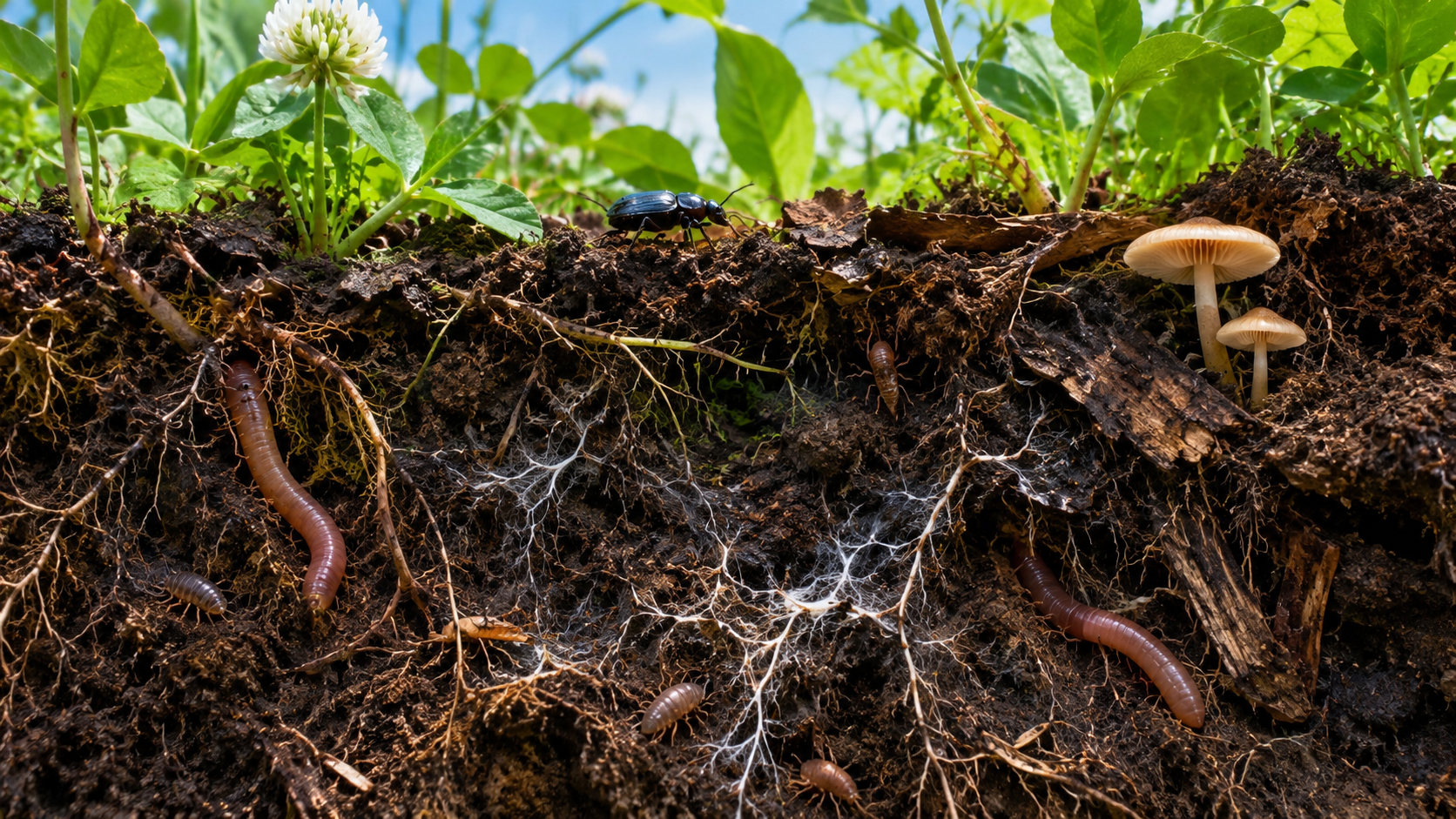
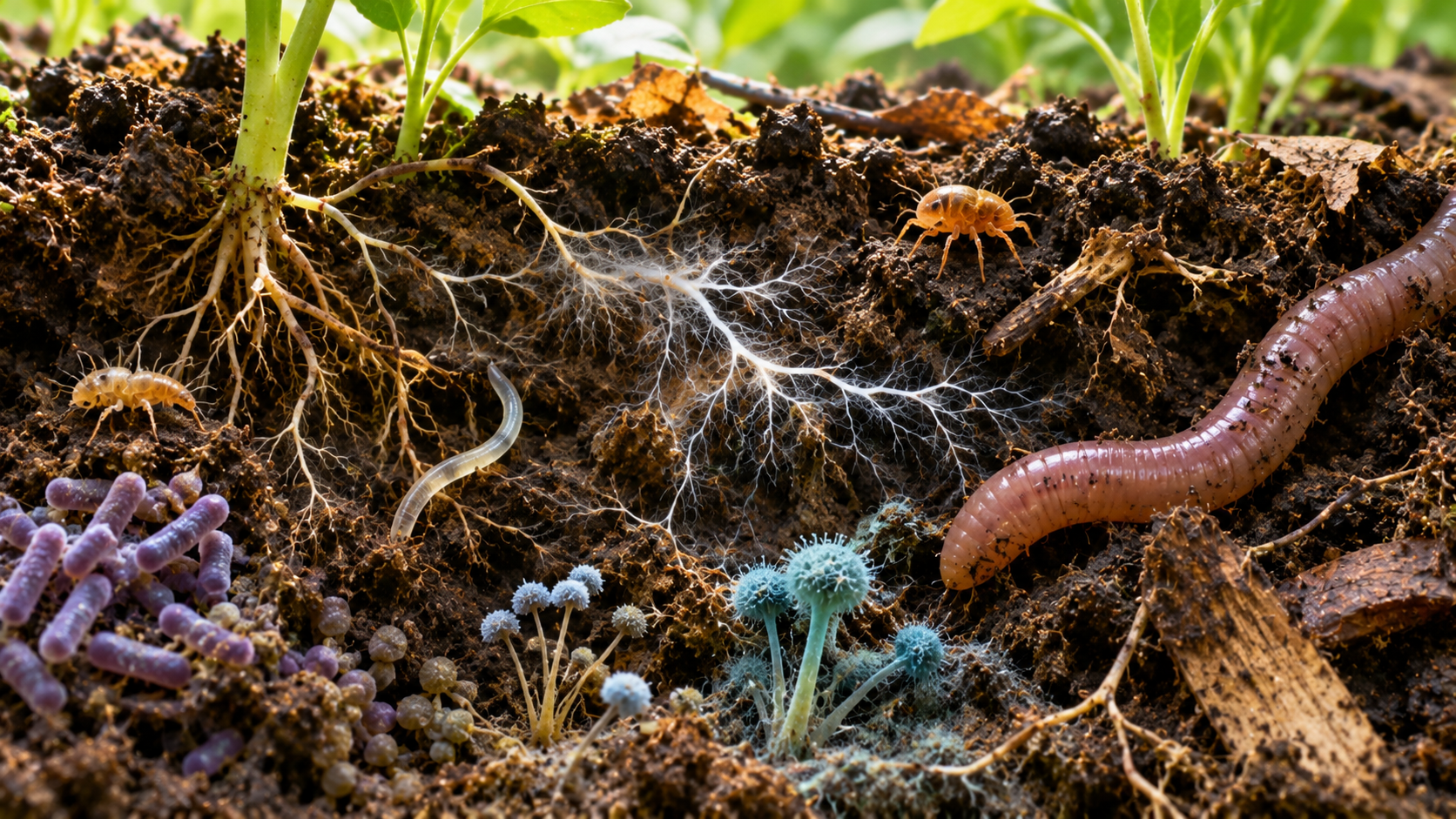
Bacteria, fungi, earthworms, nematodes and other organisms break down organic material, recycle nutrients and help maintain soil structure. Their activity supports plant growth and creates habitats for other forms of life.
In parks, gardens, allotments, roadside planting and urban woodlands, soil biodiversity helps sustain the vegetation on which many other species depend. A healthy urban green space is therefore more than a collection of trees, lawns and flowerbeds. It is an interconnected living system, with activity taking place above and below the surface.
Protecting this system means avoiding unnecessary soil disturbance, maintaining organic matter, limiting compaction and ensuring that green spaces have suitable conditions to support life.
It also means recognising that biodiversity is not confined to nature reserves and rural landscapes. It can be supported in the ordinary places where people live, work and travel.
The problem with treating urban soil as waste material
One of the greatest challenges facing urban soil is the way it is treated during development. Construction sites involve excavation, earthmoving, vehicle movements, storage and changes to ground levels. Topsoil may be stripped and stockpiled, while other areas are compacted by machinery or covered by permanent structures.
Some urban land also carries a legacy of industrial activity, previous development or inappropriate waste disposal. Contamination may include heavy metals, hydrocarbons and other substances that require investigation before land can be safely reused. This does not mean that all urban soil is contaminated or unsuitable. It means that its condition needs to be understood rather than assumed.
Soil surveys, testing and appropriate management can help identify what is present, where it can be retained and how it should be handled. Where land is being redeveloped, protecting suitable soil and restoring its functions should be considered alongside other environmental and construction requirements.
There is also an opportunity to rethink how cities manage organic waste. Where materials such as suitable green waste can be safely composted and returned to urban landscapes, nutrients and organic matter can be recycled rather than lost.
Urban planning has traditionally focused on what happens above ground - buildings, roads, transport, utilities, housing and public spaces. Increasingly, however, cities are recognising the importance of green infrastructure and nature-based solutions. Healthy soil should be part of that conversation from the beginning.
Developers, architects, landscape designers, engineers and local authorities all have a role to play. Soil condition should be assessed before development, existing vegetation and valuable soils should be protected where possible, and construction methods should minimise unnecessary disturbance.
Landscape schemes need to consider soil depth, structure, drainage, organic matter and the long-term requirements of the plants and trees being introduced. Sustainable drainage systems should be designed around actual ground conditions, rather than assuming that every site will absorb water in the same way. Urban regeneration also offers opportunities to restore previously degraded land, create new green spaces and reconnect fragmented habitats.
The European Environment Agency has warned that soil degradation affects the ability of soils to provide essential services, including water regulation, biodiversity and carbon storage. These functions are particularly important in urban areas, where environmental pressures are concentrated and where large numbers of people can benefit from improvements.
The future of our cities will be judged not only by the quality of their buildings and infrastructure, but by how well they respond to environmental pressures and support the people who live in them.
Trees need healthy soil. Green spaces need healthy soil. Urban biodiversity needs healthy soil. Sustainable drainage, climate resilience and the creation of more liveable neighbourhoods all depend, in part, on the condition of the ground beneath them.
We cannot keep covering, compacting and degrading urban soil while expecting green infrastructure to compensate for the damage. Nor can we regard soil protection as something relevant only to farmland and the countryside.
The next time a city invests in a new park, plants a street tree, creates a rain garden or redevelops a brownfield site, the question should not only be what will grow above ground. It should also be what is happening beneath it.
Frequently Asked Questions About Urban Soil Health
1. What is urban soil and how is it different from agricultural soil?
Urban soil is soil found within towns and cities, including parks, gardens, roadside verges, landscaped developments and brownfield sites. It is often more heavily disturbed than agricultural soil, with a greater likelihood of compaction, contamination, imported materials and restricted rooting space. Its properties can vary considerably, even within a relatively small area.
2. Why do street trees struggle to grow in urban environments?
Street trees often have limited space for their roots, compacted soil, restricted access to water and air, and competition from underground utilities. Impermeable paving can also prevent rainfall from reaching the root zone. Providing adequate soil volume, suitable growing conditions and protection from construction damage can improve tree establishment and long-term survival.
3. How does soil sealing increase the risk of urban flooding?
Soil sealing occurs when natural ground is covered by impermeable materials such as concrete, tarmac and buildings. This prevents rainfall from infiltrating the ground, increasing surface runoff and placing additional pressure on drainage networks. Retaining permeable surfaces and introducing green infrastructure can help manage rainfall more naturally.
4. What is the role of soil in sustainable urban drainage systems?
Soil plays an important role in sustainable drainage systems (SuDS) by allowing water to infiltrate, filter and move through the ground. Features such as rain gardens, swales and vegetated drainage areas can slow runoff and help manage rainfall close to where it falls. Their performance depends on soil permeability, structure, contamination risks and groundwater conditions.
5. Can urban soil be contaminated even in parks and gardens?
Yes. Some urban soils have a history of industrial use, waste disposal, demolition or previous development. Contaminants such as lead, arsenic and hydrocarbons may remain in the ground, including in areas that have since become green spaces. Appropriate investigation and testing can establish whether contamination presents a risk to people, plants or wildlife.
6. How does compacted soil affect urban green spaces?
Compaction reduces the pore spaces between soil particles, restricting the movement of air and water. This can make it harder for roots to grow, reduce water infiltration and affect the organisms that maintain healthy soil. In parks and public spaces, repeated foot traffic, vehicles and maintenance machinery can all contribute to compaction.
7. What is the best soil for planting trees in cities?
There is no single best soil for every urban tree. Suitable soil needs to provide sufficient rooting depth and volume, good structure, access to water and oxygen, and appropriate nutrient availability. The specification should reflect the tree species, site conditions, surrounding infrastructure and expected maintenance requirements.
8. How can urban soil support pollinators and other wildlife?
Healthy soil supports plants that provide food and habitat for pollinators, birds and other wildlife. It also contains its own communities of bacteria, fungi, earthworms and other organisms. Maintaining diverse planting, limiting unnecessary disturbance and avoiding excessive use of chemicals can help support these interconnected habitats.
9. How can developers protect soil health during construction?
Developers can protect soil by assessing site conditions before work begins, identifying areas suitable for retention and establishing clear soil protection measures. These should include designated machinery routes, protection against compaction, appropriate topsoil stripping and storage, and careful reinstatement. Existing trees, vegetation and valuable soil areas should be protected wherever practicable.
10. How can cities improve soil health in existing public spaces?
Local authorities and land managers can improve urban soil through targeted decompaction, adding suitable organic matter, improving drainage, increasing vegetation cover and reducing unnecessary disturbance. Tree planting schemes, rain gardens, community gardens and the restoration of degraded land can all create opportunities to improve soil function and strengthen urban green infrastructure.