Why Healthy Soil Is Essential for Pollinators
When we think about pollinators, we tend to look upwards. We picture bees moving between flowers, butterflies crossing meadows and hoverflies feeding on nectar. We think about wildflower planting, flowering hedgerows and the importance of providing insects with food throughout the year, but there is another part of the picture that is much easier to overlook.
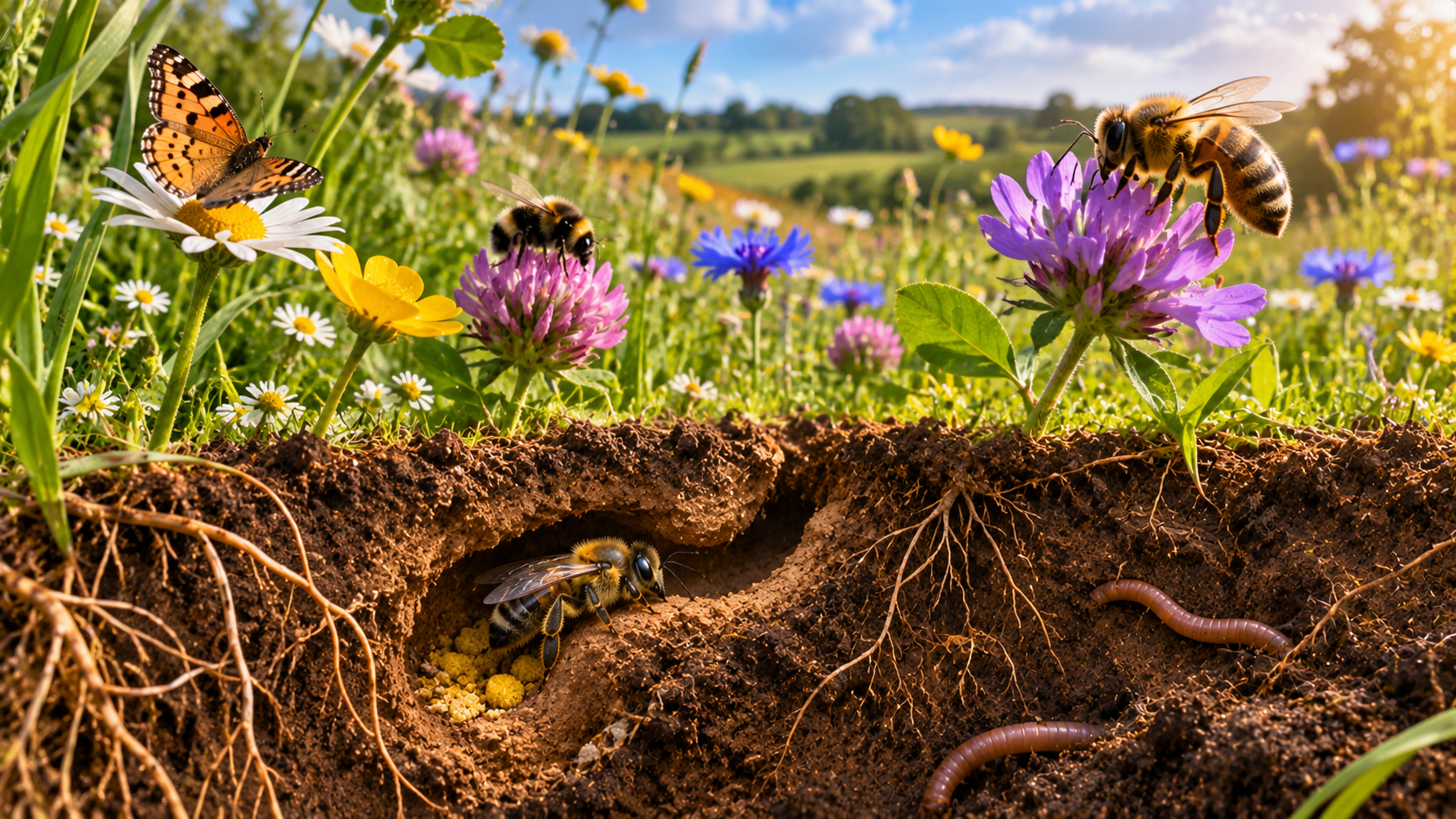
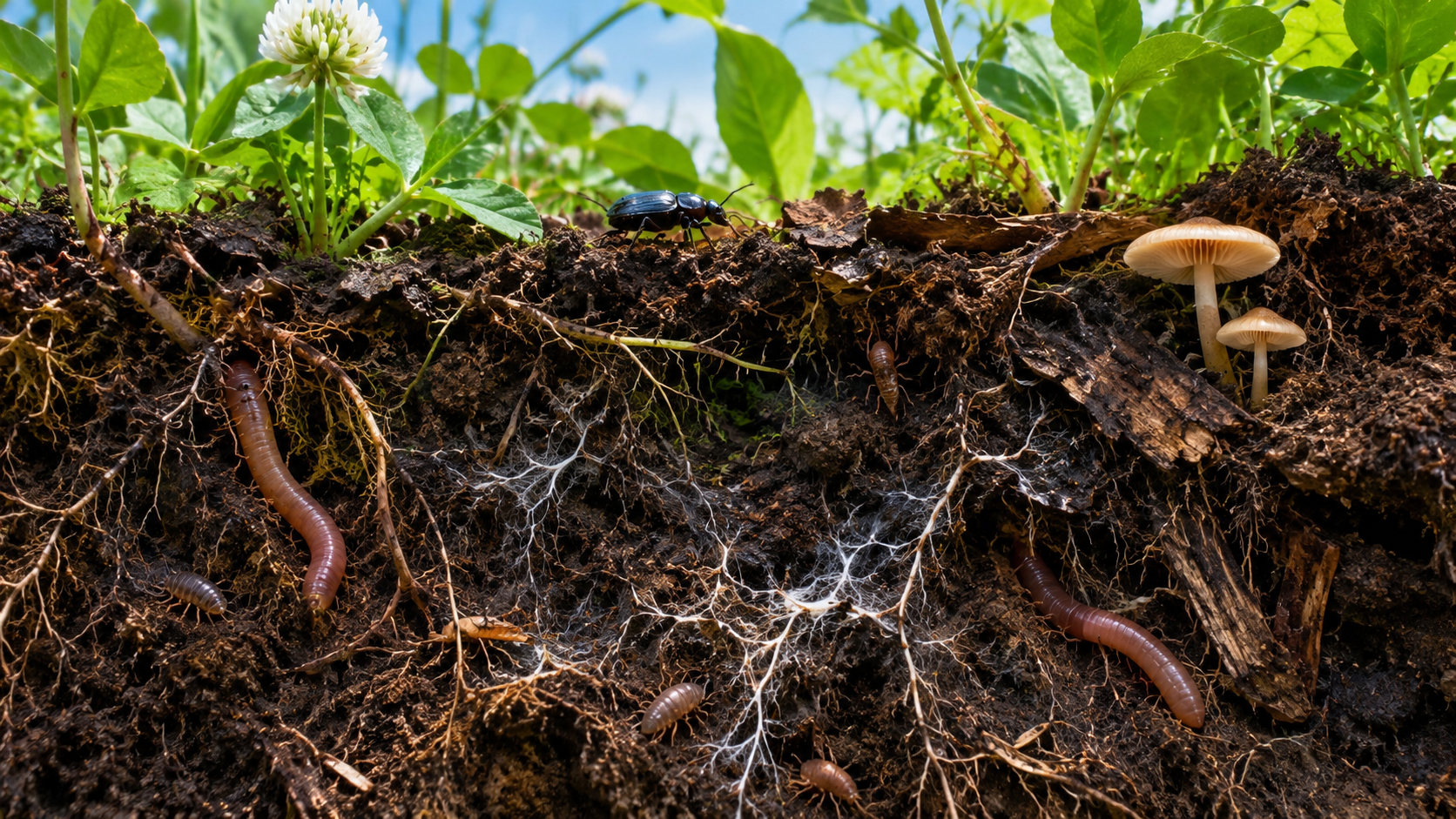
Beneath those flowers is the soil. It determines which plants can grow, influences the availability of nectar and pollen, provides nesting sites for many wild bees and supports the wider ecosystem on which pollinating insects depend.
Soil and pollinators are connected in ways that extend far beyond the relationship between a flower and the insect that visits it. Some bees spend much of their lives underground. The plants that sustain pollinators rely on soil conditions, while the insects themselves can influence the soil through their nesting and burrowing activities.
Protecting pollinators therefore means looking beyond the flowers. It means understanding the ground beneath them and recognising that healthy soil is an essential part of a healthy pollinator habitat.
Most Wild Bees Depend on the Soil
One of the most surprising facts about wild bees is that the majority do not live in hives or colonies. Many are solitary species, and around 70–75% of wild bee species nest in the ground.
These ground-nesting bees excavate small tunnels in the soil, creating underground chambers where females lay their eggs and provide food for developing larvae. The young develop out of sight, protected beneath the surface until they emerge as adults.
Mining bees, sweat bees and many other solitary species depend on suitable soil for this important stage of their life cycle. Some nest individually, while others establish nests close together, sometimes creating substantial aggregations in suitable locations.
The soil is not just somewhere to build a nest. Its texture, moisture, temperature, structure and degree of compaction can all influence whether a particular site is suitable.
A review of research published in the journal Ecological Entomology found considerable variation between bee species in their nesting requirements. Some favour sandy or sandy-loam soils, while others use different soil types. Moisture, surface vegetation and the physical resistance of the ground can also influence nest-site selection. This has important implications for conservation. A landscape may appear rich in flowers, yet offer very few suitable places for ground-nesting bees to reproduce.
What Makes Soil Suitable for Ground-Nesting Bees?
There is no single soil formula that will support every ground-nesting bee. Different species have different requirements, and the conditions that suit one may be unsuitable for another. However, several characteristics are particularly important.
Soil texture affects how easily bees can excavate their nests and how well the surrounding ground holds its shape. Sandy and sandy-loam soils are frequently associated with ground-nesting bees, although preferences vary between species.
Soil moisture is another important consideration. Waterlogged ground can make nesting difficult and threaten underground chambers, while excessively dry conditions can also create problems for developing larvae and the plants that provide food.
Soil compaction can restrict access to suitable nesting areas. Hard-packed ground is more difficult to excavate, potentially increasing the effort required for bees to establish their nests. Compaction also reduces the movement of air and water through the soil.
Ground cover matters too. Some species favour sunny, relatively open patches of bare soil, while others nest among sparse vegetation or grass. A completely sealed or densely vegetated surface may therefore offer fewer opportunities for certain species.
Research into ground-nesting bees on farms in eastern Canada found that soil texture and ground cover were important factors associated with bee abundance and species diversity. Sandier soils and areas with more bare ground supported greater numbers and a wider range of species in the study, although the researchers stressed that preferences differed between individual bees.
The important message is that pollinator-friendly soil does not always mean a surface covered in vegetation. Some bees need open ground in which to nest, alongside nearby flowers that provide food.
The Hidden Connection Between Soil and Wildflowers
The relationship between soil and pollinators is not limited to nesting. The plants that provide nectar, pollen and habitat are also dependent on the physical, chemical and biological condition of the soil. Soil influences water availability, nutrient supply, root development and the range of plant species that can establish.
Where soil conditions support diverse native vegetation, the resulting habitat can provide food for a wider range of pollinating insects. Different flowers offer different resources, and their flowering periods can help sustain insects from early spring through to autumn.
This is why wildflower-rich grasslands, meadows, field margins and flowering hedgerows are so valuable. They provide more than attractive landscapes. They offer feeding opportunities and when managed appropriately, shelter and breeding habitat for insects.
However, the relationship between soil fertility and wildflower diversity is not as straightforward as it might appear. More nutrients do not necessarily mean more flowers or better pollinator habitat.
High nutrient levels, particularly where nitrogen enrichment favours vigorous grasses, can allow a relatively small number of competitive plants to dominate. This can reduce the variety of flowering species and limit the resources available to pollinators.
A review published in Philosophical Transactions of the Royal Society B examined how changes in soil conditions affect pollinators and other organisms. It identified evidence that nitrogen enrichment and changes in soil water availability can influence the quality and quantity of floral resources. The researchers also highlighted gaps in scientific understanding, particularly concerning the effects of other soil properties and how these relationships vary between species and locations.
Healthy soil is therefore not necessarily the most fertile soil. The objective should be to maintain the conditions that support appropriate vegetation and a functioning ecosystem, rather than maximise nutrient levels.
Why Soil Disturbance Can Put Pollinators at Risk
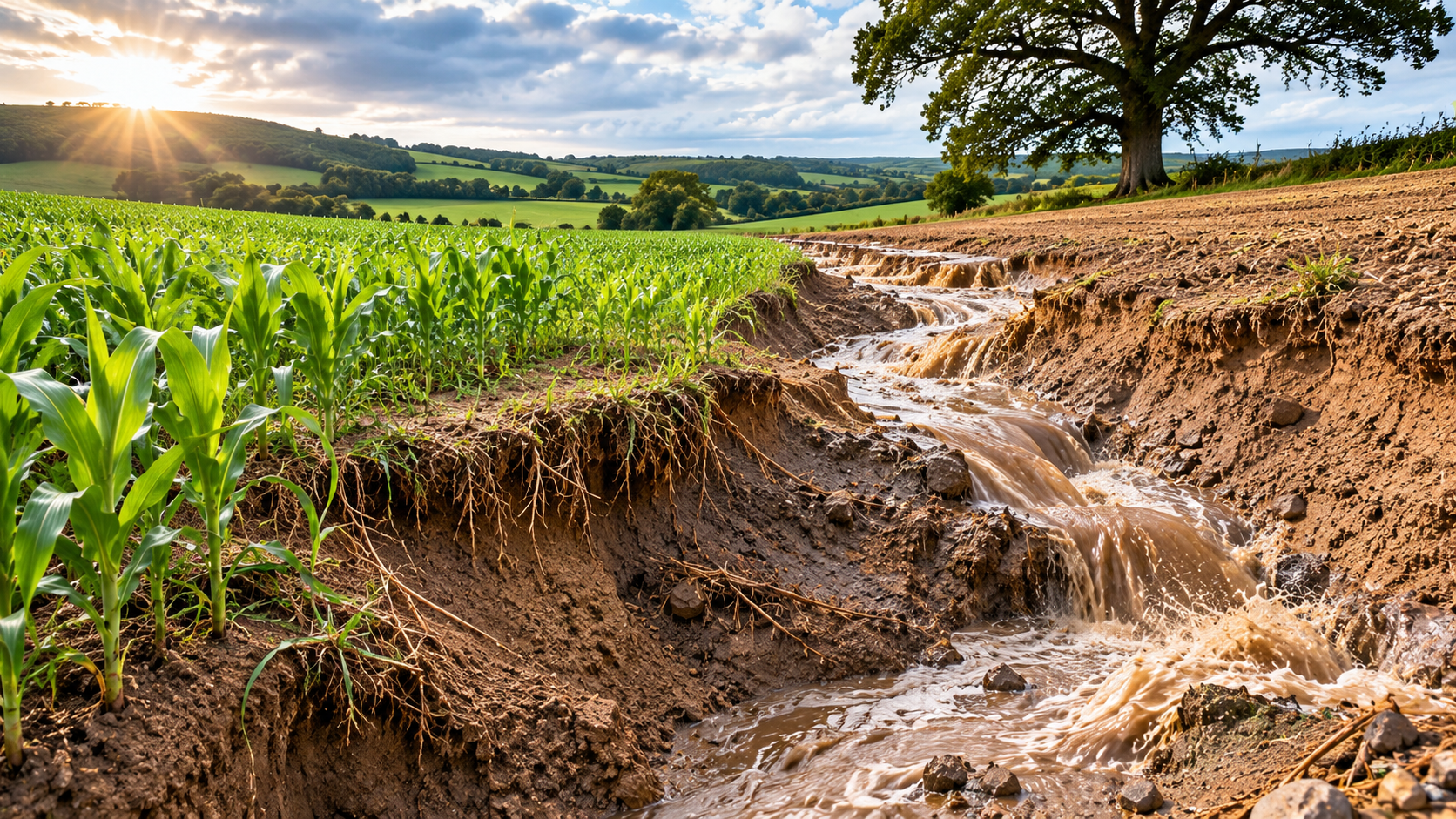
Soil is constantly affected by human activity. Agricultural cultivation, construction, land drainage, vehicle movements, intensive landscaping and changes in land use can all alter its physical structure and biological condition. For ground-nesting bees, these changes can be particularly damaging.
Deep cultivation can destroy underground nests and disturb developing larvae. Compaction can make it difficult for bees to excavate new nesting chambers. The removal of vegetation can eliminate nearby food sources, while the loss of suitable open ground can remove nesting opportunities.
Pesticides can create additional risks. Their effects depend on the substance, exposure route and species involved, but chemical use can affect pollinators directly and alter the wider biological environment on which they depend.
The European Environment Agency identifies soil-nesting habitats as an important consideration in protecting and restoring wild pollinator populations. Its review highlights the risks associated with deep soil tillage and pesticides, as well as the need to protect nesting sites throughout the bees' life cycles.
The timing of disturbance is important. A patch of ground that appears empty may contain developing bees that will not emerge for months. Routine maintenance or cultivation can therefore destroy nests without anyone realising that they were there. This is one reason why a better understanding of soil biodiversity is essential. What looks like an unused piece of land may be providing a vital habitat beneath the surface.
Pollinators Are Part of the Soil Ecosystem Too
The relationship between soil and pollinators is not a one-way process. While soil provides nesting sites and supports the plants that insects depend on, some ground-nesting bees also influence the soil themselves.
Their burrows create small channels through the ground, and the excavation process moves soil particles and can alter conditions around the nest. These activities have led researchers to consider ground-nesting bees as potential soil ecosystem engineers.
A recent European Environment Agency review highlights growing scientific interest in the contribution that soil-nesting bees may make to soil structure and ecosystem functioning.
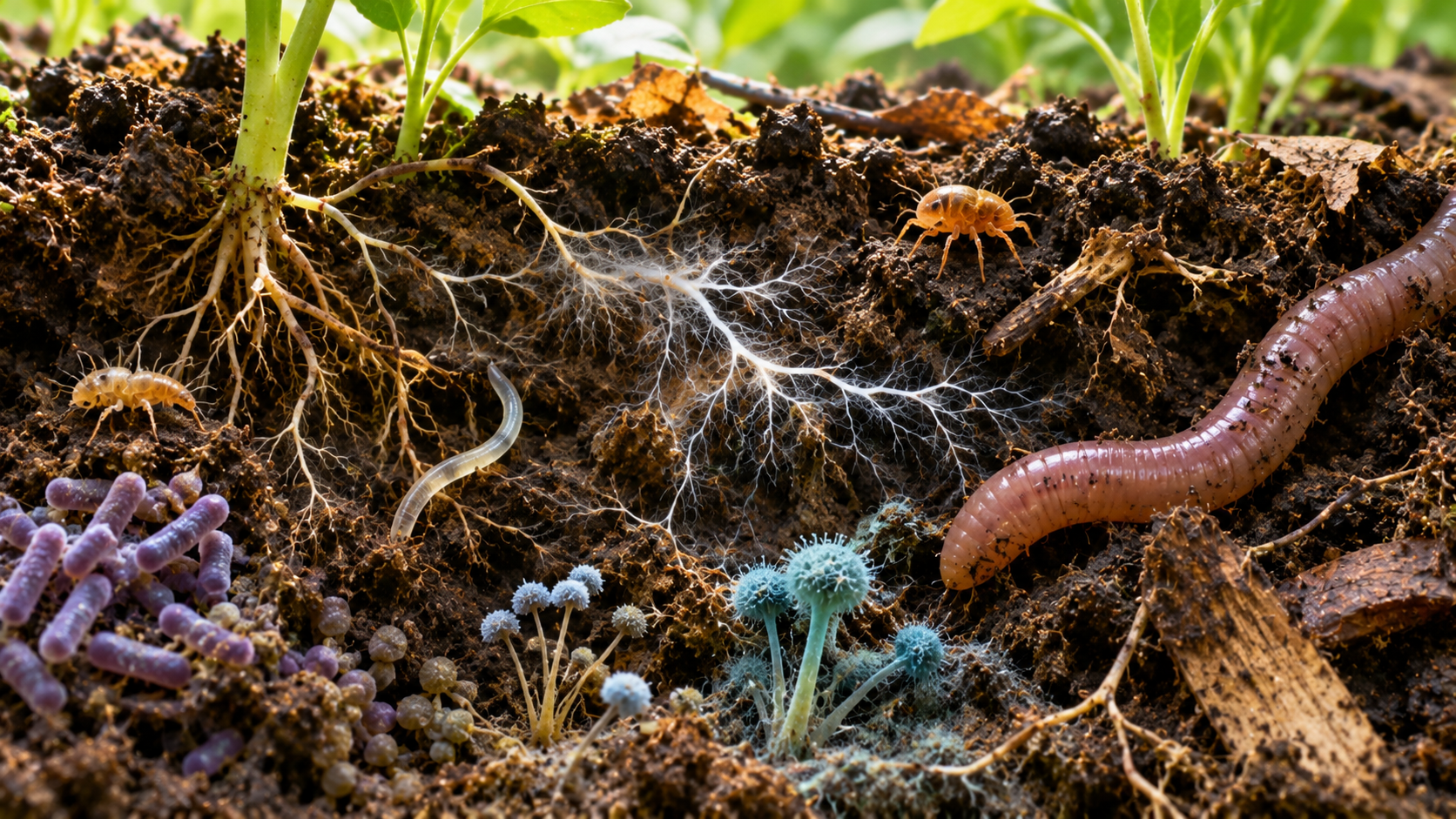
This is a reminder that soil biodiversity extends well beyond the organisms we usually associate with soil health, such as earthworms, fungi and bacteria. Insects that spend part of their lives underground also form part of this interconnected community. Protecting them means recognising the ecological value of the spaces between plants, beneath grassland and within apparently ordinary patches of earth.
Creating Pollinator-Friendly Soil Habitats
Improving conditions for pollinators does not always require large-scale landscape changes. Small, carefully managed areas can make a difference, particularly when they form part of a connected network of habitats. For landowners, farmers, gardeners, developers and local authorities, there are several practical ways to help.
Retain areas of undisturbed ground. Avoid unnecessary cultivation, excavation and heavy machinery in places where ground-nesting bees may be established. Existing nesting aggregations should be protected wherever possible.
Provide patches of bare soil. Some ground-nesting bees need open, sunny areas for excavation. Small patches of suitable bare ground, particularly where they are close to flowering plants, can provide additional nesting opportunities. These should be created with local species and soil conditions in mind, rather than through widespread removal of vegetation.
Plant a diversity of flowering species. Native wildflowers, flowering grasses, shrubs and trees can provide nectar and pollen at different times of the year. Aim for a succession of flowering resources rather than a short-lived display.
Reduce unnecessary soil compaction. Limit heavy machinery and repeated vehicle movements, particularly on wet ground. Protecting soil structure benefits both nesting insects and the plants that sustain them.
Manage grasslands carefully. Frequent mowing can remove flowers before pollinators have used them and reduce habitat diversity. Allowing suitable areas to flower and setting aside less frequently disturbed margins can provide valuable resources.
Use pesticides cautiously. Avoid unnecessary chemical treatments, particularly where flowering plants and nesting habitats are present. Integrated pest management can help reduce reliance on pesticides while maintaining appropriate crop protection.
Protect existing habitats. Old grassland, field margins, hedgerows, banks and areas of naturally occurring bare ground may already support important pollinator populations. Protecting what exists is often more effective than trying to recreate it after it has been lost.
The aim is not to make every piece of land look the same. Pollinators need a variety of conditions, including flowering vegetation, shelter, undisturbed nesting areas and suitable soil surfaces.
Why This Matters Beyond Bees
Bees are among the best-known pollinators, but they are not the only insects performing this essential ecological role. Butterflies, moths, hoverflies, beetles and other insects also visit flowers and contribute to pollination. Their habitat requirements vary considerably. Some depend on particular food plants during their larval stages, while others need specific vegetation, shelter or breeding environments.
Healthy soil supports many of the plants and habitats on which these insects depend. It helps maintain the vegetation of meadows, woodland edges, hedgerows, wetlands and other landscapes that provide food and shelter.
Pollination itself is fundamental to the functioning of natural ecosystems and the production of many crops. When pollinator populations decline, the consequences can extend through food webs, plant reproduction and biodiversity.
It would be wrong to suggest that soil condition alone determines pollinator numbers. Habitat loss, pesticides, climate change, disease, invasive species and other pressures all play a part. But soil is an important component of the wider system, and one that deserves far greater attention in conservation and land-management decisions.
Bringing Soil into the Pollinator Debate
Pollinator campaigns have done much to raise awareness of the importance of planting wildflowers, protecting hedgerows and reducing pesticide use. These are valuable actions, but they represent only part of the picture.
If we concentrate exclusively on what grows above the surface, we risk overlooking the conditions that make those habitats possible and the species that depend on the ground itself.
A flower-rich meadow may provide abundant food, but does it also offer suitable nesting sites? Is the soil compacted? Has it been disturbed by cultivation or machinery? Are there areas of open ground for solitary bees? Does the soil support a diverse range of native plants, or have nutrient levels encouraged a few vigorous species to dominate?
These are questions that should form part of any serious approach to pollinator conservation. Soil health and pollinator health are closely connected. Protecting one means paying attention to the other.
The Future of Pollinators Starts Beneath Our Feet
The next time we see a bee moving between flowers, it is worth remembering that its survival may depend on something we cannot see. Somewhere nearby, there may be a nest beneath a patch of bare earth. Its developing young may be protected underground, relying on the physical conditions of the soil and the availability of food from surrounding vegetation.
That small area of ground is part of a much larger ecological system. Damage it, and the consequences may extend beyond the soil itself. Protect it, and we help maintain the conditions that allow pollinators to reproduce, feed and thrive.
Healthy soil is not just about growing crops, storing carbon or supporting trees. It is about sustaining the extraordinary diversity of life that depends on the land. If we want to protect pollinators, we need to start looking beneath the flowers. Because the future of many of our most important insects begins in the soil.
10 FAQs – Why Healthy Soil Is Essential for Pollinators
1. Why is healthy soil important for pollinators?
Healthy soil supports the plants that provide nectar and pollen, while also offering nesting habitats for ground-dwelling insects such as solitary bees. It helps maintain the wider ecosystems on which pollinators depend.
2. Do bees nest in the soil?
Yes. Around 70–75% of wild bee species nest in the ground. Many solitary bees excavate tunnels in suitable soil, where they lay eggs and provide food for their developing young.
3. What type of soil do ground-nesting bees prefer?
Preferences vary between species, but many ground-nesting bees favour sandy or sandy-loam soils. Soil moisture, texture, compaction, temperature and vegetation cover can all influence whether a location is suitable for nesting.
4. Does soil compaction affect pollinators?
Yes. Compacted soil can make it difficult for ground-nesting bees to excavate tunnels. It can also restrict water movement, damage plant roots and affect the flowering vegetation that provides food for pollinating insects.
5. How does soil fertility influence pollinator populations?
Soil fertility affects which plants can grow and how successfully they establish. Excessive nutrient levels, particularly nitrogen enrichment, can encourage vigorous grasses to dominate, reducing the diversity of flowering plants available to pollinators.
6. Why are wildflowers important for soil health and pollinators?
Wildflowers provide nectar and pollen for bees, butterflies, hoverflies and other insects. Their roots also contribute organic matter, support soil organisms and help maintain soil structure.
7. Can disturbing soil destroy bee nests?
Yes. Cultivation, excavation, construction work and heavy machinery can damage underground nesting chambers and kill developing bees. Protecting areas of undisturbed ground is important for conserving ground-nesting species.
8. How can gardeners create soil-friendly habitats for bees?
Gardeners can provide small patches of suitable bare soil, plant diverse flowering species, avoid unnecessary digging, reduce compaction and limit pesticide use. Different bees need different nesting conditions, so habitat variety is important.
9. Do pollinators contribute to soil health?
Some ground-nesting bees influence soil structure through their burrowing and excavation activities. Their tunnels can create small channels in the ground, making them part of the wider community of organisms that interact with soil.
10. How can protecting soil help reverse pollinator decline?
Protecting soil structure, reducing disturbance, maintaining suitable nesting areas and supporting diverse flowering vegetation can improve conditions for pollinators. Soil protection is one important part of a wider approach that must also address habitat loss, pesticides and climate change.